
I’ve been working in auto glass repair for over 30 years, and if there’s one thing I’ve learned, it’s this: your windshield is constantly under attack from the environment. Whether you’re driving through Metro Detroit, taking a scenic backroad, or commuting on a gravel highway, there’s always some form of debris flying your way.
From tiny pebbles to larger construction materials, road debris is a leading cause of chips, cracks, and even windshield failure. And on modern vehicles, even minor damage can compromise Advanced Driver Assistance Systems (ADAS), like lane departure warnings and collision detection cameras.
Over the decades, I’ve seen it all: cars coming in with dozens of microchips from highway gravel, Teslas with misaligned sensors due to rock strikes, and older sedans with cracks spreading across their windshields in a matter of weeks.
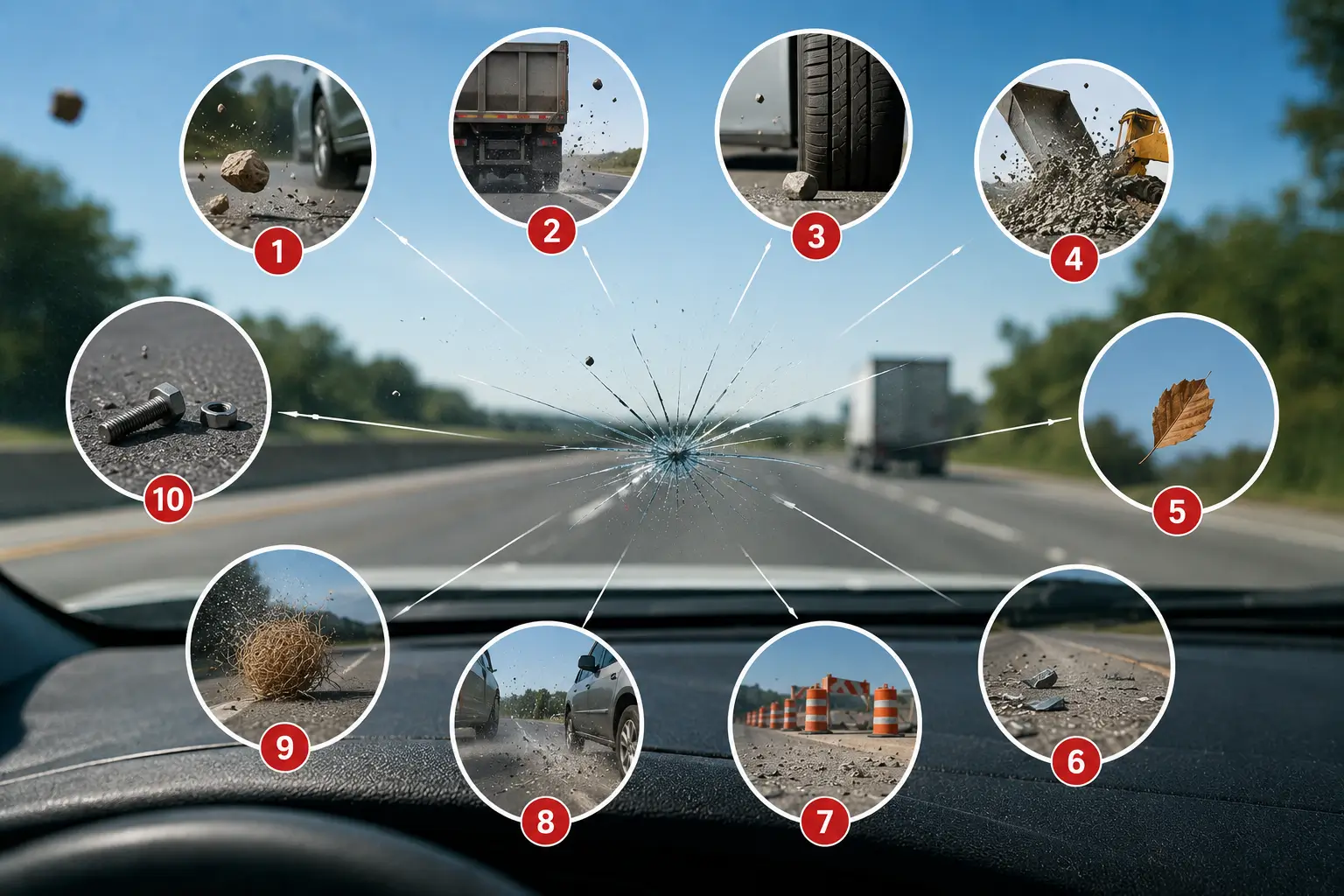
In this article, I’m going to share the top 10 ways road debris hits your windshield, plus real-world stories, preventive tips, and everything you need to know to keep your glass in top shape.
Why Windshields Are Vulnerable
Windshields aren’t just glass; they’re laminated safety structures designed to absorb impact and protect you in a crash. Despite their strength, they’re surprisingly vulnerable to small, fast-moving objects. Even a pebble the size of a marble can leave a lasting chip if it hits the glass at highway speed.
Over time, repeated stress can cause these minor impacts to grow into cracks. On vehicles equipped with ADAS, even a small chip can interfere with cameras or sensors. This isn’t just about aesthetics; it’s about your safety and the reliability of features that help prevent accidents.
Road Types and Debris Risk
The type of roads you drive on dramatically affects your risk of windshield damage. Gravel highways, urban streets near construction zones, and even suburban roads with trees lining both sides can all be culprits.
Construction zones are especially hazardous. Gravel, nails, and pieces of asphalt often scatter across the lanes. Even slow-moving traffic can inadvertently fling debris toward your windshield. Conversely, highways are dangerous for a different reason: high speeds amplify the impact of even tiny rocks.
Understanding the types of debris and how they travel on different roads is the first step to protecting your windshield.

Seasonal Debris Patterns
Different seasons bring different hazards. In spring, melting snow exposes gravel and potholes. Summer brings construction, with loose sand and gravel on highways. Fall is notorious for falling branches and leaves obscuring small debris. Winter introduces ice chunks and frozen road fragments kicked up by snowplows.
Knowing these patterns helps you anticipate threats and adjust your driving habits accordingly. For example, keeping a safe distance behind trucks during winter can prevent heavy ice from damaging your glass.
Vehicle Factors That Influence Risk
Your vehicle type matters, too. SUVs with higher ground clearance can kick up debris onto their own windshields or nearby vehicles. Trucks often attract loose gravel or small stones due to tire patterns. Even your own tires can fling debris if you’re driving on poorly maintained roads.
Sensor-equipped cars are at higher risk for costly repairs. A single chip near a camera can necessitate an ADAS recalibration, which is expensive and time-consuming. Understanding how your vehicle interacts with road debris is critical to prevention.
Top 10 Ways Road Debris Hits Your Windshield
Before diving into the list, remember: not all impacts are equal. Some cause minor cosmetic damage, while others can compromise safety systems or structural integrity. Here’s what I see most often in my 30+ years of experience.
1. Gravel Kicked Up by Other Vehicles
Gravel is one of the most common culprits. A single stone can leave a chip that spreads over time, especially on older windshields.
High-speed impacts
On highways, a stone kicked up by a truck tire can hit your windshield like a tiny bullet. I remember a driver who followed a dump truck and got multiple chips within minutes. The chips seemed small initially, but after a week of temperature changes, one developed into a crack that required full replacement.
Location patterns
Gravel usually hits the lower corners or center of the windshield. Those areas are stress points, making them prone to crack propagation.
Preventive measures
Keep a safe following distance and avoid driving behind trucks when possible. If you must, reduce speed and stay alert for debris flying off tires.
2. Loose Screws, Nails, and Metal Fragments
Construction zones are full of sharp surprises. Nails, screws, and other metal fragments can puncture your windshield instantly.
Damage patterns
Unlike gravel, metal often leaves a deep, localized chip that compromises structural integrity. One hit can necessitate a full replacement.
Impact on ADAS
If metal fragments strike near cameras or sensors, it may throw off lane departure systems, adaptive cruise control, or collision warning features.
Avoidance tips
Drive cautiously near construction sites and give wide berth to construction vehicles. Inspect your windshield after traveling through these areas.
3. Branches and Tree Limbs
Fallen sticks and branches might seem harmless, but at speed, they act like projectiles. I’ve repaired windshields with scratches and cracks caused by twigs kicked up by passing cars.
Storm hazards
Storms increase the likelihood of larger branches falling onto roads. These can create cracks that compromise the glass and even affect ADAS alignment.
Parking precautions
Avoid parking under trees in storm-prone areas. Even small branches can damage your windshield if blown by strong winds.
4. Loose Asphalt and Pothole Chunks
Deteriorating roads throw a mix of asphalt and concrete pieces. Driving near these areas can fling debris onto your windshield.
Highway vs city streets
Highway debris travels faster and can chip windshields even at safe distances. City potholes often create concentrated impact zones.
Long-term damage
Repeated minor hits weaken the windshield and increase the likelihood of cracks spreading.
5. Sand and Fine Particles
Sand and dirt might seem insignificant, but at highway speeds, they function like micro-sandpaper.
Wind and traffic effects
Dry conditions or windy days can blow fine particles into your windshield, causing scratches and weakening the surface over time.
Wiper interaction
Sand trapped under wiper blades can exacerbate scratches. Replacing worn wipers regularly prevents micro-abrasions.
6. Ice Chunks from Trucks
Winter driving introduces ice fragments from trucks and snowplows. I’ve repaired windshields damaged by ice falling off the truck ahead.
Impact severity
Ice chunks can create deep chips, especially near sensors. ADAS recalibration may be necessary if the hit occurs near cameras.
Preventive driving
Maintain distance behind trucks during winter and reduce speed near snow-loaded vehicles.
7. Debris from Construction Vehicles
Construction vehicles carry loose materials that can scatter unexpectedly. Gravel, sand, and small equipment parts often fly onto the highway.
How it happens
Improperly secured loads or uncovered trucks are major culprits. One misaligned tarpaulin can scatter debris miles down the road.
Protective measures
Always drive cautiously near construction sites and give vehicles extra space.
8. Fallen Tires and Vehicle Parts
Yes, tires, hubcaps, and car parts sometimes come loose and hit windshields. These incidents are rare but can be catastrophic.
Impact patterns
Loose parts hit with high momentum, often causing cracks that spread rapidly.
Insurance considerations
Damages from accidents or falling parts are typically covered under comprehensive insurance, but inspections should be prompt.
9. Rocks Flung from Your Own Tires
Your own vehicle can unintentionally damage your windshield, especially SUVs and trucks with higher clearance. Gravel and small stones can hit side or rear glass, sometimes damaging nearby cars.
Prevention tips
Reduce speed on gravel roads, install mud flaps, and inspect wheel wells for sharp debris.
10. Debris from Accidents or Collisions
Finally, in accidents, even minor collisions, flying debris can crack or chip windshields.
Flying fragments
Glass and metal fragments often hit at unpredictable angles. Secondary impacts are common.
Precautions
Maintain safe distances, drive cautiously near accident scenes, and inspect your windshield afterward.
FAQ Section
Q1: Can small chips grow over time?
Yes. Even tiny chips are stress points. Temperature fluctuations, wind pressure, and repeated debris impacts can cause them to expand.
Early repair prevents cracks and preserves structural integrity. I’ve seen chips no bigger than a dime grow into a full windshield replacement in a matter of weeks if ignored.
Q2: Are some roads more dangerous for debris damage?
Absolutely. Construction zones, gravel highways, and storm-affected streets carry the highest risk. Urban streets may have metal fragments or fallen branches.
Being aware of the environment and adjusting speed or distance behind other vehicles significantly reduces the chance of windshield damage.
Q3: Do protective films prevent all windshield damage?
No. While films absorb minor scratches and chips, heavy debris like ice or metal fragments can still penetrate the glass. However, they do slow micro-abrasions and increase windshield longevity. Think of them as a first line of defense, not a shield against everything.
Q4: How should I inspect my windshield after driving on debris-heavy roads?
Look for chips, cracks, or scratches, paying attention to corners and areas near cameras and sensors. Even if damage seems minor, professional inspections catch microchips that may not be visible to the naked eye. Early detection is key for safety and preventing expensive repairs.
Q5: Should I repair chips immediately?
Yes. Delaying repairs allows stress points to grow into cracks due to temperature changes and road vibrations. Quick action ensures safety, maintains your ADAS systems, and prevents higher replacement costs. A prompt repair can save you hundreds of dollars in the long run.
Conclusion
Road debris is an unavoidable part of driving, but awareness and proactive steps make a huge difference.
From gravel to ice chunks, each impact weakens your windshield and risks safety systems on modern vehicles. Driving cautiously, maintaining safe distances, and performing timely inspections can prevent minor chips from turning into costly cracks.
In my 30+ years of experience, I’ve seen windshields survive extreme conditions when drivers take preventive steps. Remember: your windshield isn’t just glass—it’s a critical safety feature. Treat it with care, and it will protect you and your passengers for years to come.
Safe driving isn’t just about speed limits and seat belts; it’s also about anticipating the invisible hazards that can hit your car at any moment. Keep your windshield strong, and it will keep you safer.