I’ve been working on auto glass in Southeast Michigan for more than three decades. I’ve seen cars roll into the shop in the middle of July with sun-baked interiors, and I’ve seen them come in during February covered in slush, salt, and ice.
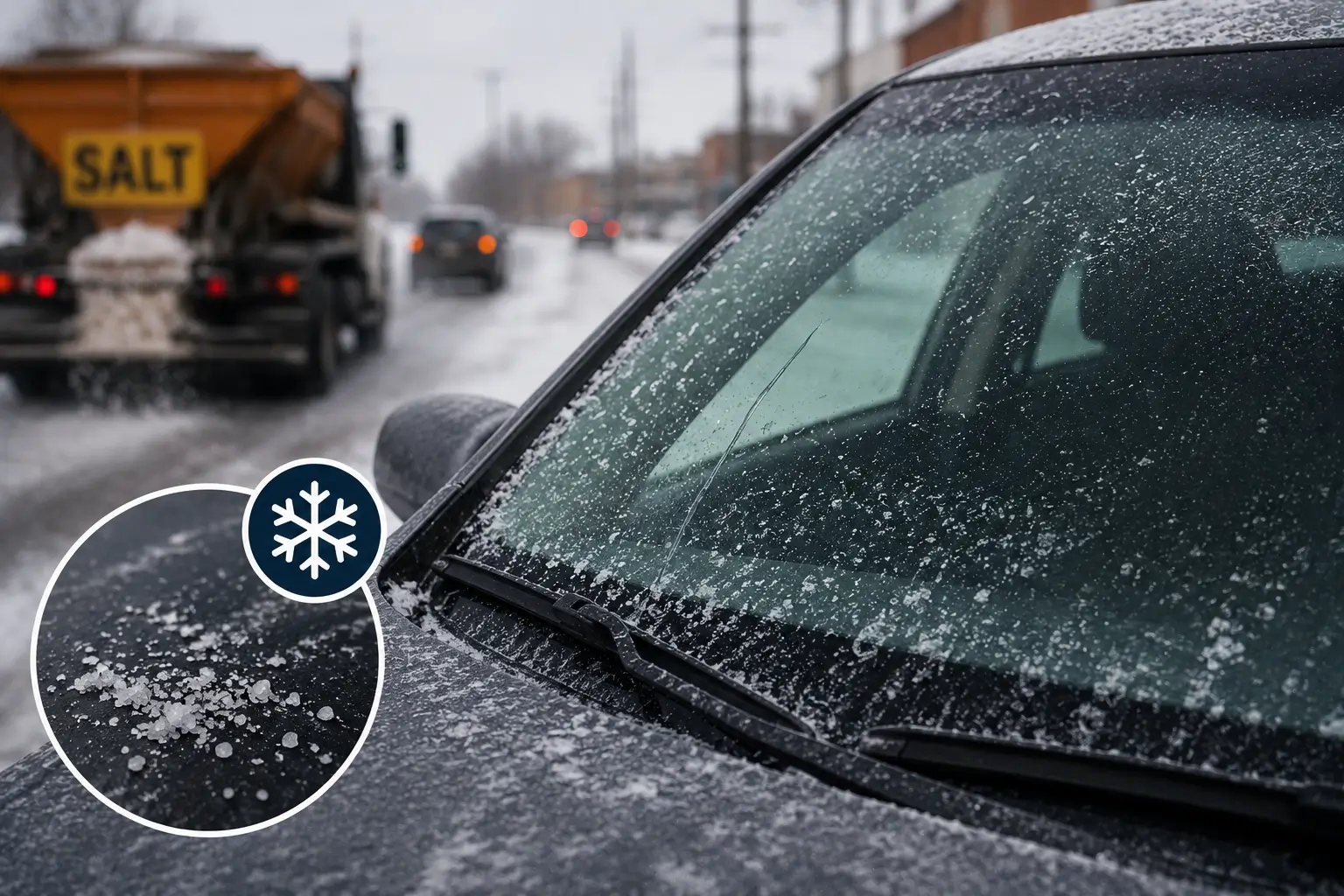
If there’s one thing Pontiac winters are known for, it’s road salt. And while most drivers think about rusted frames and corroded brake lines, very few realize how much winter road salt damage to auto glass in Pontiac is a real issue.
Back in the 90s, we didn’t talk much about salt affecting windshields. We focused on rock chips and cracks. But as vehicles evolved, glass materials changed, and Michigan winters stayed harsh, I started noticing patterns. Salt doesn’t just attack metal. It affects seals, bonding areas, trim components, and even the surface integrity of your windshield and side windows.
If you drive through Pontiac during winter — especially along Woodward Avenue, Telegraph Road, or M-59 — your auto glass faces a tough environment. Let’s talk about why that matters and what you can do about it.
How Road Salt Affects Auto Glass Over Time
Road salt itself doesn’t “eat through” laminated glass the way it corrodes steel. But it creates conditions that accelerate damage. Salt mixes with moisture, forming a corrosive solution that sits on your vehicle’s surfaces for weeks at a time.
Windshields are bonded to the vehicle frame using urethane adhesive. Around that bond is the pinch weld — a metal channel that holds the glass in place. When salty moisture seeps into tiny gaps in molding or trim, it can begin corroding that metal channel.
I’ve removed windshields in Pontiac where the pinch weld had rusted significantly because salt-laden water sat under the trim for years. That corrosion weakens the bonding surface. When it’s time to replace the windshield, the job becomes more complicated, and structural integrity can be affected.
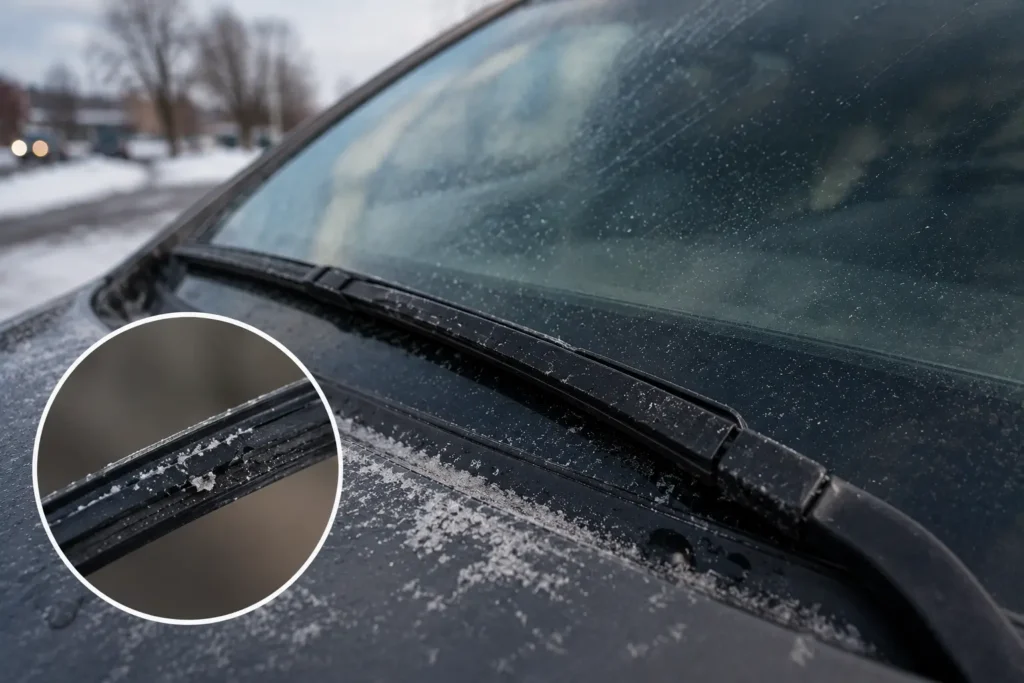
Salt also dries into crystals. Those crystals scratch glass when combined with wiper movement. Over time, this creates micro-abrasions that reduce clarity and increase glare, especially during night driving.
Winter salt damage to auto glass in Pontiac isn’t always dramatic. It’s gradual — and that’s why many drivers don’t notice it until it’s advanced.
Salt, Moisture, and Freeze-Thaw Cycles in Pontiac
Pontiac winters aren’t just cold. They fluctuate. One day it’s 15°F, the next it’s 38°F with melting snow. That constant freeze-thaw cycle is brutal on auto glass systems.
Here’s what happens. Road salt lowers the freezing point of water, which keeps slush wet longer. That salty water splashes onto your windshield, side windows, and seals. It seeps into small chips or cracks.
When temperatures drop overnight, that moisture freezes and expands. Expansion puts pressure on tiny imperfections in the glass. A small chip from I-75 debris in October can become a spreading crack by January.
I’ve had Pontiac customers tell me their windshield “suddenly cracked overnight.” It wasn’t sudden. It was weeks of salt exposure and freeze-thaw stress finally reaching a breaking point.
Michigan’s winter chemistry is a real force against auto glass durability.
Wiper Damage and Salt Abrasion
One overlooked factor in winter road salt damage to auto glass in Pontiac is wiper blade wear. Salt accumulates on windshields in a gritty film. When wipers drag across that surface, especially with worn rubber blades, they grind salt particles into the glass.
Over time, this causes:
- Fine surface scratches
- Hazy streaking in driver line of sight
- Increased glare from oncoming headlights
- Reduced clarity in rain or snow
In the 90s, glass was slightly thicker and vehicle aerodynamics were different. Today’s windshields are engineered for fuel efficiency and aerodynamics, and even minor abrasions can impact optical clarity.
I recommend replacing wiper blades before winter begins, not after they start streaking. A $25 pair of quality blades can prevent hundreds in long-term glass clarity issues.
Salt and Side Window Mechanisms
Windshields get most of the attention, but side windows suffer too. Salt spray accumulates along window tracks and seals. When drivers roll windows down in winter — even briefly — salt can enter the internal track mechanisms.
Over time, this leads to:
- Sluggish window operation
- Increased wear on window regulators
- Seal deterioration
- Air leaks
I’ve replaced countless side windows in Pontiac where the breakage wasn’t from theft or impact — it was from weakened seals and stress from misaligned tracks due to corrosion buildup.
Salt accelerates aging. It attacks rubber trim and metal components that support your glass. And once seals degrade, water intrusion becomes more likely.
Why Pontiac Drivers Are at Higher Risk
Pontiac sits in a region that uses heavy salt applications on roads. High-traffic corridors like M-59 and Woodward Avenue are treated aggressively during snowstorms.
More traffic means more spray. More spray means more salt hitting your vehicle at high speed.
Urban environments also mean vehicles sit parked outdoors for long hours — in apartment complexes, workplace lots, and street parking. Salt remains on the surface until it’s washed away. Many drivers don’t wash their cars frequently in winter, allowing salt to accumulate.
I’ve seen vehicles that were never rinsed throughout the winter season come in with severe trim corrosion around glass edges by spring.
Winter road salt damage to auto glass in Pontiac isn’t about one storm. It’s about months of buildup.
Preventing Winter Salt Damage to Auto Glass
Prevention isn’t complicated, but it requires consistency.
Regular washing during winter is critical. Even a simple rinse removes salt buildup from glass edges and trim. Pay attention to the lower windshield corners and side window seals.
Avoid pouring hot water on frozen glass. The temperature shock combined with salt-weakened surfaces can cause cracking.
Keep washer fluid filled with proper winter-grade fluid. Running wipers dry on a salty windshield increases abrasion.
Inspect for chips early. A small chip exposed to salt and freezing temperatures spreads quickly. Repairing it promptly prevents replacement later.
Applying a glass-safe protective treatment can help water bead and reduce salt adhesion. It won’t eliminate exposure, but it makes cleaning easier.
The key is awareness. Winter glass care isn’t optional in Michigan — it’s necessary.
When Replacement Becomes Necessary
Despite prevention, sometimes winter damage requires replacement.
Common signs include:
- Cracks spreading from existing chips
- Excessive surface pitting causing glare
- Rust visible along windshield edges
- Water leaks near glass seals
- Distorted visibility during night driving
When I remove winter-damaged windshields in Pontiac, I often find corrosion beginning along the pinch weld. Addressing that corrosion properly before installing new glass is essential for long-term durability.
Cutting corners during replacement — especially in winter — leads to future leaks and bonding failure. Proper prep, rust treatment, and high-quality urethane are critical.
The Role of Modern Laminated Glass and Sealants
Modern windshields are not just glass—they’re laminated systems with urethane adhesives designed for strength, impact resistance, and ADAS sensor integration. Salt doesn’t corrode the glass directly, but it compromises sealants and bonding areas.
I’ve noticed vehicles with minor surface pitting often develop seal separation after winter if salt isn’t addressed. Once the adhesive bond weakens, even moderate bumps or thermal stress can cause leaks or glass flexing. Using premium urethane and applying proper rust treatment before installation ensures the windshield performs as designed, even in harsh Pontiac winters.
Long-Term Effects of Repeated Salt Exposure
Repeated winters of salt exposure accelerate micro-abrasions and structural wear. Over time, even windshields that appear fine may have weakened edges, minor surface etching, or compromised side window tracks.
Vehicles parked outdoors, driven on salt-heavy routes, or seldom washed are most vulnerable. Early inspections can catch small chips and prevent cumulative damage that otherwise leads to expensive replacements. Think of it as preventive maintenance for your glass—like oil changes for your engine, but for your windshield and side windows.
Insurance Coverage for Salt-Related Glass Damage
Most comprehensive auto insurance policies cover sudden damage caused by road debris or environmental stress, including chips that expand due to salt exposure combined with freeze-thaw cycles. However, gradual surface wear, minor scratches, or micro-pitting may not qualify.
Pontiac drivers should review their policies carefully, checking deductibles, coverage limits, and whether glass repair or replacement must be done through certified shops. Promptly repairing chips before they spread not only maintains safety but can save money and prevent claims disputes.
Insurance Considerations for Salt-Related Damage
Most crack damage caused by road debris and environmental stress falls under comprehensive insurance coverage. However, gradual wear like surface pitting may not qualify.
If salt exposure contributes to crack spreading from an existing chip, it’s typically handled like any other glass damage claim.
Every policy differs. Pontiac drivers should verify deductible amounts and coverage terms before filing a claim.
Sometimes paying out-of-pocket for small repairs makes more sense than filing minor claims.
Frequently Asked Questions
1. Can road salt directly crack my windshield?
Road salt by itself doesn’t have enough force to crack laminated glass.
The problem arises when salt combines with moisture and Michigan’s freeze-thaw cycles. Salty water can seep into small chips or imperfections, and when it freezes, it expands, putting stress on the glass. Over time, repeated exposure to this cycle can turn minor chips into spreading cracks. Even seemingly insignificant damage can worsen during winter.
Essentially, salt accelerates damage that might have otherwise remained minor, making regular inspections and early chip repairs critical for maintaining windshield integrity throughout the Pontiac winter season.
2. How often should I wash my car in winter in Pontiac?
During the heavy salt season, washing your car every two weeks is ideal, though more frequent washes are even better.
Salt accumulates on glass edges, trim, and seals, creating corrosive conditions that can damage the bonding surfaces of windshields and side windows. Even a quick rinse removes much of the residue before it can dry into abrasive crystals.
Paying attention to lower windshield corners, window channels, and pinch welds helps prevent corrosion. Frequent winter washing minimizes long-term damage, reduces scratching from wipers dragging salt, and keeps your auto glass and surrounding components in better condition throughout Pontiac’s harsh winter months.
3. Does salt damage tinted windows?
Salt itself doesn’t dissolve or erode tint film, but it can cause damage over time, especially at the edges where moisture and contaminants accumulate.
Poorly sealed tints are most at risk, as salty water can seep under the film, causing bubbling, peeling, or discoloration. Repeated exposure combined with freeze-thaw cycles can accelerate this process. For Pontiac drivers, regular washing and using a soft cloth or proper glass cleaner helps protect tinted windows.
Ensuring window seals are intact and tint is professionally installed reduces the risk of salt-related deterioration while maintaining the privacy and glare-reduction benefits that tinting provides.
4. Are winter windshield cracks covered by insurance?
It depends on the cause and your insurance policy. Cracks resulting from direct impact, road debris, or environmental stress (like freeze-thaw cycles exacerbated by salt) often fall under comprehensive coverage.
However, surface wear, micro-abrasions, or gradual pitting caused purely by salt accumulation may not be covered. Pontiac drivers should review policy terms carefully, including deductibles and coverage limits.
Filing a claim for chips that spread due to winter conditions is common, but small, non-critical damage might be better handled out-of-pocket to avoid potential premium increases. Prompt professional repair protects both safety and vehicle integrity.
5. Can salt cause windshield leaks?
Indirectly, yes. Salt accelerates corrosion around the pinch weld and trim where the windshield is bonded to the vehicle frame. Over time, rust weakens the metal channel and adhesive bond. When seals deteriorate or bonding areas are compromised, water can penetrate the perimeter of the windshield, creating leaks.
Even minor gaps can allow moisture into the cabin, leading to interior damage or fogging issues. Pontiac winters, with repeated salt exposure and freeze-thaw cycles, make this a frequent concern. Early inspections and preventive washing help maintain seal integrity and prevent small problems from turning into costly water damage repairs.
6. Is winter a bad time to replace a windshield?
Not necessarily. Professional auto glass installers in Pontiac are trained to work safely in cold weather. Modern adhesives and urethane formulations cure properly at low temperatures, and technicians account for ambient conditions during installation.
Proper prep, rust treatment, and controlled bonding ensure the new windshield performs safely, even in sub-zero conditions. However, extreme weather — such as heavy snow or freezing rain — may delay some procedures for safety reasons.
With the right expertise, winter replacement is safe and sometimes even necessary to address salt-related damage, chips, or spreading cracks before they compromise visibility and vehicle structural integrity.
Final Thoughts
I’ve worked through blizzards, freezing garages, and sub-zero mornings replacing glass across Pontiac and Southeast Michigan. Winter road salt damage to auto glass in Pontiac is real, but it’s manageable.
Your windshield isn’t just a piece of glass. It’s part of your vehicle’s structural system. Protecting it during winter saves money, prevents sudden cracks, and ensures clear visibility during the toughest driving season of the year.
Salt will always be part of Michigan winters. But damage doesn’t have to be.