I’ve been doing windshield work for over 30 years, and if there’s one thing I’ve learned, it’s this—cheap work almost always ends up costing more in the long run.
A while back, a customer came into my shop with a newer Honda CR-V. He told me he had just replaced his windshield at a place offering a “too good to be true” price. Everything looked fine at first. No cracks, no leaks. But after a few days, his lane keep assist started acting strange. The car would drift slightly before correcting itself.
He looked at me and said, “Ray, I thought I saved money.”
I nodded and told him something I’ve said hundreds of times: “You didn’t save money… you delayed the real cost.”
Today’s vehicles are not like the ones we worked on in the 90s. Your windshield isn’t just a piece of glass anymore—it’s part of a complex system called ADAS (Advanced Driver Assistance Systems). And when cheap replacement shortcuts are taken, that system is one of the first things to suffer.
Let me walk you through exactly why.
What ADAS Systems Have to Do with Your Windshield
Back when I started, the most important thing about a windshield was visibility. If it was clear, properly sealed, and installed straight, the job was done. Today, that’s only half the story.
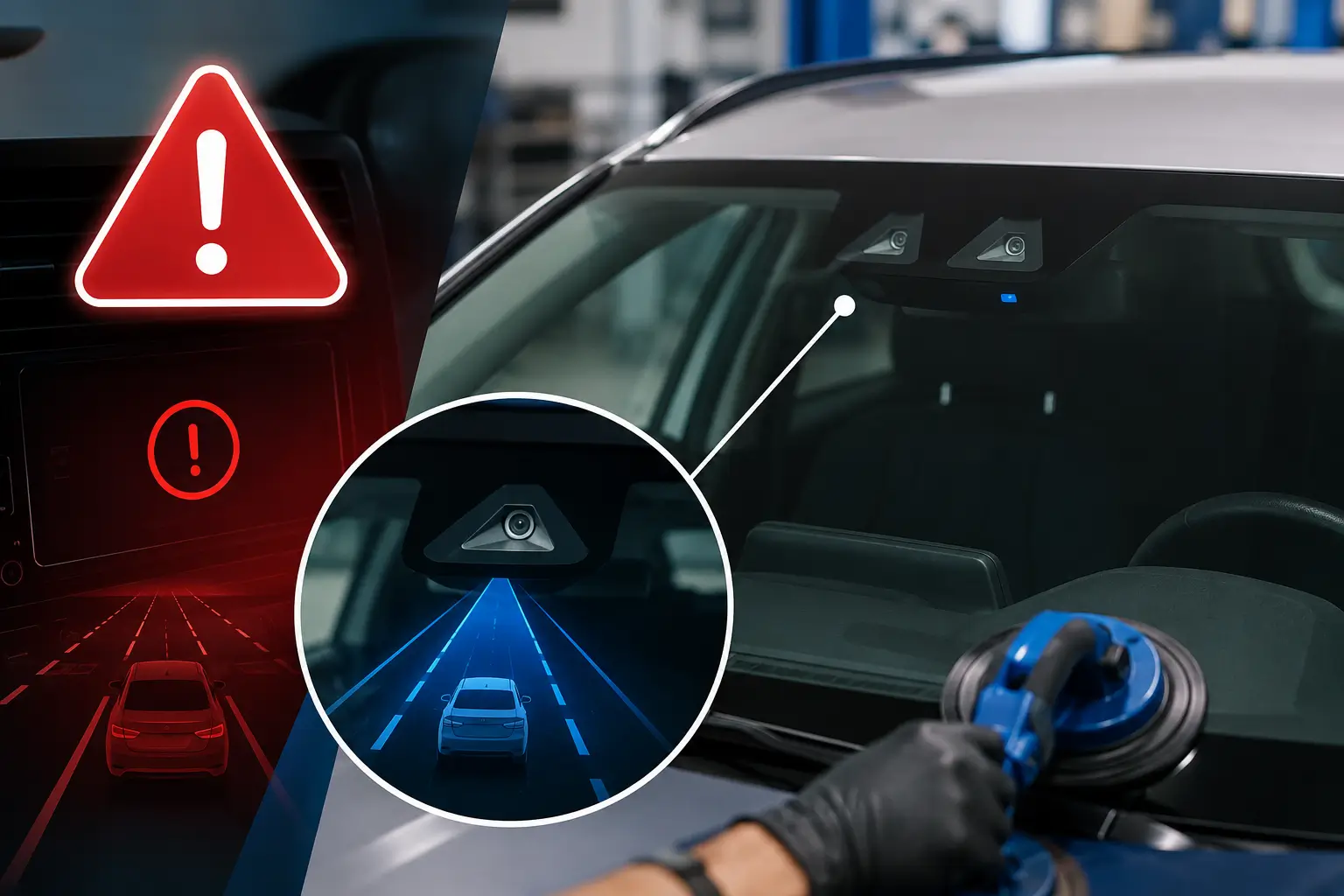
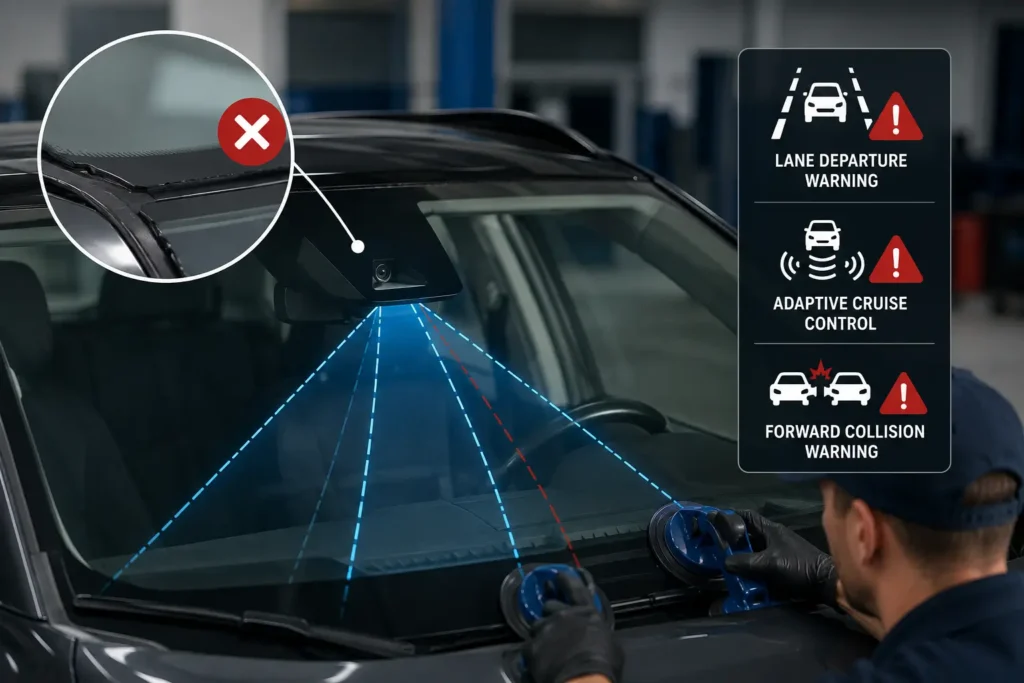
Modern vehicles rely heavily on ADAS systems. These include lane departure warning, lane keep assist, forward collision warning, and adaptive cruise control. Most of these systems depend on a forward-facing camera mounted directly behind the windshield.
That camera isn’t just sitting there casually. It’s carefully positioned and calibrated to read the road with precision. It looks at lane markings, detects obstacles, and helps your vehicle make split-second decisions.
Now imagine replacing the windshield with lower-quality glass or installing it without proper alignment. Even a slight shift can affect how that camera “sees” the road. It’s like giving someone glasses with the wrong prescription—they can still see, but not clearly.
In my shop, I always explain it this way: your windshield is now part of your car’s brain. If you mess with it, you’re affecting how the entire system thinks and reacts.
That’s why cheap replacements can become a real problem.
The Hidden Problems with Cheap Windshield Replacement
Let’s talk honestly about what “cheap” usually means in this industry.
It often means cutting corners somewhere. Maybe it’s the glass quality. Maybe it’s the adhesive. Maybe it’s the technician’s experience. Sometimes it’s all three.
I’ve seen windshields installed with aftermarket glass that doesn’t match OEM specifications. The curvature might be slightly off, or the thickness isn’t exactly right. To the average driver, it looks fine. But to a camera system that relies on precision, that difference matters.
Then there’s installation. A rushed job can lead to improper positioning. If the glass isn’t perfectly aligned, the camera angle changes. That small shift can throw off the entire ADAS system.
And don’t get me started on skipped recalibration. Some shops don’t include it because it adds time and cost. But without recalibration, the system is essentially guessing.
I remember fixing a job where the camera bracket wasn’t even mounted correctly. The customer had no idea. They just knew something felt off while driving.
Cheap work hides its problems well—until it doesn’t.
How Poor Installation Affects ADAS Accuracy
This is where things get serious.
ADAS systems are designed to be incredibly precise. They rely on exact measurements and alignment to function properly. When a windshield is installed poorly, that precision is lost.
Think about driving on the highway. Your lane departure system is supposed to warn you the moment you start drifting. But if the camera is even slightly off, that warning might come too late—or not at all.
I’ve seen vehicles where the system overcorrects, gently pulling the steering when it shouldn’t. In other cases, it fails to detect lane markings altogether.
One customer told me his car felt “confused.” That’s the word he used. And honestly, it made sense. The system was receiving inaccurate visual data because the windshield installation wasn’t done correctly.
This isn’t just about comfort or convenience. It’s about safety. These systems are designed to help prevent accidents. When they don’t work properly, you’re losing a layer of protection you paid for when you bought the car.
The Role of Calibration
Let’s talk about calibration, because this is where a lot of problems start.
After a windshield replacement, the ADAS camera needs to be recalibrated. This process ensures the system knows exactly where it’s looking and how to interpret what it sees.
Calibration isn’t quick or easy. It requires specialized equipment, a controlled environment, and trained technicians. That’s why some cheaper shops skip it—they simply don’t have the tools or don’t want to spend the extra time.
I’ve had customers tell me, “They said it wasn’t necessary.” Every time I hear that, I shake my head.
Skipping calibration is like installing a brand-new TV and never adjusting the picture settings. It might work, but it won’t perform the way it’s supposed to.
In many modern vehicles, failing to calibrate can reduce system accuracy significantly. And in some cases, the system may shut down completely or display warning messages.
At Save On Auto Glass, we never skip this step. It’s part of doing the job right.
Real-World Problems I’ve Seen from Cheap Jobs
Over the years, I’ve seen just about every mistake you can imagine.
There was one case where a driver came in after getting a bargain windshield replacement. No recalibration, low-quality glass, rushed installation. Within a week, his forward collision warning started triggering randomly.
Another time, a customer noticed his adaptive cruise control wasn’t maintaining distance properly. The system would react too late, making highway driving stressful. Again, it traced back to improper windshield installation.
One of the most frustrating cases involved water leaks. Cheap adhesive was used, and over time, moisture got in. That not only affected the windshield seal but also interfered with the camera housing.
These aren’t rare situations. They happen more often than people realize.
And the worst part? Most customers don’t connect the issue to the windshield replacement right away.
Why OEM Glass and Proper Tools Matter
I always tell people this—there’s a reason manufacturers design specific glass for specific vehicles.
OEM glass is made to match the exact shape, thickness, and clarity required for your car’s systems to function properly. It’s not just about fitting the frame. It’s about working seamlessly with the sensors and cameras.
Aftermarket glass can sometimes be fine, but cheaper versions often fall short. Even small differences in curvature or distortion can affect how the camera reads the road.
Then there are the tools. Proper calibration equipment isn’t cheap, and it’s not something every shop invests in. But without it, you’re relying on guesswork.
In my early days, we relied on skill and experience alone. Today, skill still matters—but you also need the right technology. It’s a combination of both that delivers a safe and accurate result.
Is Cheap Ever Worth It?
I get this question a lot, and I always answer it the same way.
It depends on what you value.
If you’re driving an older car with no sensors or cameras, a cheaper option might not cause major issues. But if your vehicle has ADAS features, going cheap is a risk.
You might save money upfront, but if something goes wrong, you’ll likely spend more fixing it. Not to mention the potential safety concerns.
I’ve had customers come in thinking they got a great deal, only to realize later that the job wasn’t done properly. By the time we fix everything, they’ve spent more than they would have if they had chosen a quality service from the start.
So is cheap worth it? In most modern vehicles, the answer is no.
FAQ
Can cheap windshield replacement really affect ADAS systems?
Yes, it absolutely can. Cheap replacements often involve lower-quality glass, rushed installation, or skipped calibration.
Any of these can affect how the ADAS camera reads the road. Since these systems rely on precision, even small errors can lead to inaccurate warnings or delayed responses. Over time, this can impact both safety and driving confidence.
What is the biggest risk of skipping recalibration?
The biggest risk is that your safety systems won’t work correctly. Without recalibration, the camera may not be aligned properly, which can lead to false alerts or missed warnings. In some cases, the system may shut down completely. Since ADAS features are designed to assist you in critical moments, improper calibration can reduce their effectiveness when you need them most.
Is OEM glass really better than cheaper alternatives?
In most cases, yes. OEM glass is designed specifically for your vehicle, ensuring proper fit, clarity, and compatibility with ADAS systems.
Cheaper alternatives may not meet the same standards, which can affect camera performance. While some aftermarket options are acceptable, very cheap glass often introduces risks that can impact both safety and system accuracy.
How do I know if my ADAS system is affected?
You might notice subtle changes in how your vehicle behaves. This can include delayed lane warnings, inconsistent steering assistance, or unexpected alerts.
In some cases, warning lights may appear on the dashboard. If you’ve recently had a windshield replacement and something feels off, it’s a good idea to have the system checked and recalibrated if needed.
Can insurance cover proper windshield replacement and calibration?
Many insurance policies do cover windshield replacement and calibration, especially if it’s necessary for safety systems.
Coverage depends on your provider and policy details, so it’s always best to check beforehand. Some reputable auto glass shops can also help you handle the insurance process and ensure everything is done correctly without cutting corners.
Final Thoughts
Cars have changed a lot since I first picked up my tools. What used to be a simple replacement job has become a precise, technology-driven process.
And that’s not a bad thing. These systems are designed to keep you safer on the road. But they only work properly when everything is installed and calibrated correctly.
Cheap windshield replacement might look like a good deal at first, but it often comes with hidden risks. From misaligned cameras to skipped calibration, the consequences can affect how your vehicle performs in ways you might not notice right away.
If you take one thing from this article, let it be this—your windshield is no longer just glass. It’s part of your vehicle’s safety system.
Treat it that way.