
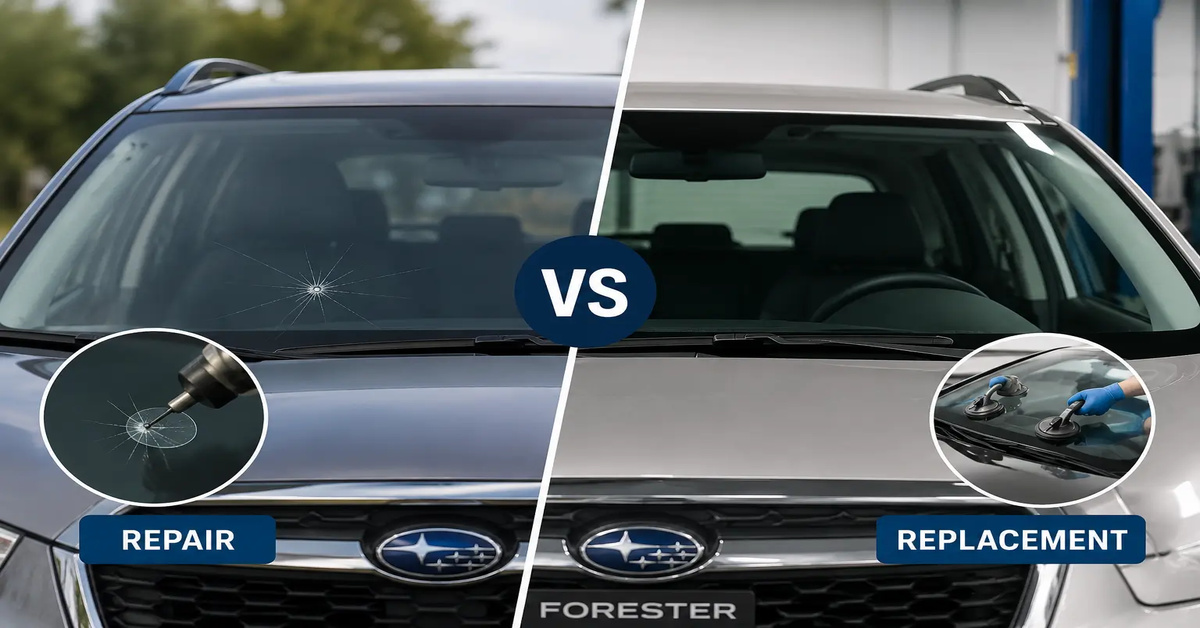
If you drive a Subaru Forester, you already understand how much you depend on clear visibility and advanced safety features every time you’re on the road. Your windshield plays a far more important role than most drivers realize. It is not just there to block wind or rain—it is a structural component that supports the roof, helps airbags deploy correctly, and ensures your visibility remains uncompromised in all driving conditions.
When a crack or chip appears, it may seem minor at first glance. Many drivers delay taking action, assuming the damage is cosmetic or harmless.
However, from my 30+ years of experience working on windshields, especially on vehicles like the Forester, I can tell you that small damage rarely stays small.
What begins as a tiny chip can quickly spread into a large crack, especially under pressure from weather, vibration, and temperature changes.
In this guide, I’m going to walk you through everything you need to know—from understanding how damage works to making the right decision between repair and replacement—so you can protect your vehicle, your safety, and your wallet.
Understanding Windshield Damage
Windshield damage may look simple from the outside, but in reality, it involves a complex structure and a variety of factors that influence how the damage behaves over time.
Many Forester owners encounter chips from loose gravel, highway debris, or sudden temperature changes. While these may seem like everyday driving hazards, the real issue lies in how the glass responds after the impact.
The windshield in your Subaru Forester is made from laminated glass, which consists of two layers of glass with a plastic interlayer in between. This design is meant to hold the glass together during impact, preventing it from shattering and protecting passengers.
However, once the outer layer is damaged, the integrity of the entire structure can be compromised. Even if the damage looks small, it can extend deeper than what is visible to the eye.
Another important factor is environmental stress. In colder regions like Michigan, the freeze-thaw cycle plays a major role in crack expansion. Moisture enters the damaged area, freezes, expands, and puts pressure on the surrounding glass. This process repeats over time, gradually turning a minor chip into a significant crack. Heat can also play a role. Sudden exposure to high temperatures, such as blasting the heater on a frozen windshield, creates uneven expansion, which can worsen the damage.
When I inspect a windshield, I don’t just look at the surface. I evaluate the size, location, and depth of the damage. These factors determine whether a repair is possible or if replacement is necessary.
A small chip in the center of the windshield may be easily repairable, but the same chip near the edge or near a sensor could pose a much greater risk. Understanding these details helps drivers make informed decisions instead of waiting until it’s too late.
The Repair Process
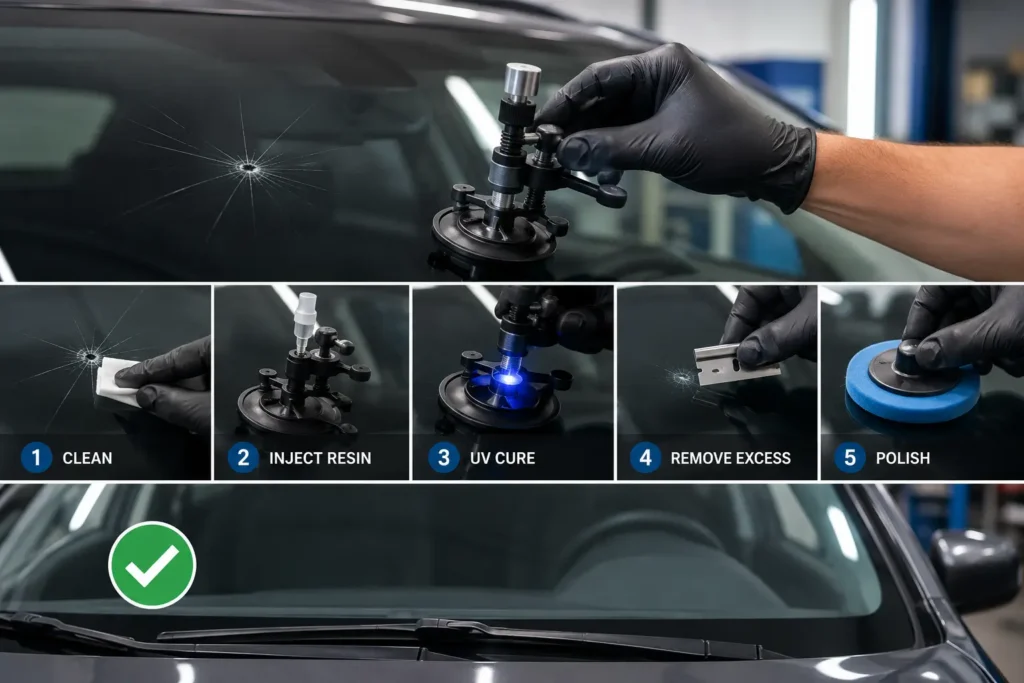
Windshield repair is a highly specialized process that aims to restore both the structural integrity and clarity of the glass without replacing it entirely. Many people think of it as a simple fix, but when done properly, it requires precision, experience, and the right tools.
The process begins with cleaning the damaged area to remove any dirt, moisture, or debris. This step is critical because any contamination can affect how well the resin bonds with the glass.
Once the area is prepared, a specialized resin is injected into the crack or chip. This resin is designed to fill the damaged space completely, bonding the glass layers together and preventing further spreading.
After the resin is injected, it is cured using ultraviolet light. This hardens the resin and restores strength to the glass. The final step involves polishing the area to improve clarity and ensure the repair blends as seamlessly as possible with the rest of the windshield.
In most cases, the entire process takes between 30 to 60 minutes. However, the quality of the repair depends heavily on how well each step is executed. A properly repaired windshield can last for years without any issues, while a poorly done repair may fail within weeks.
I remember working on a Forester just before a harsh winter storm. The owner was concerned that the repair wouldn’t hold up in freezing temperatures.
I assured them that with proper curing and care, it would remain stable. Months later, they came back with the same windshield intact, even after repeated exposure to snow and ice. That’s the difference that professional repair makes.
When Repair Is Not Enough
There are situations where repairing a windshield is simply not a safe or reliable option. While many drivers hope to avoid replacement due to cost, safety should always come first. Certain types of damage make replacement the only viable solution.
Cracks that are longer than six inches tend to compromise the structural integrity of the glass. Similarly, damage that occurs along the edges of the windshield is more likely to spread quickly because the edges experience more stress.
Another critical factor is the driver’s line of sight. Any distortion in this area can affect visibility and increase the risk of accidents.
Modern Subaru Foresters also include Advanced Driver Assistance Systems (ADAS), which rely on sensors mounted on the windshield. These systems are incredibly sensitive and require precise alignment to function correctly. Even a small crack or improper repair in the sensor area can interfere with features like lane departure warnings and collision detection.
I once had a 2020 Forester come into my shop with a long crack running directly across the sensor zone.
The owner was hoping for a repair, but it was clear that replacement was the only safe option. After replacing the windshield and recalibrating the sensors, the vehicle’s safety systems were restored to full functionality. Situations like this highlight why it’s important to make the right call early on.
If your Subaru Forester requires a replacement, choosing a professional windshield replacement service that follows industry-approved installation methods and performs ADAS recalibration when required helps ensure your vehicle’s safety systems continue to operate correctly.
Cost Considerations
Cost is often the biggest factor when deciding between repair and replacement, and it’s understandable. However, what many drivers don’t realize is that delaying action often leads to higher expenses in the long run.
Repairing a small chip is relatively inexpensive, usually costing between $50 and $120. This makes it an easy decision if the damage is caught early.
On the other hand, replacing a windshield can cost anywhere from $350 to $600 or more, depending on the model, sensor integration, and labor involved.
Insurance can help offset these costs, but coverage varies. Many policies cover chip repairs بالكامل without requiring a deductible, which makes early repair even more beneficial. However, once the damage spreads and requires replacement, you may have to pay a deductible, increasing your out-of-pocket expenses.
Over the years, I’ve seen countless cases where drivers ignored a small chip, only to end up paying for a full replacement later. The lesson is simple: addressing the problem early is always more cost-effective than waiting for it to worsen.
DIY vs Professional Service
The availability of DIY windshield repair kits has made it tempting for many drivers to attempt repairs on their own. While these kits can be useful in certain situations, they come with significant limitations.
DIY repairs often lack the precision and quality of professional work. The resin used in these kits may not bond as effectively, and improper application can leave air bubbles or incomplete sealing. This not only affects the appearance of the repair but also its durability.
Another major concern is curing. Professional repairs use controlled UV light to ensure the resin hardens correctly. DIY methods may not provide the same level of consistency, leading to weaker repairs that can fail under stress.
For vehicles like the Subaru Forester, which rely on windshield-mounted sensors, professional service becomes even more important. Replacing a windshield without proper recalibration can compromise the functionality of critical safety systems. This is not something a DIY kit can address.
I’ve had many customers come in after attempting a DIY repair, only to find that the damage had worsened or could no longer be repaired. In most of these cases, a replacement became necessary, costing far more than a professional repair would have initially.
Winter Challenges in Michigan
Winter conditions in Michigan create some of the harshest environments for windshields. The combination of freezing temperatures, snow, ice, and road salt puts constant stress on the glass.
One of the biggest challenges is the freeze-thaw cycle. As moisture enters a crack and freezes, it expands, increasing the size of the damage. This process repeats over time, gradually weakening the windshield.
Snow removal also plays a role. Scraping ice off the windshield can put additional pressure on already damaged areas, causing cracks to spread. Many drivers unknowingly make the situation worse by using excessive force or improper tools.
Proper care during winter can make a significant difference. Gradual heating, careful scraping, and regular inspections help maintain the integrity of the windshield. I’ve seen repaired windshields last through entire winters without issues when these precautions are followed.
Insurance and Coverage
Understanding your insurance coverage can make a big difference when dealing with windshield damage. Many policies are designed to encourage early repair, as it is more cost-effective than replacement.
Chip repairs are often covered بالكامل with no deductible, making it easy for drivers to address minor damage without financial burden. However, once the damage becomes severe enough to require replacement, the situation changes. Depending on your policy, you may be responsible for a deductible, which can significantly increase your costs.
Timing plays a crucial role here. Reporting the damage early and documenting it properly can improve your chances of receiving full coverage. Waiting too long may result in partial coverage or even denial if the insurer determines that the damage worsened due to neglect.
Maintenance After Repair or Replacement
Taking care of your windshield after a repair or replacement is essential for ensuring long-term durability. Many drivers assume that once the job is done, no further attention is needed, but this is not the case.
After a repair, it’s important to avoid sudden temperature changes and excessive pressure on the glass. The resin needs time to fully settle and bond, and exposing it to stress too soon can affect its effectiveness.
After a replacement, the adhesive used to secure the windshield requires time to cure. During this period, it’s best to avoid activities that could disturb the seal, such as slamming doors or driving on rough terrain.
Regular maintenance, including cleaning and inspection, helps catch new damage early and prevents small issues from becoming major problems. Over the years, I’ve seen drivers extend the life of their windshields significantly by simply being proactive.
FAQs
Q1: Can a small chip on my Forester windshield be repaired?
Yes, in most cases, a small chip on your Subaru Forester windshield can be repaired, especially if it is smaller than a quarter and not located near the edges or critical sensor areas. However, the key factor here is timing.
The sooner you address the chip, the higher the chances of a successful repair. When a chip is left untreated, dirt and moisture can enter the damaged area, making it more difficult for the resin to bond properly during repair.
Another important consideration is the location of the chip. If it is directly in the driver’s line of sight, even a successful repair may leave a slight distortion, which could affect visibility.
In such cases, replacement might be recommended for safety reasons. Additionally, if the chip is near the edges of the windshield, it is more likely to spread due to structural stress.
Professional repair is always the best option because it ensures proper sealing, structural reinforcement, and minimal visual impact. While DIY kits may seem convenient, they often fail to deliver the same level of quality and durability. Ultimately, addressing a small chip early can save you from a much larger and more expensive problem later.
Q2: How long does a Forester windshield repair take?
A typical windshield repair for a Subaru Forester usually takes between 30 to 60 minutes, but the total time can vary depending on several factors. The size and depth of the chip, the location of the damage, and environmental conditions all play a role in determining how long the process will take.
While the repair itself is relatively quick, what many drivers overlook is the importance of proper curing. After the resin is injected into the damaged area, it needs time to harden and bond with the glass. In colder climates like Michigan, this process can take slightly longer, as low temperatures can affect how quickly the resin cures.
It’s also important to follow post-repair guidelines. For example, avoiding sudden temperature changes immediately after the repair helps ensure that the resin sets correctly. Many professionals recommend waiting a short period before driving at high speeds or exposing the windshield to extreme conditions.
Overall, while the repair process is fast and convenient, taking the necessary precautions afterward is essential for ensuring long-lasting results.
Q3: Does windshield replacement affect ADAS sensors on a Forester?
Yes, windshield replacement has a direct impact on ADAS sensors in a Subaru Forester, and this is one of the most critical factors to consider when replacing the glass. These sensors are mounted on or near the windshield and are responsible for features such as lane departure warnings, adaptive cruise control, and collision detection.
When the windshield is replaced, these sensors must be recalibrated to ensure they function correctly. Even a slight misalignment can affect their accuracy, potentially leading to incorrect readings or system malfunctions. This is why professional installation is essential for vehicles equipped with ADAS.
Recalibration typically involves specialized equipment and procedures that align the sensors with the vehicle’s specifications. Skipping this step can compromise safety and may even cause issues during vehicle inspections.
In my experience, many drivers underestimate the importance of recalibration. However, ensuring that these systems are properly aligned is just as important as the quality of the windshield itself. It’s not just about replacing glass—it’s about maintaining the safety systems that rely on it.
Q4: Will insurance cover my windshield repair?
In many cases, insurance will cover windshield repair, especially if the damage is minor and addressed early. Most insurance companies prefer repairs over replacements because they are less expensive and quicker to complete. As a result, many policies include full coverage for chip repairs without requiring a deductible.
However, coverage for full replacement can vary depending on your policy. Some policies require a deductible, while others may offer full coverage under specific conditions. This is why it’s important to review your policy details and understand what is included.
Timing also plays a significant role. Reporting the damage as soon as it occurs increases the likelihood of approval. If the damage is left untreated and worsens, the insurance company may determine that the situation could have been prevented, which could affect your claim.
Documenting the damage with photos and choosing a certified repair shop can also improve your chances of receiving coverage. Overall, acting quickly and understanding your policy can help you minimize costs and avoid complications.
Q5: Can I repair a crack myself?
While it is technically possible to repair a small chip yourself using a DIY kit, it is generally not recommended for anything beyond very minor damage. DIY kits lack the precision, quality materials, and controlled conditions required for a reliable repair. As a result, they often produce inconsistent results.
One of the biggest issues with DIY repairs is improper resin application. If the resin does not fully penetrate the crack, air pockets can form, weakening the repair and allowing the damage to spread further. Additionally, curing the resin without professional equipment can result in a weaker bond.
For larger cracks, deeper damage, or areas near sensors, DIY repairs are not suitable at all. Attempting to fix these issues yourself can make the situation worse and may even eliminate the possibility of a professional repair later.
In most cases, investing in professional service is the safer and more cost-effective choice. It ensures that the repair is done correctly, maintains the structural integrity of the windshield, and preserves the functionality of any safety systems connected to it.
Conclusion
Deciding between windshield repair and replacement for your Subaru Forester is not always straightforward, but understanding the key factors makes the decision much easier. Small chips can often be repaired quickly and affordably, while larger cracks or damage near critical areas require full replacement to ensure safety.
The most important takeaway is to act early. Delaying action not only increases the risk of further damage but also leads to higher costs and potential safety issues. By addressing problems promptly and relying on professional expertise, you can protect your vehicle and avoid unnecessary complications.
At Save On Auto Glass, we’ve spent decades helping Forester owners make the right decisions with confidence. If you notice a chip or crack, don’t ignore it. A simple inspection today can save you time, money, and stress down the road.