

For many drivers in Fenton, Michigan, parking outdoors is simply part of everyday life.
Not every home has a garage. Apartment residents may rely on open parking areas. Many people leave their vehicles in driveways, workplace lots, shopping centers, or uncovered spaces for hours at a time.
Modern vehicles are designed to handle outdoor conditions, so parking outside does not automatically damage your windshield.
The bigger concern is what happens when the glass is repeatedly exposed to changing temperatures, moisture, debris, sunlight, dirt, ice, and environmental buildup over time.
A windshield may look completely fine when you park the vehicle.
Then several days later, a small problem appears.
Maybe a tiny chip from road debris begins to spread. Perhaps a worn wiper has created fine scratches. A branch falls during a storm. Moisture collects around existing damage. A small crack becomes more noticeable after a freezing night.
These problems often begin quietly.
The important thing is knowing what to check.
Regular inspection and simple maintenance can help you catch problems early, reduce repair costs, and prevent small windshield issues from becoming larger ones.
Why Outdoor Parking Can Create Auto Glass Risks
Outdoor parking exposes your vehicle to conditions that constantly change throughout the day and throughout the year.
In Fenton, a vehicle parked outside may experience freezing winter temperatures, direct summer heat, rain, moisture, road dust, tree debris, bird droppings, falling objects, and sudden temperature swings.
Most of these conditions do not damage a healthy windshield by themselves. A properly installed windshield is designed to tolerate normal weather. Problems become more likely when the windshield already has a weak point.
A small chip can respond differently to rapid heating and cooling.
A damaged wiper can drag dirt across the surface.
Moisture can collect inside an existing crack. A branch or another object can create an impact while the vehicle is parked. Outdoor parking does not mean damage is inevitable.
It simply makes regular windshield inspection more important because the vehicle is exposed to environmental stress even when it is not being driven. The glass also takes stress on the road, so it helps to know which of Fenton’s most-traveled roads create the most windshield risk.
Problem 1: Temperature Stress From Michigan Weather
Temperature changes are one of the biggest concerns for vehicles parked outside in Michigan.
Fenton drivers experience significant seasonal variation. A vehicle may sit outside overnight in freezing temperatures and then begin heating quickly when morning sunlight reaches the windshield. In summer, the opposite may happen.
The glass becomes extremely warm in direct sunlight, then cools rapidly when the weather changes or the air conditioning begins running.
Glass naturally expands slightly when heated and contracts when cooled.
A healthy windshield is designed to handle those normal changes. Existing damage makes the situation different. A chip or crack creates a weak point where stress can concentrate. Repeated expansion and contraction may gradually cause that damage to spread.
This is why a windshield may look unchanged when a vehicle is parked at night but have a longer crack the next morning.
The weather may not have created the original chip.
It simply placed enough stress on an existing weakness to make the damage worse.
Problem 2: Ice and Improper Windshield Cleaning
Outdoor parking during a Michigan winter often means dealing with frost, ice, and snow before driving.
The biggest risk is usually not the ice itself. It is how the ice is removed. Drivers who are in a hurry sometimes use sharp objects, scrape aggressively, or pour hot water onto frozen glass. These methods can create unnecessary stress.
Hot water causes a very rapid temperature change between the frozen windshield and the heated area. If the glass already has a small chip or crack, that sudden temperature difference can cause the damage to spread. Sharp tools may scratch the surface or place too much pressure on weakened glass.
The safer approach is gradual.
Use a proper automotive ice scraper. Allow the defroster to warm the windshield slowly. Use winter-rated washer fluid when appropriate.
Removing ice safely may take a few extra minutes, but it is better than turning a small windshield chip into a long crack.
Problem 3: Tree Branches and Falling Debris
Parking near trees can be convenient because of the shade they provide. It can also introduce windshield risks. Leaves, small branches, seeds, tree sap, and bird droppings can all land on the vehicle.
Most of these materials are harmless.
The concern increases during strong winds and storms. Larger branches or other falling objects can strike the windshield with enough force to create chips, cracks, or more serious impact damage. The problem is not always obvious immediately.
A small impact mark may be difficult to notice when the windshield is dirty or wet. After strong winds or severe weather, take a few seconds to inspect the glass before driving. Look around the upper corners, edges, and center of the windshield for new marks. If you regularly park under older trees or large branches, consider moving the vehicle during severe weather when another parking option is available.
Problem 4: Bird Droppings and Environmental Contaminants
Bird droppings, tree sap, pollen, dust, and other environmental buildup may not seem like serious auto glass problems. In most cases, they are not structurally damaging by themselves. The bigger issue is visibility and cleaning.
Contaminants left on the windshield for long periods can become difficult to remove.
Drivers may then scrub aggressively or use rough materials to clean the glass. That creates a risk of scratches. Dirt and dried particles can also be dragged across the surface by windshield wipers.
Fine scratches may not immediately affect windshield strength, but they can reduce clarity, especially when driving at night or into direct sunlight.
Regular cleaning helps prevent buildup. Use clean microfiber towels and products designed for automotive glass.
If tree sap or hardened material is difficult to remove, soften it first instead of scraping aggressively. Keeping the windshield clean also makes chips and cracks easier to notice.
Problem 5: Sun Exposure and Heat Stress
Summer heat is another factor outdoor-parked vehicles experience regularly.
A car sitting in direct sunlight can become extremely hot inside. The windshield, dashboard, seals, adhesive, and surrounding trim all heat up as well.
Modern windshields are designed for outdoor use, so ordinary sunlight does not normally damage healthy glass. Existing damage creates the greater concern.
As the glass heats and expands, stress can concentrate around a chip or crack. Repeated heating and cooling may make existing damage more noticeable. Long-term exposure also places repeated thermal stress on the adhesive, seals, and trim around the windshield.
Parking in shade or under cover when practical can reduce unnecessary heat exposure.
However, drivers should not assume shade alone will solve an existing windshield problem. If a chip is already present, early inspection remains more important than changing where the vehicle is parked.
Problem 6: Rain, Moisture, and Hidden Windshield Damage
Rain does not normally damage healthy windshield glass. The problem begins when moisture enters existing damage. A small chip or crack may allow water to collect inside the weakened area.
That moisture may carry dirt or contaminants into the damage.
If temperatures later fall below freezing, the trapped water can freeze and expand. That expansion adds more pressure to the damaged glass. Outdoor vehicles in Michigan may experience this process repeatedly.
Rain enters the chip. Temperatures fall overnight. The moisture freezes. The weather warms again.
Then the cycle repeats.
After periods of heavy rain or changing temperatures, inspect the windshield for new cracks, changes in existing damage, or moisture around impact areas.
Early attention can prevent a manageable chip from becoming a larger problem.
Problem 7: Wiper Damage After Outdoor Parking
Windshield wipers deserve attention when a vehicle spends a lot of time outdoors.
Dust, pollen, sand, road film, and other small particles can collect on the windshield and on the wiper blades. If the wipers are turned on while dry debris is sitting on the surface, abrasive particles may be dragged across the glass. Over time, this can create scratches. The wiper blades themselves also deteriorate.
Sun exposure can harden rubber.
Cold weather can make blades brittle.
Repeated temperature changes can create cracks and uneven edges. A worn blade may streak, chatter, skip, or fail to clear water properly. In severe cases, harder parts of the blade assembly can contact the glass.
Replacing worn wipers is one of the simplest and least expensive ways to protect windshield clarity. Clean the blades occasionally as well, especially if the vehicle sits outside in dusty conditions.
Problem 8: Road Salt and Winter Residue
Even when a vehicle is parked, winter residue can continue affecting visibility. Michigan roads are regularly treated with salt and other materials during cold weather. These materials collect on vehicles during driving and remain around windshield edges, lower glass areas, wiper sections, and exterior trim.
The windshield glass itself is designed to resist normal salt exposure.
The biggest issue is buildup. Salt residue creates a dirty film that reduces clarity and can hide small chips. It may also increase the amount of abrasive material dragged across the glass by wipers.
Regular winter washing helps remove salt and road film. Pay particular attention to the lower windshield area where wipers rest. Keeping this area clean makes it easier to notice developing damage and helps the wipers work more effectively.
Problem 9: Small Chips Becoming Larger Cracks While Parked
A common misconception is that windshield cracks only spread while the vehicle is moving. That is not true. A parked vehicle may still experience significant windshield stress. Temperature changes continue.
The sun heats the glass. The temperature drops overnight. Moisture enters the damage.
Wind moves debris. The glass expands and contracts. A chip that looked completely stable when you parked the vehicle can become noticeably larger after several weather cycles.
This is especially common when the damage already has small lines extending from the impact point.
Drivers sometimes discover the problem in the morning and assume someone must have hit the vehicle overnight. Sometimes that happens.
But in other cases, the damage simply spread while the vehicle was stationary. This is another reason small chips should not be ignored.
Problem 10: Damage From Poor Parking Locations
Not every outdoor parking location creates the same level of risk. Parking near active construction areas can expose the vehicle to dust, gravel, and falling material.
Parking under large trees can increase the chance of branch or storm damage. Parking close to busy roads may expose the vehicle to debris thrown from passing traffic. Industrial areas may create additional dust and environmental buildup. Loose gravel parking areas can also increase debris exposure when vehicles drive nearby.
You will not always have the option to choose an ideal parking space.
But when you do, consider the surroundings.
A few extra steps to a safer parking area may reduce exposure to falling objects, loose gravel, and construction debris.
Parking location will not prevent every problem, but it can reduce unnecessary risk.
What Drivers Should Check After Their Vehicle Sits Outside
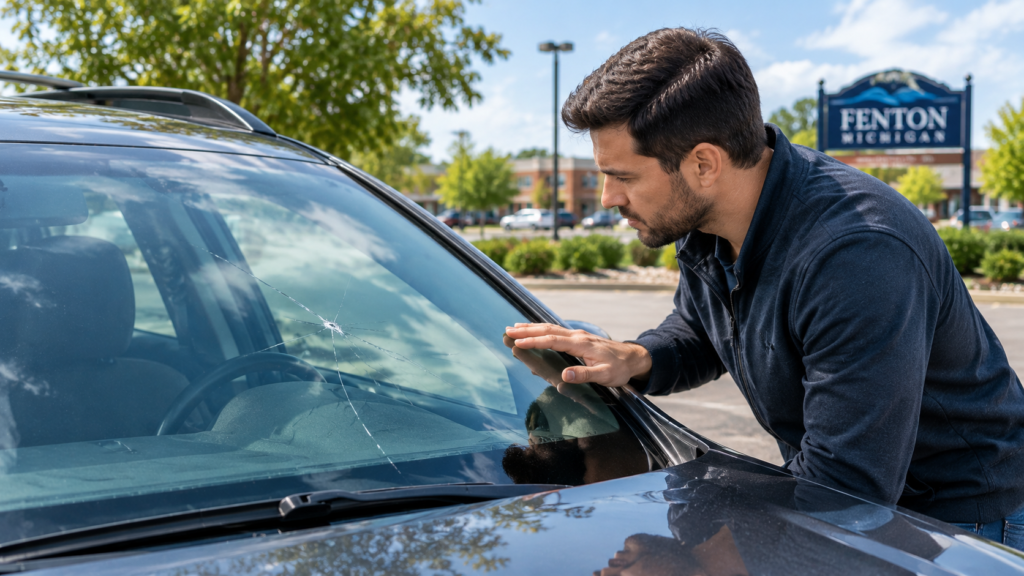
A windshield inspection does not need to take long. Before driving, take a few seconds to look over the glass. Check for new chips, small cracks, edge damage, unusual wiper marks, reduced visibility, or signs of moisture around existing damage.
Also look at the wiper blades.
Make sure they are not torn, cracked, or covered with hardened debris.
If severe weather occurred overnight, inspect the windshield more carefully. Look for impact marks from branches or other objects. If you notice a change in an existing chip, do not assume it will remain stable.
A quick inspection can help you identify problems before another drive adds more vibration and stress.
How Fenton Drivers Can Protect Outdoor-Parked Vehicles
Drivers who park outside do not need complicated protective routines. A few basic habits make a meaningful difference. Keep the windshield clean.
Replace worn wipers. Use proper ice-removal tools. Avoid pouring hot water onto frozen glass. Have small chips inspected before they spread.
Choose safer parking locations when severe weather is expected. Check the windshield after storms, heavy snow, major temperature changes, or nearby construction activity.
If the vehicle sits unused for long periods, inspect the glass before the next drive. The goal is consistency.
Small maintenance habits performed regularly can help extend windshield life and make damage easier to manage when it occurs.
How Outdoor Conditions Affect Modern Vehicle Safety Systems
Windshield condition matters even more on newer vehicles. Many modern vehicles use cameras and sensors mounted behind the glass. These systems may support lane departure warning, lane keeping assistance, forward collision warning, automatic emergency braking, rain sensing, and other Advanced Driver Assistance Systems.
If outdoor-related damage eventually requires windshield replacement, the repair may involve more than new glass.
Some vehicles require ADAS calibration after replacement. Calibration helps make sure windshield-mounted cameras remain properly aligned and can interpret the road accurately.
The replacement windshield also needs to match the vehicle’s technology. That means professional service is especially important on newer vehicles.
The windshield may be part of the vehicle’s electronic safety system as well as its physical structure.
Common Mistakes Drivers Make After Outdoor Parking
One common mistake is assuming the windshield is fine simply because there is no large visible crack. Small chips can be easy to miss. Another mistake is ignoring a chip because the vehicle is not currently being driven.
Damage can still spread while parked. Improper ice-removal methods are another major problem during winter. Drivers also sometimes wait until scratches or cracks begin seriously affecting visibility before taking action.
By then, repair options may be more limited. Finally, some drivers overlook wiper condition.
A damaged blade can repeatedly scratch the windshield long before the problem becomes obvious.
Regular inspection is the easiest way to avoid these mistakes.
Frequently Asked Questions
Can parking outside damage a windshield?
Outdoor parking does not usually damage healthy windshield glass by itself.
The bigger concern is repeated exposure to temperature changes, moisture, debris, sunlight, ice, and other environmental conditions.
If the windshield already has a chip or crack, these factors can make the damage worse.
Outdoor parking therefore increases the importance of regular inspection rather than automatically creating damage.
Can cold weather crack a windshield?
Cold weather can contribute to existing windshield damage spreading.
Glass contracts when temperatures fall.
If a chip or crack is already present, stress may concentrate around the weakened area.
Moisture inside the damage can also freeze and expand.
A healthy windshield can normally handle ordinary cold weather, but damaged glass is more vulnerable.
Does sunlight damage windshield glass?
Modern windshield glass is designed to tolerate normal sunlight and heat.
However, direct summer sun can create high surface temperatures and repeated expansion and contraction.
Existing cracks or chips may become worse under those conditions.
Long-term heat exposure can also affect seals, adhesive, and surrounding trim.
Should I check my windshield after storms?
Yes.
Strong winds and storms can move branches, debris, and other objects. Some impacts are immediately obvious, while others create small chips that are easy to miss.
A quick inspection after severe weather can help you find damage before normal driving or temperature changes cause it to spread.
Can ice removal damage a windshield?
Yes, if improper methods are used.
Pouring hot water onto frozen glass can create sudden thermal stress. Sharp tools and aggressive scraping can also damage the surface or worsen an existing chip.
Proper automotive scrapers and gradual defrosting are safer choices.
How often should outdoor-parked vehicles be inspected?
There is no strict schedule, but frequent quick checks are useful.
Inspect the windshield after severe weather, major seasonal temperature changes, construction activity nearby, or long periods of outdoor parking. You can also check it whenever you wash the vehicle.
Regular inspection makes it easier to catch small problems early.
Do modern vehicles need special windshield replacement service?
Many do.
Newer vehicles may have cameras, rain sensors, heating systems, heads-up displays, or other technology connected to the windshield. If replacement is necessary, the correct glass is important.
Some vehicles also require ADAS calibration afterward.
A professional provider should identify these requirements before beginning the work.
Final Thoughts:
Parking outdoors is a normal part of life for many Fenton drivers, and it does not mean windshield damage is unavoidable.
Modern windshields are built to handle changing weather, but existing chips or cracks can become worse with temperature changes, moisture, debris, and daily exposure.
The best protection is simple awareness. Keep the windshield clean, maintain good wipers, use proper ice-removal methods, inspect the glass after storms, and address small damage before it spreads.
For newer vehicles, windshield care also involves technology. Cameras, sensors, and ADAS features may depend on the windshield, making proper replacement, compatible glass, and calibration essential.
Outdoor parking may be unavoidable, but windshield problems can often be prevented. A few simple checks and timely repairs can help Fenton drivers maintain visibility, safety, and lower repair costs throughout the year.