
For Fenton, Michigan drivers, road construction is a normal part of maintaining and improving local transportation routes.
Resurfacing, bridge repairs, utility work, lane improvements, and other infrastructure projects are necessary for safer and more reliable roads.
But during active construction, temporary driving conditions can create additional risks for your vehicle—especially your windshield. Loose gravel, broken pavement, fresh road materials, construction trucks, uneven surfaces, and changing traffic patterns can all increase the chance of windshield chips and cracks.
The damage is not always obvious immediately.
You may hear a small impact while driving through a work zone, continue your commute, and only notice the chip later when the vehicle is parked.
By that point, the damaged area may already have been exposed to vibration, temperature changes, moisture, and daily driving stress.
Understanding what to look for after construction-zone driving—and knowing when to have the glass inspected—can help Fenton residents avoid unnecessary windshield replacement costs.
Why Road Construction Increases Windshield Damage Risks
Construction zones create a driving environment very different from normal roads — loose stone, fresh pavement, and heavy trucks all raise the odds of a windshield impact.
Curious about the specific causes behind construction-zone windshield damage? See the full breakdown in Why Fenton Construction Zones Can Increase Windshield Damage.
That is why construction-related windshield damage should be taken seriously even when the chip appears minor.
Common Types of Windshield Damage After Construction Driving
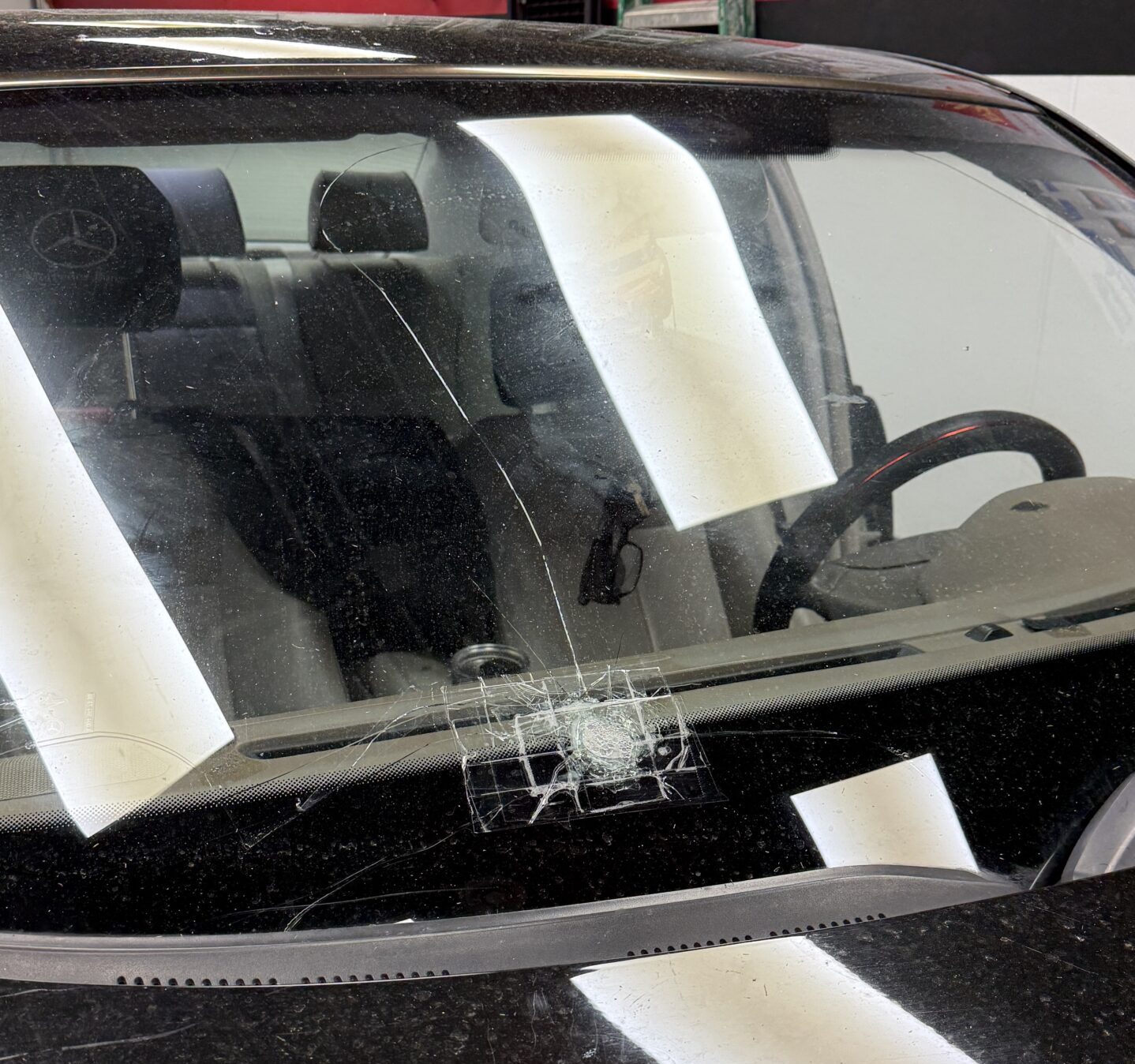
Construction debris can create several different types of windshield damage. The most common is a simple chip, where a small piece of road material strikes the surface and leaves a visible impact point.
Another type is a star crack, where small lines spread outward from the center of the impact.
A bullseye usually appears as a circular or rounded impact pattern. Some windshields develop combination damage, where more than one type of crack or chip pattern appears around the same point. The appearance of the damage matters because not every chip or crack can be repaired the same way.
Size, depth, location, and whether the damage has already begun spreading all influence the repair decision.
Damage near the windshield edge may require additional attention because the perimeter of the glass is important to overall windshield strength.
The safest approach is not to guess based on appearance alone.
A professional technician can evaluate the damage and determine whether repair is appropriate or whether replacement is necessary.
Cause 1: Loose Gravel From Road Work
Loose gravel is one of the most common sources of windshield damage around construction areas.
During resurfacing, road repair, shoulder work, and temporary lane setup, small stones can remain on or near the driving surface. Vehicles passing through these areas can lift gravel with their tires and send it toward traffic behind them.
The driver may have little or no warning. This is especially common when following dump trucks, construction vehicles, commercial trucks, or traffic traveling through recently repaired pavement.
A small rock can strike the windshield quickly enough that you hear the impact but never see the object.
Maintaining extra following distance is one of the simplest ways to reduce exposure. More space gives loose debris more time to fall back toward the road and gives you additional reaction time if material is visibly coming from a vehicle ahead.
You cannot eliminate every stone impact, but distance makes a difference.
Cause 2: Construction Trucks Carrying Materials
Road construction depends heavily on trucks carrying gravel, sand, asphalt materials, equipment, and other supplies. Even when these vehicles are properly loaded and operated, they can still create additional road-debris exposure.
Large tires may pick up stones and loose material from construction entrances or gravel surfaces.
Debris can also collect around wheel areas and become dislodged once the truck returns to normal traffic. Following closely behind these vehicles increases the chance that material will strike your windshield.
The safest habit is to give construction trucks more room than you would give an ordinary passenger vehicle.
This is good for windshield protection and overall driving safety.
Large work vehicles may brake differently, turn more slowly, and have larger blind spots. Extra distance gives everyone more room.
Cause 3: Fresh Pavement and Surface Materials
New pavement is a long-term improvement, but active resurfacing projects can create short-term windshield hazards.
Before road materials fully settle, small loose particles may remain on the surface. Vehicles traveling over those areas can move stones, asphalt fragments, or other material into nearby traffic. Drivers may notice windshield damage after traveling through resurfacing projects, lane repairs, pavement patch areas, or shoulder work.
This does not mean new pavement itself is unsafe.
The greater risk comes during the temporary period when construction is active and road surfaces are changing. Reducing speed where required and avoiding close following can help protect the windshield during these conditions.
Once the project is complete, the road may be much smoother.
During the work, however, drivers should be more alert.
Cause 4: Changing Road Conditions
Construction zones require drivers to adapt quickly.
Temporary traffic patterns may include narrow lanes, reduced speed limits, lane shifts, uneven surfaces, sudden merges, and short sections of rough pavement.
These changes affect more than traffic flow. Vehicle movement can disturb loose road material and create additional vibration.
Sudden braking and acceleration may also cause vehicles to throw debris from the surface. The best approach is calm, controlled driving. Slow down according to posted limits and current conditions.
Avoid aggressive lane changes. Leave enough distance so you do not need to brake suddenly.
Smooth driving reduces vehicle stress and gives you more time to respond to changing road conditions.
If the windshield already has a chip, reducing unnecessary vibration is especially important.
Cause 5: Highway Construction Near Fenton
Many Fenton residents regularly use major routes such as US-23.
Highway construction can create additional windshield risk because traffic moves at higher speeds. At highway speed, a very small piece of gravel can strike the windshield with significant force.
Work zones may also involve truck traffic, resurfacing, lane restrictions, shoulder work, temporary pavement, and loose material around construction areas. Recent resurfacing and pavement-improvement work in and around major Fenton-area routes are good examples of situations where drivers should expect changing road conditions.
The combination of highway speed and debris exposure makes windshield inspection particularly important after passing through active work zones.
If you hear a noticeable impact, check the glass once you can safely stop.
A small chip discovered early may be much easier to address than a crack that spreads after several more highway trips.
What Fenton Drivers Should Do After a Construction-Related Impact
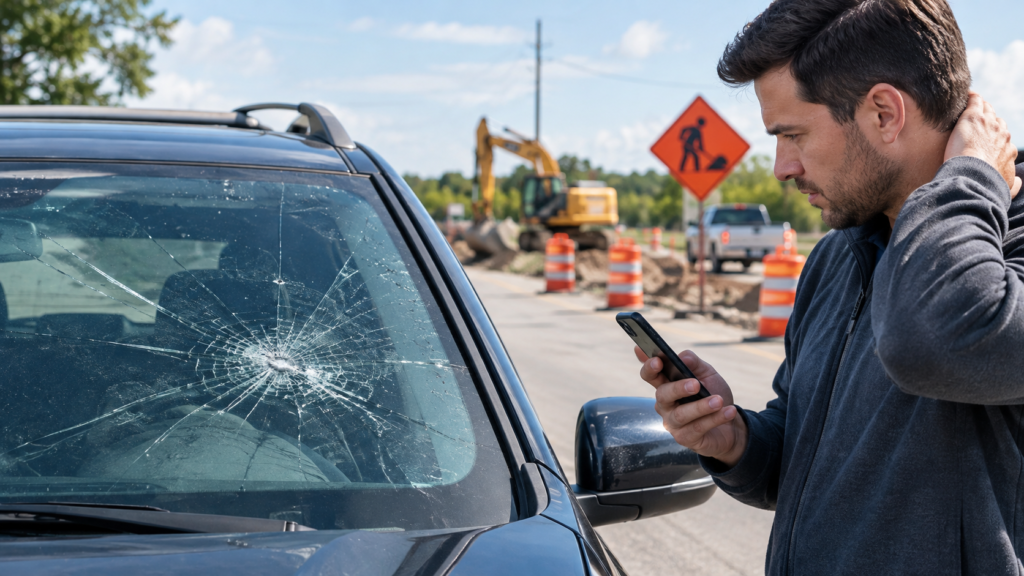
If you hear something hit the windshield while driving through a construction area, do not try to inspect the glass while moving.
Wait until you can stop safely. Then look closely at the windshield. Check for small chips, impact points, star-shaped lines, cracks spreading from the impact, or damage near the edges. If you already had a chip, see whether it has changed.
Do not assume a small mark is harmless simply because it does not affect visibility.
The appearance of the damage does not always tell you how stable it will remain. A professional auto glass technician can determine whether repair is possible.
The sooner the damage is evaluated, the more likely you are to have multiple repair options.
Why Early Windshield Repair Matters
One of the most common reasons a small chip becomes expensive is delay. Drivers often wait because the damage looks minor. The windshield still provides a clear view. The vehicle drives normally.
Nothing appears urgent.
But daily driving continues placing stress on the damaged area.
Michigan temperature changes cause glass to expand and contract. Potholes and rough pavement create vibration. Cold weather can allow moisture inside a chip to freeze and expand. Another small impact may add more stress. Eventually, the damage may begin to spread.
A chip that could have been repaired may turn into a crack that requires complete windshield replacement.
That is why early inspection is usually the better financial decision.
When Windshield Replacement May Be Necessary
Not every construction-related chip can be repaired. Replacement may be necessary when the crack becomes too large, the damage reaches or affects the windshield edge, the driver’s viewing area is significantly compromised, or the structural condition of the glass makes repair inappropriate. The exact decision depends on the damage.
A professional technician should evaluate the windshield rather than recommending replacement simply because damage exists. The goal is not always saving the original glass. If you are not sure which applies to your windshield, our team can inspect it and walk you through your options for auto glass repair in Fenton.
The goal is restoring safe visibility and proper windshield performance.
When replacement is required, correct installation becomes important. The old glass must be removed properly, the bonding area prepared, the correct replacement windshield installed, and the adhesive given enough time to cure.
Newer vehicles may involve additional procedures as well.
How Fenton Residents Can Reduce Construction-Related Windshield Risks
Drivers cannot avoid every construction zone. Fortunately, reducing risk does not require complicated driving habits. Increase following distance, especially behind dump trucks and construction vehicles. Slow down in work zones.
Avoid aggressive driving over rough temporary surfaces. Watch for visible gravel or loose material. Inspect the windshield after hearing an impact. Keep the glass clean so small chips are easier to notice.
Most importantly, have damage evaluated before it begins spreading.
Small habits like these will not prevent every windshield impact, but they can reduce unnecessary exposure and help you catch problems earlier.
Where you park matters too, because the auto glass problems that can appear after parking outdoors in Fenton often start with a chip you already have.
Mobile Auto Glass Repair After Construction Damage
Mobile auto glass service can be useful for drivers who discover windshield damage after a construction-zone trip. Instead of driving to a shop, a technician may be able to come to your home, workplace, or another appropriate location.
This can be helpful for commuters, parents, business owners, and anyone with a busy schedule.
It also means you may not need to continue driving with damaged glass. However, mobile service is not automatically appropriate for every situation. The location needs to provide suitable working conditions.
Weather, temperature, cleanliness, available space, adhesive requirements, and vehicle technology can all influence whether mobile repair or replacement makes sense.
A professional provider should determine the best approach based on your vehicle and the type of damage.
Convenience is valuable, but the repair still needs to be completed under proper conditions.
Modern Vehicles and Windshield Technology
Modern windshields often support much more than visibility. Many newer vehicles use cameras and sensors mounted behind or around the glass. These systems may support lane departure warning, lane keeping assistance, forward collision warning, automatic emergency braking, rain sensing, and other Advanced Driver Assistance Systems.
If construction-related damage requires windshield replacement, some vehicles may also require ADAS calibration. Calibration helps make sure the windshield-mounted camera is positioned correctly and can interpret the road as intended.
This means a modern windshield replacement may involve three important parts:
- The correct glass.
- Proper installation.
- Any required calibration.
A windshield that physically fits the vehicle may still be the wrong choice if it does not support the technology installed on that model. That is why experience with newer vehicle systems matters when choosing an auto glass provider.
Common Mistakes Drivers Make After Construction Damage
One common mistake is waiting because the chip looks small.
Small damage can still spread. Another mistake is assuming construction debris cannot cause serious windshield problems because the material is only gravel or small stone. At driving speed, even a small object can create significant impact force.
Drivers also sometimes continue making long highway trips without checking the windshield after hearing an impact.
That gives the damage more time to spread before it is noticed. Another mistake is choosing a repair company based only on the lowest price. Price matters, but so do the type of glass, repair quality, installation procedures, warranty support, and ADAS capability.
The cheapest service is not a good value if important steps are missing.
Frequently Asked Questions
Can road construction cause windshield damage?
Yes. Construction zones can increase windshield damage risk because loose gravel, pavement material, heavy trucks, temporary surfaces, and road debris are often present.
Vehicle tires can throw small objects into the air.
At sufficient speed, even a small stone can create a chip or crack.
Should I repair a windshield chip after construction driving?
Small windshield damage should be inspected as soon as practical.
Depending on its size, type, depth, and location, repair may be possible.
Waiting gives road vibration, temperature changes, moisture, and continued driving more time to make the damage worse.
Early attention generally provides more options.
Can a small chip become a large crack?
Yes. A chip creates a weak point in the glass.
Temperature changes, potholes, rough roads, vibration, and weather exposure can all cause the damage to spread.
The chip may stay unchanged for days or weeks before suddenly becoming larger.
That unpredictability is why inspection is important.
Are construction trucks a major windshield risk?
They can be. Large construction vehicles may travel over gravel, dirt, shoulders, and active work areas.
Their tires can throw stones and road material toward nearby vehicles.
Giving trucks extra following distance reduces exposure and improves overall driving safety.
When does a windshield chip require replacement?
Replacement may be necessary when the damage becomes too large, reaches critical edge areas, interferes significantly with visibility, or weakens the windshield enough that repair is no longer appropriate.
A professional technician should evaluate the glass and recommend the safest solution.
Can mobile auto glass repair be done after construction damage?
Often, yes. Mobile repair may be possible if the damage is suitable and the service location provides appropriate working conditions.
Weather, temperature, vehicle technology, and the type of repair can all affect whether mobile service is recommended.
The technician should determine the best option.
Do newer vehicles need special procedures after windshield replacement?
Many do. Vehicles with windshield-mounted cameras may require ADAS calibration after replacement.
Other vehicles may also have rain sensors, heating elements, heads-up displays, or other technology connected to the windshield.
The correct replacement should support all required vehicle features.
Final Thoughts:
Road construction is important for improving Fenton’s roads, but active work zones can create temporary windshield risks. Loose gravel, construction trucks, fresh pavement materials, rough surfaces, and changing traffic patterns can all increase the chance of damage.
Most construction-related windshield problems start small. A single stone impact may create a minor chip, but Michigan weather, road vibration, moisture, and daily driving can cause it to spread.
That is why early attention matters. Inspect the windshield after an impact, monitor existing chips, and have damage evaluated before it becomes a larger problem. Early repair may help avoid a full replacement.
If replacement is required, the correct glass, proper installation, and any necessary ADAS calibration are essential—especially for newer vehicles where the windshield is part of the safety system.
Drivers cannot prevent every road hazard, but careful driving, proper following distance, and quick action after damage can help protect visibility, reduce repair costs, and keep vehicles safer on Michigan roads.