When it comes to auto safety, your windshield is more than just a piece of glass—it’s a critical component that protects you, your passengers, and even your vehicle’s advanced systems like ADAS (Advanced Driver Assistance Systems).
Over the decades, windshield technology has evolved drastically. Back in the 90s, windshields were mostly simple laminated glass. Today, they’re engineered with precision materials, adhesives, and coatings to handle everything from road debris to extreme weather.
I’ve been replacing and repairing windshields for over 30 years, and I’ve seen firsthand how different materials affect durability, clarity, and safety.
From classic cars to modern electric vehicles, each windshield has its own story. In this article, I’ll break down the top 10 materials used in modern windshields, why they matter, and what you should know when replacing or repairing yours.
Why Modern Windshields Are Different
Windshields today aren’t just sheets of glass. Modern vehicles rely on high-tech materials to provide strength, optical clarity, and safety features.
Laminated glass, acoustic layers, UV coatings, and even embedded sensors have become standard in many vehicles. These materials not only protect you during collisions but also contribute to your car’s fuel efficiency, noise reduction, and overall comfort.
If you’ve ever driven a Tesla, Subaru, or Cadillac recently, you’ve noticed how quiet and smooth the cabin feels.
That’s not just engineering—it’s the result of advanced windshield materials. In the following sections, we’ll explore exactly what goes into these modern windshields and why each material plays a critical role.
Understanding Laminated Glass
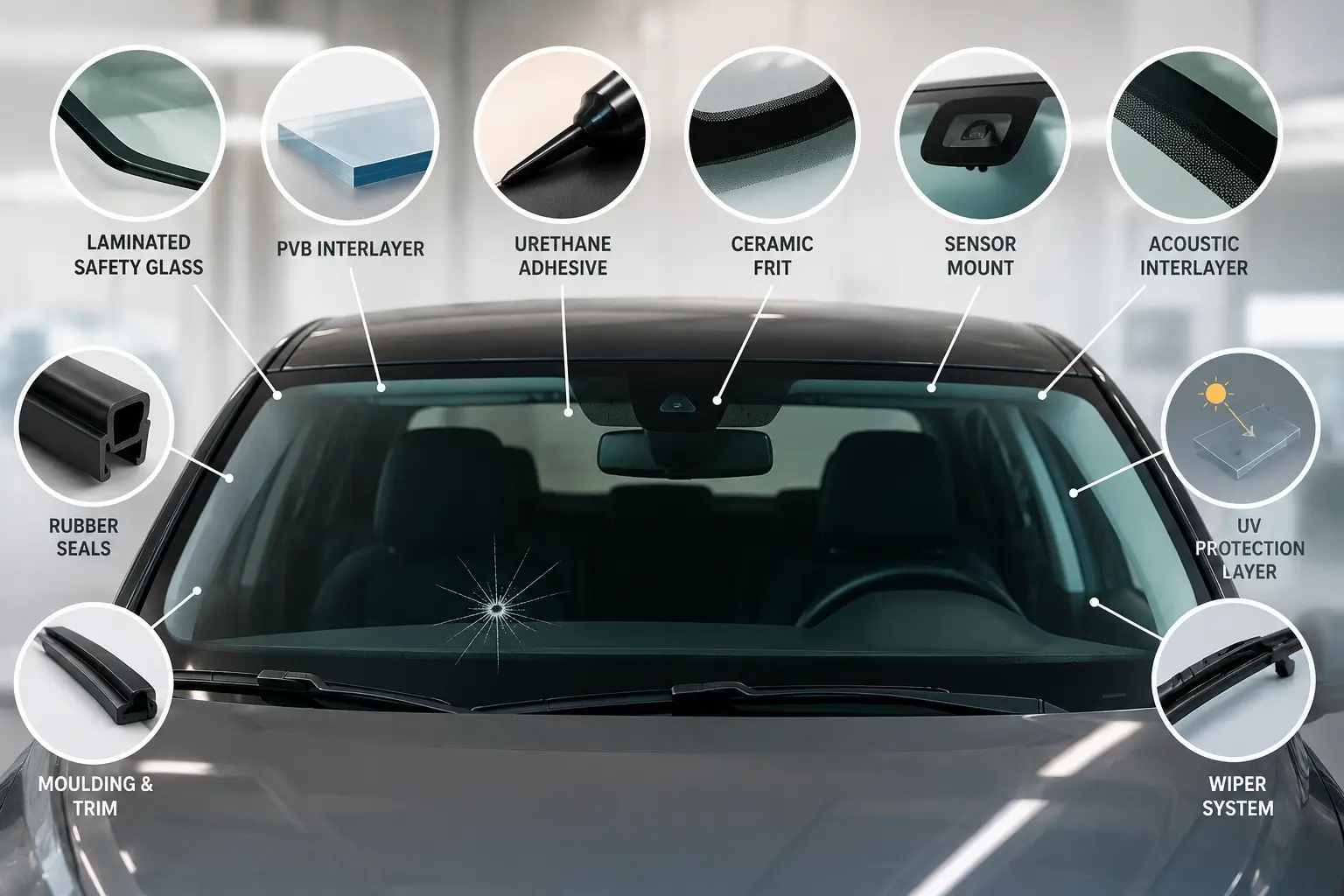
Laminated glass is the backbone of almost every windshield on the road today. It’s made by bonding two or more layers of glass with an interlayer of polyvinyl butyral (PVB).
This design prevents the glass from shattering into sharp pieces on impact, reducing the risk of injury. Laminated glass also provides excellent optical clarity, which is essential for both safety and comfort.
The layers are carefully engineered to balance flexibility and strength. In colder climates, laminated glass helps reduce the risk of cracks caused by sudden temperature changes. It also supports ADAS systems by providing a stable mounting surface for cameras and sensors.
Top 10 Materials Used in Modern Windshields
Before diving into each material, it’s important to understand that modern windshields are not just glass—they are a combination of advanced materials, each serving a specific purpose.
From laminated layers to advanced coatings, each material is carefully chosen to provide safety, durability, and comfort. Below, I’ll walk you through the top 10 materials used in today’s windshields, including their benefits, challenges, and applications.
1. Laminated Glass
Laminated glass is the core foundation of almost every modern windshield on the road today. It is not just a single sheet of glass but a carefully engineered safety system designed to protect passengers during impact while maintaining clarity and durability.
Its ability to stay intact even after cracking makes it one of the most important innovations in automotive safety. Without laminated glass, modern windshield safety standards would not exist in their current form.
Composition and Structure
Laminated glass is made by bonding two layers of glass with a strong, flexible interlayer, usually polyvinyl butyral (PVB). This structure is created under heat and pressure, allowing the layers to fuse into a single, unified sheet.
The purpose of this design is not just strength, but controlled flexibility. When an impact occurs, the energy spreads across the surface instead of breaking through instantly.
Safety Advantages
The biggest advantage of laminated glass is that it holds together even when cracked. Instead of breaking into sharp shards, the interlayer keeps the glass bonded, reducing injury risk. This is especially important during accidents, where loose glass fragments could cause serious harm to passengers. It also helps maintain roof support during rollovers.
Applications
Today, laminated glass is used in almost all front windshields, especially in vehicles equipped with ADAS systems. Its optical clarity and strength make it ideal for supporting cameras, sensors, and modern safety technologies without distortion.
2. Tempered Glass
Tempered glass is a specially treated form of glass designed to handle high stress and break safely when failure occurs. While it is not commonly used for front windshields, it plays a critical role in side and rear windows as well as certain specialty applications in vehicles.
Manufacturing Process
Tempered glass is created by heating normal glass to extremely high temperatures and then rapidly cooling it. This process creates internal tension within the glass, making it significantly stronger than untreated glass. The controlled stress is what gives it both durability and its unique breaking pattern.
Safety Benefits
When tempered glass breaks, it shatters into small, blunt pieces instead of sharp shards. This reduces the risk of deep cuts during accidents. Although it does not remain intact like laminated glass, its controlled breakage pattern is intentional and designed for occupant safety in side-impact scenarios.
Use Cases
Tempered glass is widely used in side windows, rear windows, and sunroofs. Some performance vehicles also use it in specialized areas where weight reduction or design flexibility is required.
3. Polyvinyl Butyral (PVB) Interlayers
PVB interlayers are one of the most important yet invisible components inside laminated glass. Although drivers never directly see this layer, it plays a crucial role in determining the windshield’s safety, durability, and performance. Without it, laminated glass would lose its structural integrity.
Impact Resistance
The PVB layer acts as an energy absorber during collisions. When the glass is hit, this layer helps distribute force evenly across the surface, preventing immediate shattering. This energy absorption is what makes laminated glass so effective in real-world accidents.
Noise Reduction
PVB also plays a key role in reducing noise inside the vehicle. It dampens vibrations coming from wind, traffic, and road surfaces. This contributes to a quieter cabin, especially noticeable at highway speeds or in urban traffic.
Durability
In addition to safety and comfort, PVB protects the glass from UV damage and temperature fluctuations. It helps maintain long-term adhesion between glass layers, ensuring that the windshield remains stable under different environmental conditions.
4. SentryGlas® (SGP)
SentryGlas® is an advanced interlayer material used in high-performance and luxury vehicles. It offers significantly greater stiffness and strength compared to traditional PVB, making it ideal for demanding safety applications.
Enhanced Safety
SGP provides superior impact resistance and holds glass together even under extreme force. Even when the glass cracks, the structure remains stable, reducing the risk of collapse or penetration during severe impacts.
Structural Benefits
This material also improves the overall rigidity of the windshield, contributing to better roof strength and vehicle stability. It is especially valuable in vehicles designed to meet higher safety standards or crash performance ratings.
Luxury Applications
Due to its higher cost, SGP is commonly found in premium vehicles such as Tesla, BMW, and Cadillac. It is often used in models where safety, performance, and structural integrity are top priorities.
5. Acoustic Laminates
Acoustic laminates are designed specifically to improve cabin comfort by reducing external noise. As vehicles become quieter—especially electric cars—controlling road and wind noise has become increasingly important.
Sound Dampening
This material works by absorbing sound vibrations before they enter the cabin. The interlayer is engineered to target specific noise frequencies, particularly those from tires, wind, and passing traffic.
Comfort Factor
By reducing noise levels, acoustic laminates make driving significantly more comfortable. Long journeys feel less tiring because the constant background noise is minimized, improving overall driving experience.
Integration with ADAS
Despite having extra layers, acoustic windshields maintain full optical clarity. This ensures ADAS cameras and sensors function correctly without interference or distortion.
6. UV-Blocking Coatings
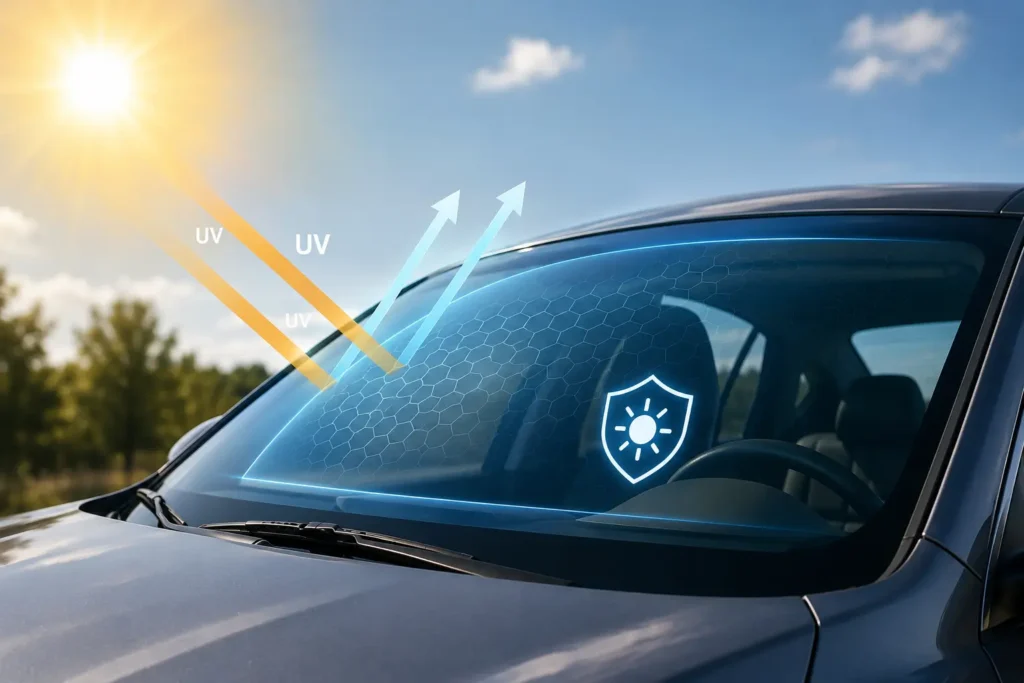
UV-blocking coatings are invisible protective layers that shield passengers and interior components from harmful ultraviolet radiation. They are essential for both health protection and vehicle preservation.
Health Benefits
These coatings reduce UV exposure inside the cabin, protecting drivers and passengers from long-term skin damage caused by sunlight. This is especially important for individuals who spend extended periods driving daily.
Interior Preservation
UV protection also prevents fading and cracking of interior materials such as dashboards, seats, and trim. Over time, this helps maintain the vehicle’s appearance and resale value.
Long-Term Durability
By blocking UV rays, these coatings also protect the windshield’s internal layers from degradation, extending the lifespan of the glass structure itself.
7. Hydrophobic Coatings
Hydrophobic coatings improve driving safety by repelling water from the windshield surface. This allows rainwater to bead up and slide off more easily, improving visibility during wet conditions.
Improved Visibility
These coatings reduce the need for constant wiper use by allowing water to naturally roll off the glass. This results in clearer visibility, especially at higher speeds where airflow assists water removal.
Maintenance Tips
Hydrophobic coatings gradually wear off over time and need reapplication every few months for optimal performance. Regular maintenance ensures consistent water-repellent behavior.
Compatibility
These coatings are fully compatible with modern laminated windshields and do not interfere with sensors or optical clarity when applied properly.
8. Anti-Reflective Coatings
Anti-reflective coatings are designed to minimize glare from sunlight, headlights, and reflective surfaces. They play an important role in improving visibility and reducing eye strain during driving.
Driving Comfort
By reducing glare, these coatings make driving safer and more comfortable, particularly during sunrise, sunset, and nighttime conditions.
Optical Clarity
They enhance overall visibility by reducing light distortion and improving contrast. This allows drivers to see road details more clearly.
Use in ADAS
For vehicles equipped with ADAS, reducing reflections is essential. These coatings ensure cameras receive accurate light input without interference from glare or reflections.
9. Embedded Sensors
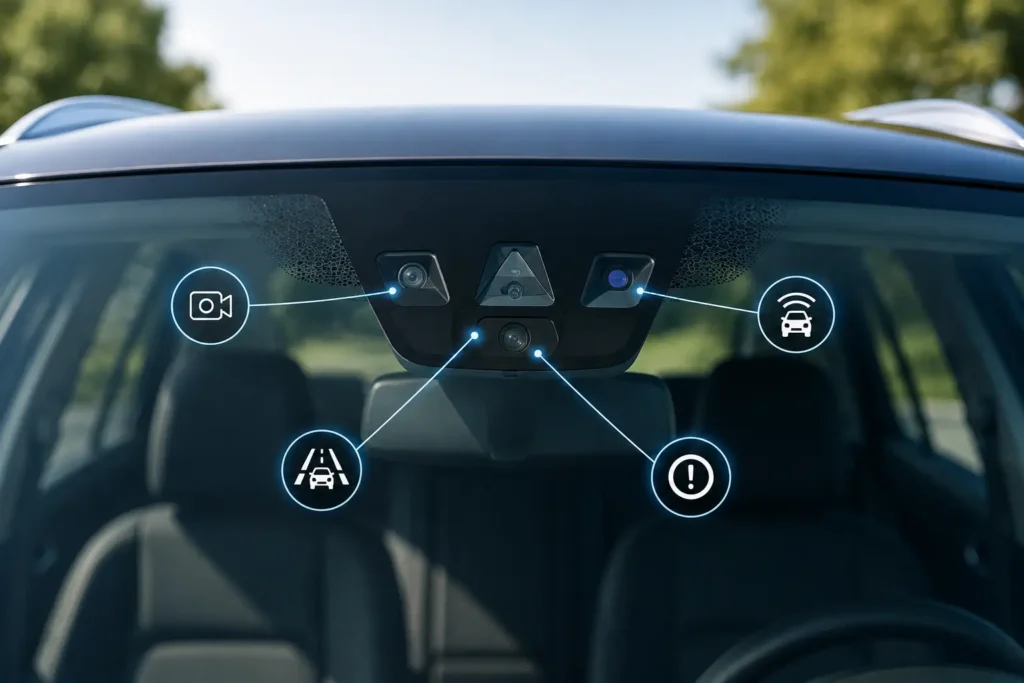
Embedded sensors transform windshields into intelligent components of modern vehicles. These systems support safety features such as lane assistance, automatic braking, and rain detection.
Types of Sensors
Modern windshields may include cameras for ADAS, rain sensors for automatic wipers, and heads-up display systems that project information directly onto the glass.
Installation Precision
Installing windshields with embedded sensors requires extreme accuracy. Even minor misalignment can affect system performance and compromise safety features.
Calibration Needs
After installation, many vehicles require ADAS recalibration to ensure sensors are aligned correctly. Without this step, safety systems may function incorrectly or inconsistently.
10. Heated Windshield Elements
Heated windshield elements are designed to improve visibility in cold weather by preventing frost and ice buildup. They provide convenience and enhance safety in winter driving conditions.
Heating Technology
These windshields use thin metallic filaments or conductive layers embedded within the glass. When activated, they generate gentle heat that melts frost and ice quickly.
Climate Advantages
In cold regions, this technology significantly reduces the time needed to prepare a vehicle for driving. It eliminates the need for scraping and improves early-morning safety.
Integration with Other Materials
Heated elements are carefully integrated into laminated glass without affecting strength or clarity. They work alongside coatings and interlayers to maintain durability and performance.
FAQs
1. How do I know if my windshield has an SGP interlayer?
Most premium vehicles like Tesla, BMW, and Cadillac list the materials in the owner’s manual. SGP interlayers are usually found in laminated windshields with enhanced structural integrity. If unsure, a certified auto glass technician can identify it.
The material’s strength often translates to a longer lifespan and better impact resistance. Vehicles with SGP also provide added safety in rollover accidents.
2. Can hydrophobic coatings damage my ADAS sensors?
No, if applied correctly by a professional. Hydrophobic coatings are designed to sit on the surface without interfering with camera or sensor functions.
However, improper DIY application over the sensor area can lead to false readings or glare, so it’s crucial to follow manufacturer instructions.
3. How often should UV-blocking coatings be replaced?
Typically, UV coatings last 5–10 years, depending on climate and sun exposure. If the interlayer or coating shows yellowing, cracking, or reduced effectiveness, consult a technician. These coatings protect both occupants and interior materials, so replacement is essential for long-term durability.
4. Do heated windshields increase repair costs?
Yes, because the heating elements are embedded within the glass. Any crack or replacement requires precise handling to prevent damage to these elements. In addition, professional installation is often mandatory to ensure proper function, especially in regions with harsh winters like Michigan.
5. Can aftermarket windshields affect safety?
Absolutely. Cheap or unverified aftermarket windshields may not use the correct materials or adhesives. This can compromise laminated strength, clarity, and sensor calibration. Always choose OEM or high-quality aftermarket replacements that meet safety standards.
Conclusion
Modern windshields are marvels of engineering, combining layers of glass, interlayers, coatings, and embedded sensors to keep you safe, comfortable, and connected.
Each material serves a purpose—from impact resistance to sound dampening, UV protection, and even integration with ADAS systems. Choosing the right windshield and understanding the materials it uses is not just about aesthetics or cost—it’s about your safety and long-term satisfaction.
At Save On Auto Glass, we’ve replaced thousands of windshields, from classic cars to modern EVs, ensuring every layer, coating, and sensor is installed with care. Next time you consider a replacement, don’t just think about price—think about materials, calibration, and quality.
Your windshield is your first line of defense. Protect it wisely, and you’ll drive safer and more comfortably for years to come.