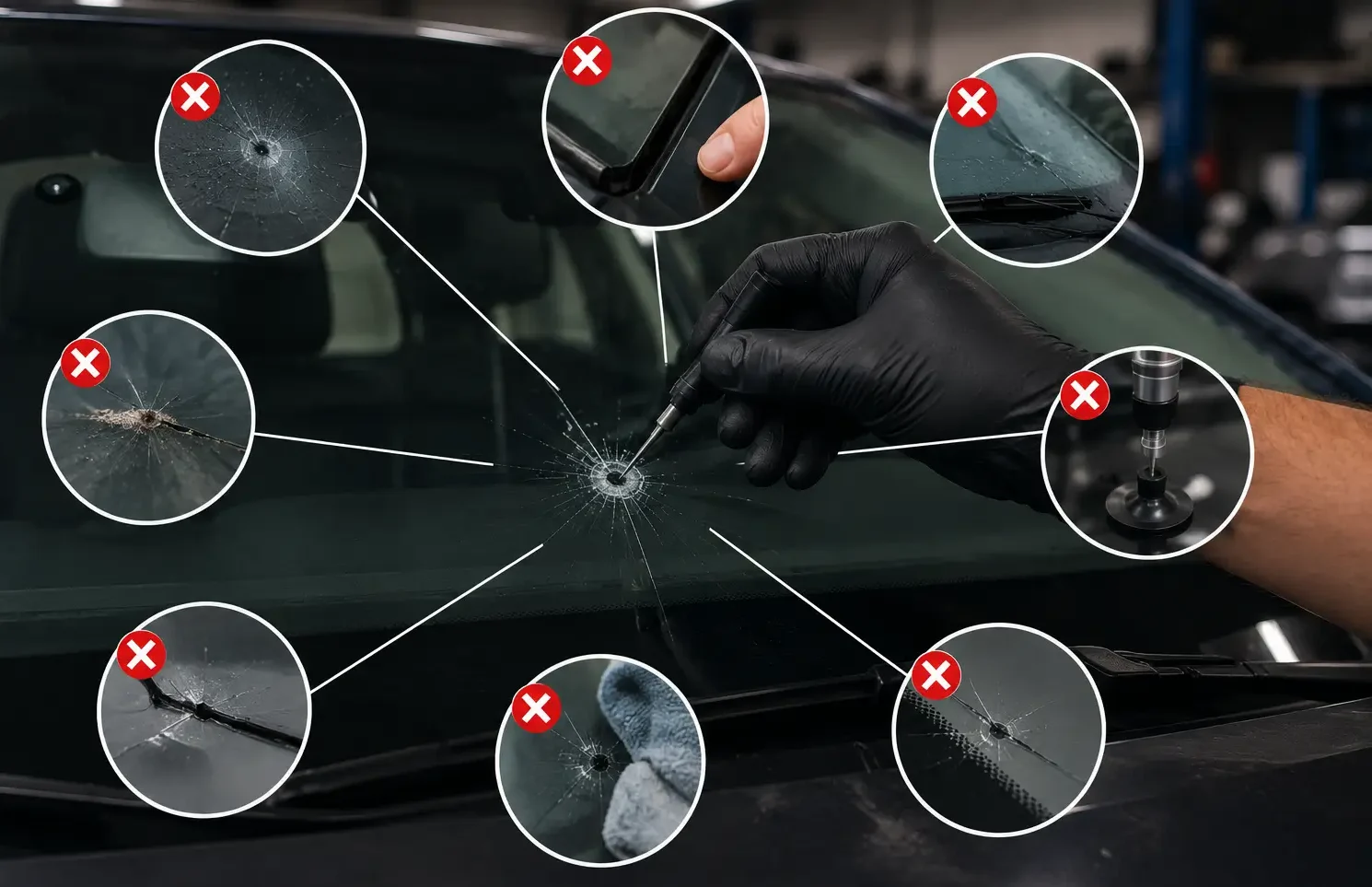
A cracked or chipped windshield is more than an inconvenience—it’s a safety hazard. Many drivers think a quick repair will fix the problem, but not all windshield repairs succeed. From improper techniques to environmental factors, there are many reasons why a repair can fail, leaving you back at the shop or, worse, at risk on the road.
I’ve been working with auto glass for over 30 years, repairing everything from classic cars to modern EVs, and I’ve seen it all.
Some repairs are simple and last a lifetime, while others fail because of overlooked details or inexperience. In this article, I’ll explain the top 10 reasons windshield repairs fail, what you can do to prevent it, and how to make sure your windshield stays safe and reliable.
How Windshield Repair Actually Works in Real Practice
Before understanding why repairs fail, it’s important to know how a proper windshield repair is actually performed. Most drivers assume it’s just “filling a crack,” but the process is far more technical. It involves cleaning the damaged area, creating a vacuum, injecting specialized resin, and curing it under UV light.
Each step must be done in sequence for the repair to bond properly with the laminated glass layers. If even one stage is done incorrectly, the entire repair becomes weak and unstable over time.
What Determines a Successful Windshield Repair
Not every windshield repair has the same outcome, even if the damage looks similar. Success depends on a combination of factors including crack type, depth of damage, environmental conditions, and technician skill.
A small chip in clean, dry conditions may heal perfectly, while the same chip contaminated with dirt or moisture may fail quickly. Vehicle type also plays a role, especially in modern cars with ADAS sensors that require precise glass clarity and stability after repair.
Types of Windshield Damage That Can and Cannot Be Repaired
One of the biggest reasons repairs fail starts even before the repair begins—choosing the wrong type of damage to repair. Some chips, like small bullseye or star cracks, are highly repairable if treated early.
However, long cracks, edge damage, or heavily spread fractures are often beyond repair limits. Attempting to fix non-repairable damage usually results in temporary fixes that eventually fail under stress. Understanding this difference is critical for avoiding repeated repairs and unnecessary costs.
Why Timing Plays a Critical Role in Repair Success
Time is one of the most important factors in windshield repair success. A chip that is repaired immediately has a much higher chance of lasting permanently compared to one left untreated for weeks or months.
Over time, dust, moisture, and temperature changes enter the crack, weakening the internal structure of the glass. Once contamination sets in, resin cannot fully bond with the damaged area, which significantly increases the risk of failure even if the repair looks visually perfect at first.
How Weather and Environment Affect Repair Outcomes
Environmental conditions have a major impact on whether a repair will succeed or fail. Extreme heat can cause resin to cure too quickly, while freezing temperatures prevent proper flow and bonding.
Humidity and moisture can also interfere with adhesion inside the crack. Even after repair, ongoing exposure to temperature fluctuations can stress the glass and weaken the repaired area.
This is why controlled indoor repairs generally produce more consistent and long-lasting results compared to outdoor fixes.
Why Technician Skill Is the Most Overlooked Factor
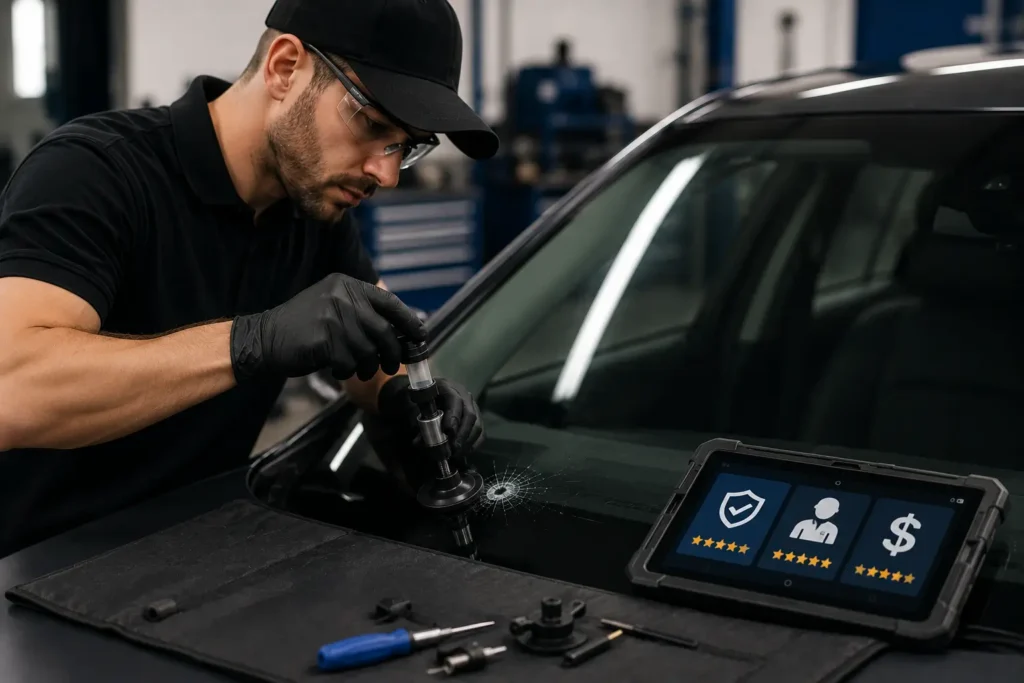
Many drivers underestimate how much technician experience affects windshield repair success. Even with high-quality resin and tools, an inexperienced technician may apply incorrect pressure, miss internal crack paths, or fail to properly vacuum air from the damage.
These small mistakes are not always visible immediately but often lead to repair failure weeks later. Skilled technicians understand crack behavior, glass tension, and curing timing, which makes a huge difference in long-term durability.
Top 10 Reasons Windshield Repairs Fail
Before we go into each reason in detail, it’s important to understand that repair success depends on three core factors: the nature of the damage, the quality of materials used, and the technician’s skill level. If even one of these is compromised, the repair becomes vulnerable to failure.
Now let’s break down the most common reasons repairs do not hold up over time.
1. Damage Too Large or Severe
Not all windshield damage can be safely repaired. Every windshield has a structural limit, and when cracks or chips exceed that limit, repair becomes temporary at best and ineffective at worst.
When damage is too large, the structural bonding inside laminated glass is already compromised. Even if resin is applied, it cannot fully restore the original strength of the glass. This means the windshield may still be vulnerable to spreading cracks, especially under vibration or temperature changes.
Another issue is visibility distortion. Large repairs often leave behind cloudy or uneven areas that can interfere with safe driving, especially at night or during heavy rain. In many cases, replacing the windshield is the only way to fully restore safety and clarity.
2. Incorrect Resin Application
Resin application is one of the most critical steps in windshield repair, and even small mistakes can lead to complete failure. The resin must flow evenly into the crack structure and bond with the inner layers of laminated glass.
If too much resin is used, it can overflow or create pressure inconsistencies. If too little is used, air pockets remain trapped inside the crack, weakening the repair from within. Temperature also plays a major role—if conditions are not ideal, the resin may not penetrate deeply enough.
A properly applied resin should restore both strength and clarity. When done incorrectly, however, the repair becomes fragile and prone to future cracking.
3. Dirty or Contaminated Windshield Surface
Cleanliness is one of the most underestimated factors in windshield repair success. Even microscopic dust particles, moisture, or oil residues can interfere with resin bonding.
When contaminants are trapped inside a repair, they create weak zones where the resin cannot properly adhere to the glass surface. Over time, these weak points expand and lead to visible bubbles, discoloration, or crack reactivation.
In professional settings, technicians often clean the damaged area multiple times using specialized tools and air systems to ensure complete contamination removal. Skipping this step almost always leads to long-term repair failure.
4. Extreme Temperature Conditions
Temperature plays a major role in how resin behaves during and after repair. If the environment is too cold, the resin becomes thick and does not flow properly into fine cracks. If it is too hot, the resin may cure too quickly, trapping air bubbles inside.
Both situations result in weak bonding and reduced durability. Extreme temperatures can also affect the glass itself, causing expansion or contraction during repair, which places stress on already damaged areas.
For this reason, many professional repairs are done in controlled environments where temperature and humidity are carefully managed to ensure consistent results.
5. Incorrect Repair Technique
Even with good materials, a windshield repair can fail if the technique is incorrect. The angle of resin injection, vacuum pressure, and timing all play critical roles in determining the final strength of the repair.
Small technical mistakes can leave behind invisible weaknesses that later turn into spreading cracks. This is especially common when inexperienced technicians attempt to handle complex crack patterns.
Professional repair is a skill developed over years of experience, where technicians learn how different types of damage respond under pressure. Without this knowledge, even a visually perfect repair may not last.
6. Using Low-Quality Resins or Materials
The quality of resin used directly determines how long a repair will last. Low-grade materials may look fine initially but often degrade over time, especially when exposed to heat, cold, and vibration.
Cheap resins tend to shrink, discolor, or lose adhesion strength. This not only affects visibility but also reduces structural support inside the crack. Over time, the damage may reappear or spread beyond the repaired area.
High-quality, industry-approved resins are designed to maintain clarity and strength under extreme conditions, making them essential for long-lasting repairs.
7. Multiple or Intersecting Cracks
Windshields with multiple or intersecting cracks present one of the most difficult repair scenarios. Each crack creates a different stress path within the glass, making it hard for resin to distribute evenly.
When cracks overlap, it becomes difficult to fully seal all weak points. Even if one section is repaired successfully, another part may continue to expand under pressure.
In such cases, the structural integrity of the windshield is already significantly weakened, and replacement often becomes the safer option.
8. Delayed Repairs
Time is one of the biggest enemies of windshield damage. A small chip may seem harmless at first, but once exposed to weather, vibration, and dirt, it begins to spread internally.
Moisture can enter the crack and expand during temperature changes, while road vibrations gradually widen the damage. What could have been a simple repair can quickly turn into a full replacement if ignored.
Early repair not only improves success rates but also reduces cost significantly.
9. Poor Curing Time or UV Exposure
Curing is the final step where resin hardens and bonds permanently with the glass. If this step is rushed or performed incorrectly, the entire repair is compromised.
Insufficient UV exposure leaves the resin partially soft, which reduces its ability to withstand pressure. Over time, this leads to clouding, cracking, or separation from the glass layers.
Proper curing requires both correct UV intensity and adequate time. Professionals never skip or shorten this step, as it directly determines repair durability.
10. Improper Technician Training
Even with the best materials and conditions, an untrained technician can still cause repair failure. Experience plays a major role in identifying damage patterns, selecting the right method, and executing the repair correctly.
Common mistakes include poor resin distribution, incorrect pressure control, and failure to properly inspect the crack before starting. These errors often lead to incomplete repairs that fail under stress.
This is why certification and hands-on experience are critical when choosing a windshield repair service.
FAQs
1. Can all windshield chips be repaired successfully?
Not all windshield chips are suitable for repair because the success depends heavily on size, depth, and location of the damage. Small chips that are not near the edges of the windshield are usually repairable with high success rates.
However, once a crack becomes too long, spreads across multiple directions, or reaches the edge, the structural integrity of the glass is already compromised. In such cases, repair may only be temporary and cannot restore full strength.
Modern vehicles with ADAS systems also require extra caution, since even minor distortion can affect camera accuracy. That is why professional assessment is always recommended before deciding between repair and replacement.
2. Does weather affect repair success?
Yes, weather has a significant impact on windshield repair quality because resin behavior is highly sensitive to temperature and humidity. In extremely cold conditions, the resin becomes thick and fails to penetrate deeply into cracks, leading to weak bonding.
In very hot weather, the resin may cure too quickly, trapping air bubbles and reducing clarity. Moisture from rain or humidity can also interfere with adhesion, causing long-term separation.
This is why many professionals prefer controlled indoor environments for repairs. When outdoor conditions are not ideal, delaying the repair or using temperature-controlled equipment ensures a much more durable and reliable result.
3. Are DIY windshield repair kits reliable?
DIY windshield repair kits may seem convenient, but they rarely match the quality or durability of professional repairs. The main issue is the lack of precision tools and controlled pressure systems needed for proper resin injection.
Without these, air bubbles often remain trapped inside the crack, weakening the structure. Additionally, most DIY kits use lower-grade resin that may discolor or shrink over time.
While they can provide a temporary cosmetic fix for very small chips, they do not restore structural integrity. For safety-critical areas like windshields, professional repair is always the more reliable and long-lasting option.
4. How do I know if a repair is failing?
A failing windshield repair usually shows visible and gradual signs over time. One of the earliest indicators is cloudiness or discoloration around the repaired area, which suggests that the resin has not bonded properly.
Bubbles may also form inside the crack, reducing both clarity and strength. In more serious cases, the crack may begin to reappear or spread beyond the original repair zone. Drivers may also notice increased glare or distortion while driving. If any of these symptoms appear, it is important to have the windshield inspected immediately to prevent further damage or potential safety risks.
5. Can failed repairs be redone?
In some cases, a failed windshield repair can be redone, but this depends entirely on the condition of the glass after the initial repair.
If the crack has not significantly spread and the previous resin can be safely removed, technicians may attempt a second repair with improved techniques and materials.
However, if the damage has expanded or weakened the laminated structure too much, a repair may no longer be effective.
In such situations, full windshield replacement becomes the only safe and reliable option. A professional inspection is essential to determine the best course of action.
Conclusion
Windshield repairs fail for many reasons, but most of them are preventable with proper technique, quality materials, and timely action. Whether it’s incorrect resin application, environmental stress, or delayed repair, each factor plays a role in long-term success.
With decades of experience in auto glass repair, I’ve seen how small mistakes can turn into major safety risks. The key takeaway is simple: don’t delay repairs, don’t ignore quality, and always trust experienced professionals.
A properly repaired windshield restores not just clarity, but also safety and structural strength—something every driver depends on every day.