You’ve just noticed a chip on your windshield. Maybe a small rock kicked up on the highway, or a careless branch brushing past your car in a parking lot.
That sinking feeling hits: “Do I need a replacement? Can I wait? Or can I fix it myself?” For years, drivers had to tow their cars to a shop, sit in a waiting room, and hope the technician had time to squeeze them in. But today, there’s a better way: mobile auto glass repair.
I’ve been in this business since the late 80s. Back then, mobile repair vans were noisy beasts, powered by generators that could wake the neighbors.
We’d haul in every tool imaginable and pray the wind didn’t ruin the curing resin. Over 35 years, I’ve repaired thousands of windshields, trained young techs, and worked with dealerships, insurance companies, and fleet owners. And one thing is clear: mobile repair is not just convenient—it’s often the safest and smartest choice.
In this article, I’m going to walk you through why mobile auto glass repair might be your best option, how it works, the pros and cons, and what you need to know to make the right choice. I’ll sprinkle in real-world stories, insider tips, and advice that only comes from decades of doing this work every day.
Why Windshield Repair Matters
Let’s start with a simple fact: your windshield is more than just glass. It’s a structural part of your car, helping support airbags and protecting you from debris. For vehicles with ADAS systems like lane departure warnings, forward collision alerts, and adaptive cruise control, the windshield holds cameras and sensors in perfect alignment.
Even a tiny chip can spread quickly. I once had a car come into the shop in Sterling Heights, Michigan, in 1999. The owner thought a small star-shaped chip was harmless. By the next morning, the crack had spider-webbed across half the windshield. That’s why timely repair matters—and why mobile service is such a lifesaver.
What Mobile Auto Glass Repair Actually Is
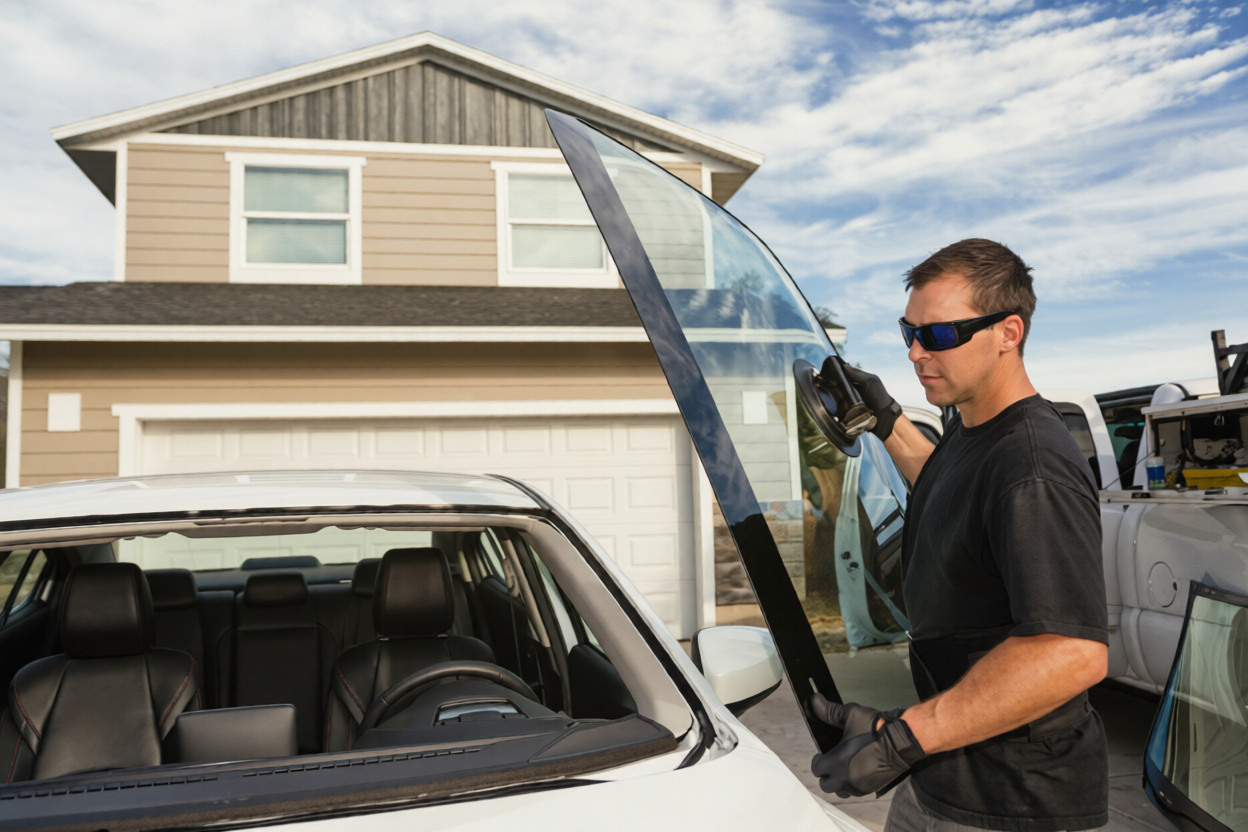
Mobile auto glass repair is exactly what it sounds like: a certified technician comes to your location, fully equipped, and performs repairs or replacements on-site.
Unlike DIY kits or inconvenient trips to a shop:
- You don’t have to disrupt your day – We work at your home, office, or even in a parking lot.
- You get professional tools and resins – AGSC-approved adhesives and OEM-grade glass ensure safety.
- ADAS calibration is handled on-site – For modern vehicles, we check sensor alignment before you drive away.
Back in the early 90s, we only had shop-bound tools. Mobile repair meant carrying a generator, clamps, hoses, and a lot of patience. Today, vans are compact, climate-controlled, and fully equipped. That makes mobile repair faster, cleaner, and safer.
Advantages of Mobile Auto Glass Repair
Let me share why I prefer mobile service—and why I recommend it to most customers.
1. Convenience
Think about your busy day. Dropping a car off at a shop can cost you hours. With mobile repair:
- Schedule a time that works for you
- Technician arrives on-site
- Repair usually takes under an hour for minor chips
I remember a fleet manager who once had 12 trucks with cracked windshields. Instead of losing half a day driving each vehicle to a shop, we repaired them all right in their parking lot. He was amazed at how much time we saved.
2. Reduced Risk of Damage
Transporting a car with a cracked windshield can be risky. Chips can spread due to temperature changes, bumps in the road, or even highway vibrations. Mobile repair eliminates that risk: the car stays where it is, and the crack is stabilized immediately.
3. Professional-Grade Repair
Some drivers turn to DIY kits, thinking it will save money. Here’s the reality:
- DIY kits often leave air bubbles or fail to fill all fissures
- Resin may not cure properly if temperature or sunlight is wrong
- ADAS sensors can be misaligned without proper calibration
At Save On Auto Glass, we use AGSC-approved resins, OEM-grade glass, and check ADAS calibration on every modern vehicle. Mobile service doesn’t mean cutting corners—it means doing it properly wherever you are.
4. Faster Insurance Handling
Most insurance companies are familiar with mobile services. We can often file claims, handle approvals, and get repairs done the same day. No waiting for shop appointments or juggling schedules.
5. Safety First
Your windshield is critical to vehicle safety. Mobile repair ensures:
- Proper resin injection for chip and crack stabilization
- Full curing with controlled conditions
- ADAS sensors aligned
- OEM or OEM-equivalent glass is used
I’ve seen countless situations where a poorly repaired windshield compromised safety. Mobile service reduces those chances by providing a controlled, professional environment wherever the car is parked.
Common Misconceptions About Mobile Auto Glass
Even seasoned drivers sometimes hesitate about mobile repairs. Here are some myths I hear:
- “Mobile repair is less reliable.” Not true. Certified technicians use the same tools and materials as in-shop repairs.
- “It’s more expensive.” Often, mobile service is comparable or even cheaper when you factor in lost time and transportation.
- “ADAS sensors can’t be aligned outside a shop.” Modern vans have all the calibration tools needed for most vehicles.
Back in 1995, I remember a skeptical client who thought mobile repair was a gimmick. We repaired his chip in 40 minutes, aligned his sensors, and he drove away completely satisfied. He ended up recommending mobile service to half his office.
The Mobile Repair Process
Here’s what typically happens when you schedule mobile auto glass repair:
- Assessment – We inspect the damage and confirm repair eligibility. Chips under 1 inch are usually perfect candidates. Cracks longer than 3 inches may need replacement.
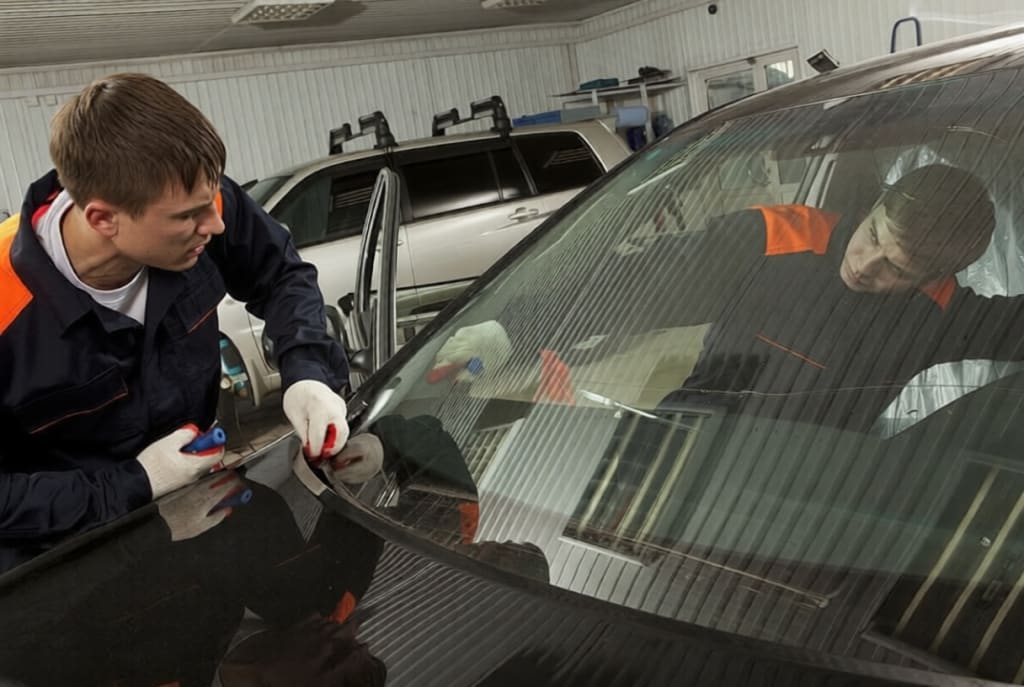
- Preparation – The area is cleaned, debris removed, and surfaces prepped for resin.
- Resin Injection – AGSC-approved resin is carefully injected to fill the chip. Multiple cycles ensure no air pockets.
- Curing – Using UV light or sunlight, resin is cured to restore structural integrity.
- Finishing – Excess resin is removed, windshield cleaned, and ADAS calibration checked if needed.
Most repairs take under an hour. Replacements can take 1–2 hours depending on vehicle type.
Real-World Stories
I’ll never forget the client in Sterling Heights who called late on a Friday. A large chip had formed on his SUV’s windshield. He was worried about driving to a shop in rush-hour traffic. We rolled out a mobile unit, repaired the chip, and had him back on the road safely within 45 minutes.
Another time, we serviced a fleet of delivery vans in Lansing. Rather than losing drivers all morning, mobile repair allowed us to fix 10 vehicles at their depot in less than two hours. The fleet manager was thrilled—time saved is money saved.
Tips to Ensure Mobile Repair Success
From years on the road, here’s what I tell every customer:
- Check credentials – Look for AGSC-certified technicians.
- Ask about adhesives – Only AGSC-approved resins and OEM-grade glass should be used.
- Avoid DIY for long cracks or driver’s line-of-sight damage.
- Schedule quickly – Chips can spread if left too long.
- Inspect ADAS sensors – If your car has lane departure or collision warning systems, proper alignment is crucial.
Cost Considerations
Mobile repair is surprisingly affordable:
- Minor chip repair – $65
- Full windshield replacement – $200–$500+, depending on vehicle make and models
- Insurance – Many policies cover mobile chip repair at no cost
Compared to the time, fuel, and hassle of visiting a shop, mobile repair is often the more economical option.
Pro Tips for Longevity
- Avoid extreme temperatures – Repair is more effective between 50–80°F.
- Don’t wash immediately – Pressure washers can dislodge curing resin.
- Inspect repairs after a few days – Check for air bubbles or spreading.
- Park in shade if possible – Sunlight helps curing but prevents overheating.
Key Takeaways
- Mobile auto glass repair is convenient, fast, and professional.
- It reduces risk of damage while providing the same high-quality materials and techniques as a shop.
- Ideal for minor chips, star breaks, and fleet or busy schedules.
- Always choose certified technicians with OEM-grade glass and AGSC-approved resins.
Mobile service can save time, money, and stress—and ensure your windshield remains a safe, structural component.
FAQs
How long does mobile windshield repair or replacement usually take?
For a small chip or minor crack repair, mobile service usually takes about 45 minutes to one hour from start to finish. That includes cleaning the damage, removing trapped air, injecting the resin, curing it with UV light, and smoothing the surface. In many cases, customers tell me the repair was done before they even finished a coffee break.
A full windshield replacement takes longer, usually 90 minutes to two hours, depending on the vehicle and glass availability. Cars with cameras or rain sensors may take a bit more time because everything has to be checked carefully. The biggest benefit is that you don’t lose half a day sitting in a waiting room.
Is mobile auto glass repair really as safe as going to a shop?
Yes, mobile auto glass repair is just as safe as shop work when it’s done by a trained and certified technician. The same OEM or OEM-equivalent glass, urethane adhesives, and installation standards are used. Safety comes from the installer’s experience, not from the walls around the vehicle.
Will my auto insurance cover mobile auto glass repair?
In most cases, yes. Insurance companies usually cover mobile auto glass repair the same way they cover shop repairs. Many policies even waive the deductible for windshield chip repairs, because fixing small damage early saves money for everyone involved.
What many drivers don’t realize is that insurance companies don’t get to decide where you get your glass repaired. You have the right to choose mobile service as long as the work meets safety standards. We often help customers with the paperwork so they don’t feel stuck dealing with insurance details alone.
Do modern vehicles need ADAS calibration after windshield replacement?
If your car has features like lane-keeping assist, forward collision warning, or adaptive cruise control, then ADAS calibration is often required after windshield replacement. These systems rely on cameras mounted to the glass, and even a tiny shift can throw off their accuracy.
Skipping calibration can cause warning lights, false alerts, or systems that fail when you need them most. A professional mobile technician will check your vehicle’s requirements and make sure everything works the way the manufacturer intended. This step is about safety, not upselling.
Can I drive my car immediately after a mobile windshield repair?
For chip repairs, you can usually drive right away once the resin is fully cured. The repaired area regains strength quickly, but it’s still smart to avoid car washes and heavy rain for about 24 hours. That extra time helps the repair settle and last longer.
For windshield replacements, there’s a required safe drive-away time. Modern urethane adhesives cure much faster than they did years ago, but timing still matters. Driving too soon can weaken the bond, which affects airbag deployment and overall crash protection.
Conclusion
After all these years in the auto glass world, one thing is clear—people don’t delay windshield repairs because they don’t care. They delay them because life gets busy. Work, family, and daily responsibilities leave little time to sit in a shop waiting room. That’s where mobile auto glass repair really earns its place.
When done the right way, mobile repair delivers the same safety, quality, and precision as an in-shop service, just without the inconvenience. The tools, materials, and standards don’t change just because the work happens in your driveway or parking lot. What matters is the technician’s experience, attention to detail, and respect for safety.
Today’s windshields are more than glass. They support airbags, assist driver safety systems, and protect passengers in ways most drivers never see. Taking care of damage early—and choosing a repair option that fits your real life—helps keep those systems working the way they should.
If this helped you understand your options a little better, consider sharing it with someone who’s been putting off a repair or wondering if mobile service is really worth it.