I’ve been in the auto glass industry for over 30 years, and I’ve seen it all—from the tiny chips on classic cars of the 90s to the high-tech windshields in today’s EVs and SUVs. One thing hasn’t changed: a windshield is far more than just a piece of glass. It’s a critical component of your car’s safety system.
Yet, I can’t tell you how many drivers underestimate the dangers of a poorly installed windshield. A quick, cheap replacement might seem harmless, but the risks can be serious. From airbag deployment failures to ADAS (Advanced Driver Assistance Systems) malfunctions, cutting corners can have long-lasting consequences.
In this article, I’ll break down the top 10 safety risks of a poorly installed windshield, explaining why proper installation matters, what to watch out for, and sharing real-world experiences from my decades in the field.
Understanding Why Windshield Installation Quality Matters
A windshield is not just a piece of glass fitted into a frame—it is a structural safety component that supports the entire vehicle body. In modern cars, especially those with ADAS systems, the windshield plays a direct role in airbag deployment, roof strength, and sensor accuracy. This means even a small installation mistake can affect multiple safety systems at once.
Many drivers assume that as long as the glass “fits,” the job is done correctly, but in reality, precision, curing time, and adhesive quality are just as important as the glass itself. Poor installation may not show immediate issues, but the hidden risks often appear weeks or months later.
How Modern Windshields Are Structurally Integrated into Vehicles
Today’s windshields are engineered as part of the car’s structural frame, not just an external barrier. They are bonded using high-strength adhesives that essentially “lock” the windshield into the vehicle body.
This bonding helps distribute crash forces, supports rollover protection, and stabilizes the roof during impact. In many vehicles, especially SUVs and EVs, the windshield contributes significantly to cabin rigidity. Without proper integration, the entire safety structure becomes weaker. That’s why manufacturers have strict installation guidelines, including exact adhesive types, bead thickness, and curing times that must be followed precisely.
Common Mistakes Made During Windshield Installation
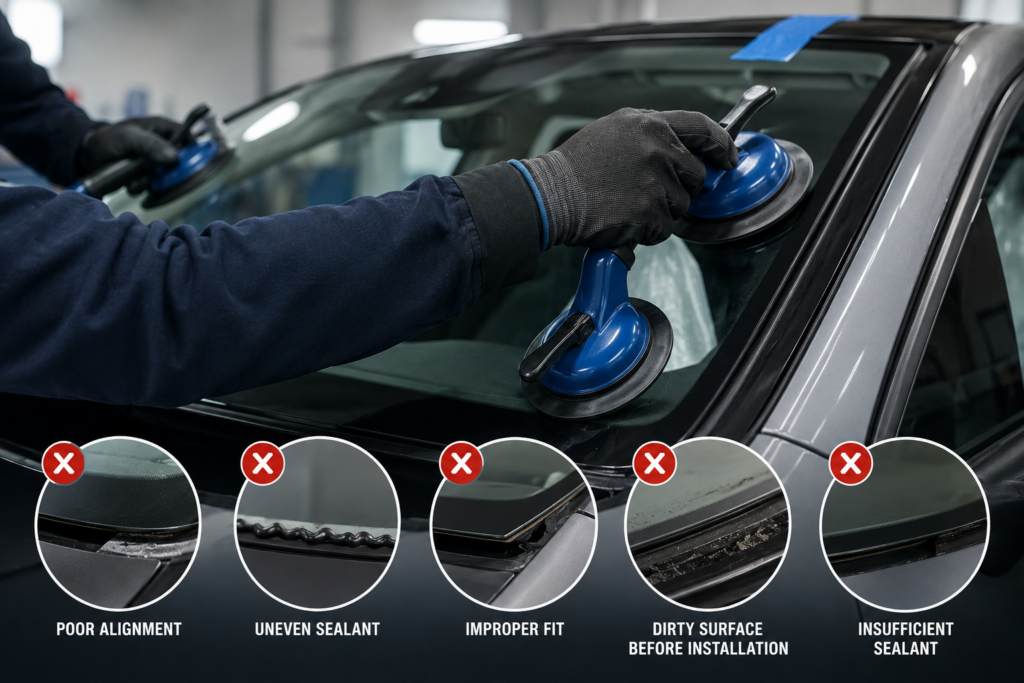
Many windshield failures begin with simple but critical installation mistakes. These include improper cleaning of the bonding surface, using low-quality adhesives, rushing the curing process, or failing to align the glass correctly.
Even a few millimeters of misalignment can cause stress points that lead to cracks or leaks over time. Another common issue is skipping ADAS recalibration, which can result in malfunctioning driver-assist systems.
Inexperienced technicians may also reuse old moldings or seals, which compromises water resistance and long-term durability. These mistakes often remain invisible until serious damage occurs.
The Role of Adhesives and Curing Time in Installation Safety
Adhesives are the backbone of windshield installation, and their performance directly affects safety. Modern urethane adhesives require precise application and a specific curing time before the vehicle can be safely driven.
If the curing process is rushed, the bond between glass and frame remains weak, increasing the risk of detachment during impact.
Temperature and humidity also influence adhesive performance, which is why professional shops often control installation environments. A properly cured windshield becomes structurally solid within hours, but a poorly cured one can fail under pressure, vibration, or even normal driving conditions.
How ADAS Technology Increases Installation Complexity
Modern vehicles rely heavily on ADAS systems such as lane departure warning, automatic braking, and adaptive cruise control. Many of these systems use cameras and sensors mounted directly on or near the windshield.
This makes installation significantly more complex than in older vehicles. Even slight misalignment during windshield replacement can throw off sensor calibration, leading to inaccurate readings or system failure.
After installation, precise recalibration is required to ensure all safety systems function correctly. Without this step, the vehicle may appear normal but behave unpredictably in critical driving situations.
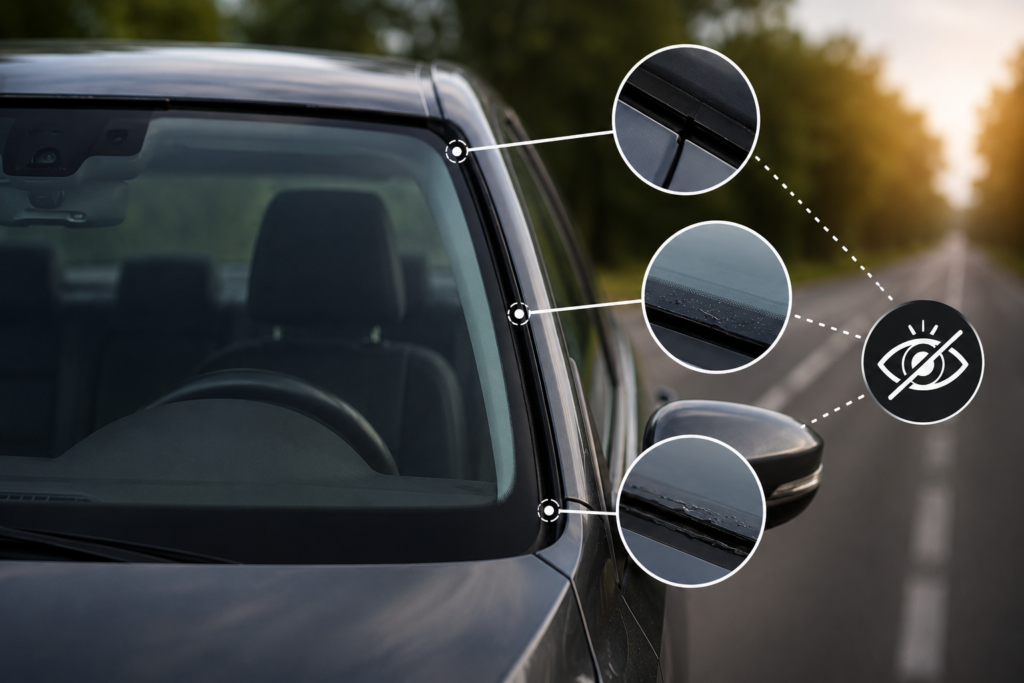
Why Poor Installation Risks Are Often Invisible at First
One of the most dangerous aspects of poor windshield installation is that problems rarely appear immediately. A windshield may look perfectly fine after installation, with no visible gaps or defects. However, underlying issues like weak adhesive bonding, improper alignment, or uncalibrated sensors develop slowly over time.
These hidden problems can lead to leaks, distortion, cracking, or safety system malfunctions weeks or months later. Drivers often only notice the issue when it becomes severe, such as during heavy rain, sudden braking, or an accident—when it’s already too late to prevent consequences.
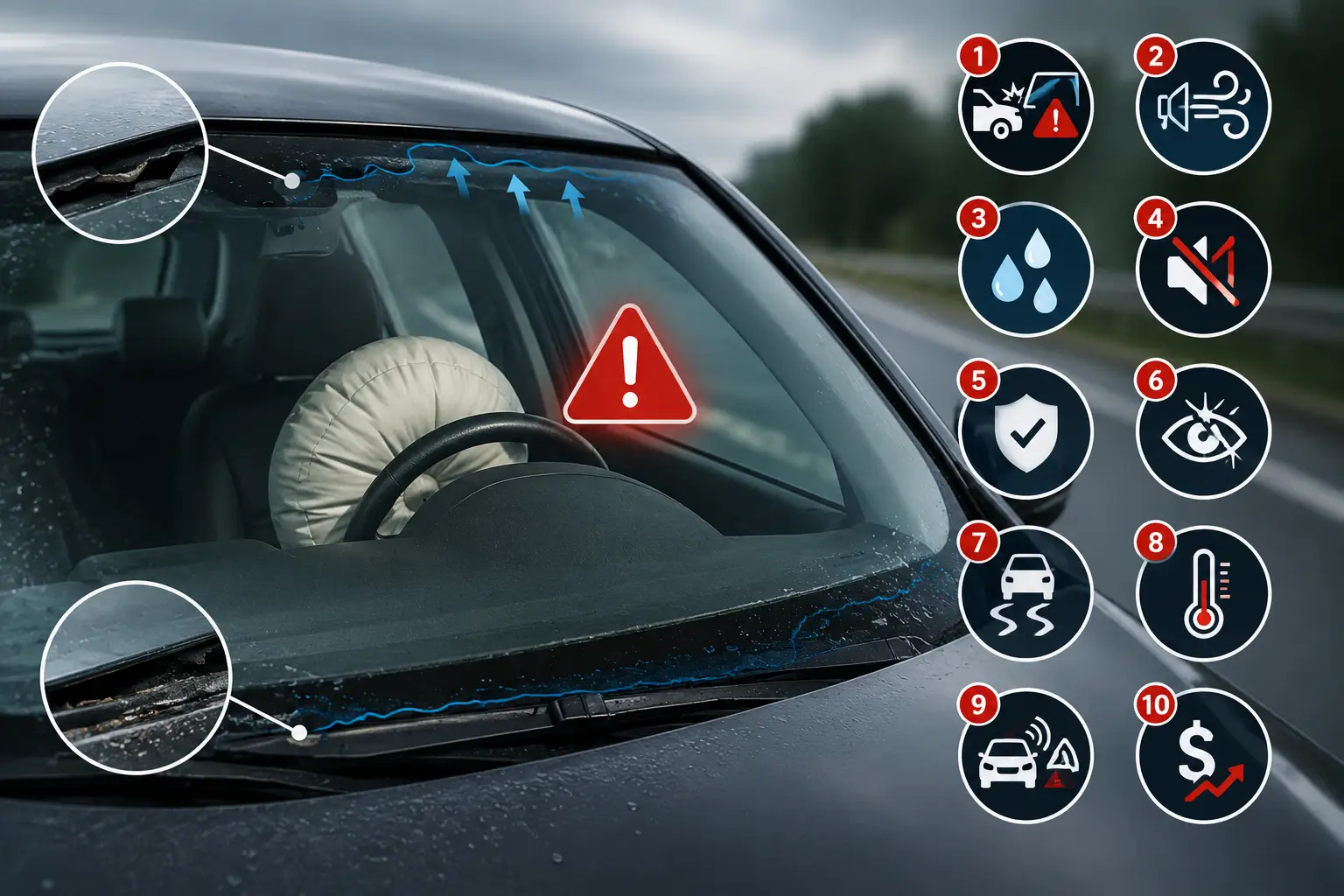
Top 10 Safety Risks of a Poorly Installed Windshield
1. Airbag Malfunction
A windshield helps support the deployment of passenger-side airbags. If the glass isn’t bonded correctly, airbags may not deploy at the correct angle or with the correct force.
Impact on safety
An improperly installed windshield can cause airbags to deploy too early, too late, or unevenly. This reduces their effectiveness during a collision.
Real-life example
I had a client whose front passenger airbag hit the dashboard at an odd angle after a low-speed collision. Investigation revealed the windshield wasn’t fully bonded due to insufficient adhesive curing. The fix involved reinstallation with proper adhesive and a careful calibration of all sensors.
Preventive action
Always choose certified technicians who follow manufacturer specifications for adhesive type, curing time, and alignment.
2. Reduced Structural Integrity
Windshields contribute to the car’s overall rigidity, especially during rollovers. A weak or improperly installed windshield can compromise roof strength and passenger protection.
Stress distribution
During an accident, a properly bonded windshield distributes force across the frame. Improper installation creates weak points where the glass can detach or shatter.
Long-term effects
Even without an accident, a weak windshield is more prone to cracks and chips that worsen over time.
Why it matters
Structural integrity isn’t just about extreme accidents. It impacts day-to-day safety and long-term durability of your vehicle.
3. Leaks and Water Damage
Poor sealing allows water to seep into the cabin, damaging electronics, upholstery, and even ADAS sensors.
Hidden dangers
Water intrusion can corrode connectors and interfere with camera-based safety systems, causing warnings to fail or misfire.
Customer story
A client drove a Mazda SUV with a windshield replaced at a discount shop. Heavy rain caused water to leak onto the dashboard, shorting the lane-departure camera system. Repairing both the windshield and sensors cost far more than a quality installation upfront.
Prevention tips
Always check the adhesive bead and ask about manufacturer-recommended curing time to ensure a watertight seal.
4. Sensor Misalignment
Modern vehicles use cameras, radar, and LiDAR sensors attached to the windshield for ADAS. A misaligned windshield can cause lane departure warnings, automatic braking, or adaptive cruise control to fail.
Calibration matters
Even a few millimeters off can trigger false alerts or prevent safety systems from activating.
Hands-on experience
I once replaced a Tesla windshield where the owner didn’t request ADAS recalibration. The collision avoidance system didn’t engage correctly, and we had to recalibrate the cameras manually.
Pro tip
Always confirm the shop can perform static and dynamic calibration for your vehicle’s sensors.
5. Increased Risk of Glass Shattering
Improper bonding or inferior adhesives increase the likelihood of glass shattering under minor impacts.
Why it happens
If the adhesive doesn’t cure fully or is applied unevenly, the windshield loses structural support. Rocks, hail, or small accidents that wouldn’t normally damage the glass can cause it to crack or shatter.
Real-world example
A driver hit a small rock on the highway. Instead of a tiny chip, the entire windshield developed a spiderweb crack because the adhesive didn’t bond the glass properly.
Prevention
Use OEM-quality glass and certified adhesives applied by experienced technicians.
6. Compromised Roof Strength
In rollover accidents, the windshield helps prevent the roof from collapsing. A poorly installed windshield can reduce roof integrity, putting passengers at risk.
Structural role
Windshields act like a brace, distributing impact forces. Improper installation weakens this brace.
Customer story
A client with a 2018 SUV experienced minor roll damage in a parking lot incident. The poorly bonded windshield popped out, causing more damage to the roof and interior. Proper installation could have prevented this.
Tip
Check that your shop follows manufacturer specifications for adhesive application and curing.
7. Leaks That Damage Electronics
Modern vehicles house countless electronics near the windshield, from ADAS sensors to infotainment cameras. Water intrusion can destroy these systems.
Invisible consequences
Water may not appear immediately. Over weeks or months, corrosion or short circuits can develop, affecting vehicle safety and performance.
Hands-on example
A Honda owner experienced intermittent warning lights after a low-cost replacement. The cause? Water leaked through a weak adhesive bead and affected the front radar sensor.
Best practice
Inspect the installation and ensure proper bead width, pressure, and curing.
8. Poor Visibility
Incorrect installation may leave small gaps, uneven adhesive, or distortion in the glass, causing visual impairments for the driver.
Why clarity matters
Even a tiny distortion near the driver’s line of sight can lead to eye strain or missed hazards.
Experience story
A driver came in complaining about wavy glass after a replacement. The shop had used aftermarket glass and improperly applied the adhesive. Correcting it required a proper OEM glass installation and meticulous leveling.
Tip
Ensure technicians check for optical clarity and confirm correct curvature and alignment.
9. Premature Cracking
A windshield installed without proper curing or alignment is more susceptible to stress cracks. Temperature changes, road vibrations, and minor impacts become more damaging.
Stress factors
Improper bonding leads to uneven stress distribution, which accelerates cracking.
Real scenario
A client’s windshield developed cracks within a week after replacement. Inspection revealed insufficient adhesive coverage. The repair required full replacement with correct procedures.
Preventive step
Confirm shops follow manufacturer-recommended adhesive thickness, curing times, and alignment methods.
10. Voided Vehicle Warranty
Incorrect installation may void your windshield or vehicle warranty. Manufacturers often require certified installation for glass and sensors.
Warranty implications
A warranty may cover sensor failure or glass defects, but only if installed by a certified shop following proper protocols.
Experience
I had a client whose ADAS malfunctioned months after a DIY replacement. The dealer refused to honor the warranty because the glass wasn’t installed professionally. Proper installation would have protected both safety and warranty coverage.
Tip
Always verify shop certification, adhesive type, and adherence to manufacturer specifications.
FAQ
Q1: How can I tell if my windshield was installed incorrectly?
Signs include leaks, airbag malfunction, uneven adhesive lines, water pooling near sensors, or visual distortions. Subtle issues like misaligned sensors may not be immediately obvious.
If your car’s ADAS systems give false alerts, or you notice wavy glass, it’s worth having a certified technician inspect it. Early detection prevents bigger problems and preserves safety.
Q2: Can a poorly installed windshield cause accidents?
Absolutely. Improper bonding or misalignment can affect airbag deployment, sensor accuracy, or structural integrity during a collision.
Even minor cracks can spread rapidly under stress, compromising driver visibility. I’ve seen cases where incorrectly installed windshields increased repair costs and risk during relatively minor accidents.
Q3: How do certified technicians prevent these risks?
Certified technicians follow manufacturer protocols for adhesive application, curing times, sensor calibration, and glass alignment.
They use proper tools and techniques to ensure structural integrity, sensor functionality, and airbag safety. Certifications like AGSC or ASE indicate training and adherence to these standards.
Q4: Is it worth paying extra for a certified shop?
Yes. A higher upfront cost is an investment in safety, long-term durability, and peace of mind. Cheap or untrained installers often cut corners, leading to leaks, sensor malfunctions, or structural failures that cost much more to fix.
Q5: Can environmental factors worsen a poor installation?
Yes. Extreme heat, cold, or humidity can affect adhesives and curing. A poorly bonded windshield is more vulnerable to stress cracks, leaks, and sensor misalignment under environmental changes. Professionals account for this using temperature-controlled environments and proper curing methods.
Conclusion
A windshield is far more than a pane of glass—it’s a critical safety component, a sensor hub, and a structural element of your car. Poor installation compromises everything from airbag deployment to ADAS performance, roof strength, and long-term durability.
Over my 30+ years, I’ve repaired countless windshields damaged by improper installation, often at a cost far higher than choosing a certified shop upfront. Proper installation, using certified materials and experienced technicians, ensures safety, durability, and functionality.
Next time you need a windshield replacement, remember: safety isn’t something to cut corners on. The right installation preserves your life, your car’s technology, and your peace of mind.