
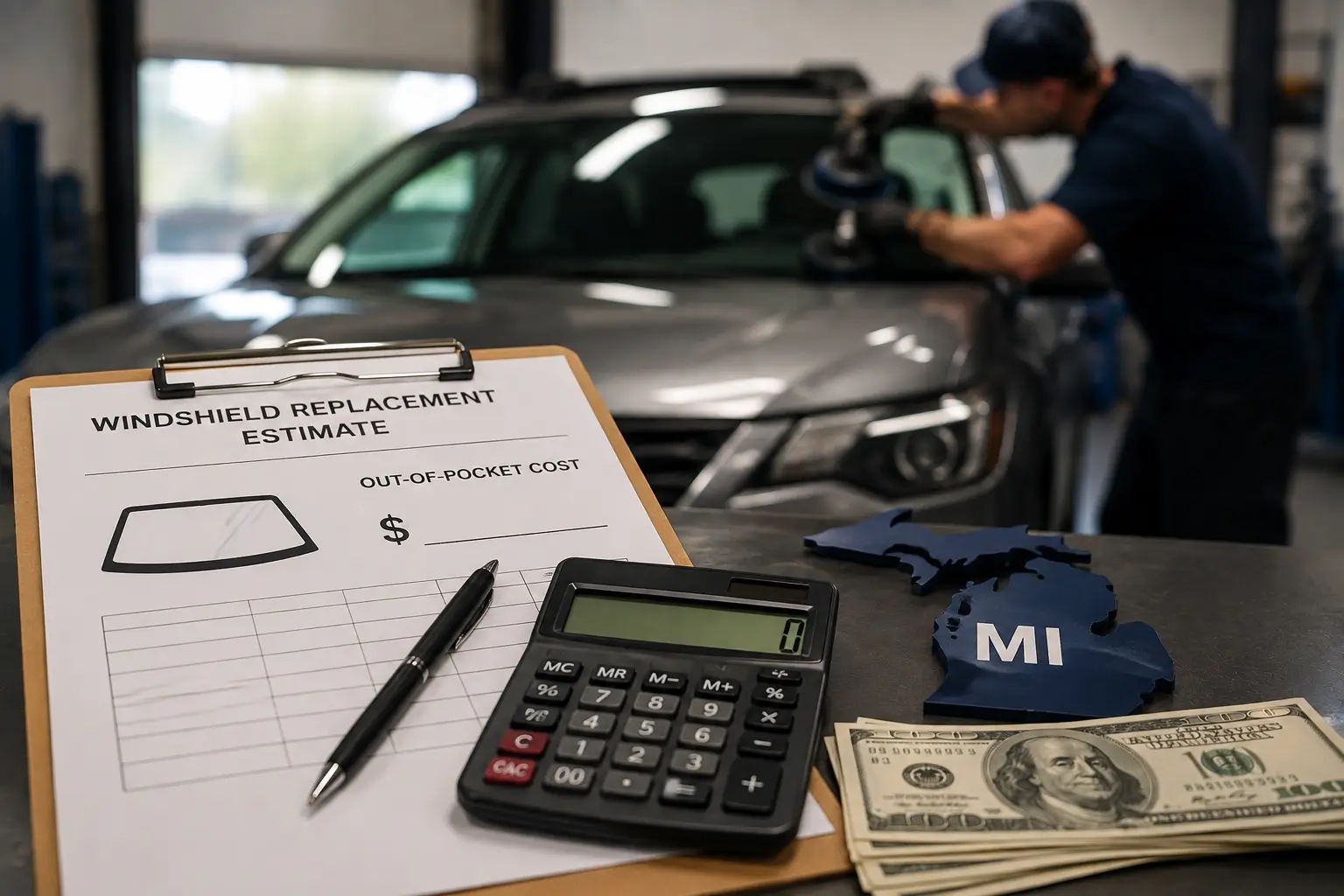
I’ve been replacing windshields for over 30 years, and if there’s one question that never goes away, it’s this: “How much is this going to cost me out of pocket?”
I remember a customer who walked into my shop with a cracked windshield on his Chevy Malibu. First thing he asked—before anything else—was, “Ray, just be honest with me. What am I paying today?”
That’s a fair question.
Back in the 90s, I could give you a quick answer. Most windshields were simple, and pricing didn’t vary much. Today? It’s a whole different story. Modern vehicles, sensors, cameras, calibration—it all plays a role.
So if you’re in Michigan and trying to figure out your out-of-pocket windshield replacement cost, let me break it down for you the way I would in my shop—clear, honest, and based on real experience.
What “Out-of-Pocket Cost” Really Means
Let’s clear this up first, because a lot of people misunderstand it.
Out-of-pocket cost is simply what you pay yourself after insurance—or when you’re not using insurance at all. That could mean you’re paying the full amount, or just covering your deductible.
I’ve had customers think their insurance covers everything, only to find out they still owe money. Others assume they’ll pay full price, but their policy actually helps more than they expected.
It all depends on your situation.
If you don’t have comprehensive coverage, you’re paying 100% out of pocket. If you do have coverage, then your cost usually comes down to your deductible. And in some cases—especially with full glass coverage—you might pay nothing at all.
But here’s the thing. Even when insurance is involved, understanding the real cost matters. Because at the end of the day, you want to know what you’re actually responsible for.
Average Windshield Replacement Cost in Michigan
Let’s talk real numbers.
In Michigan, the average windshield replacement cost typically ranges between $200 and $500 for standard vehicles. That’s what most drivers are dealing with when there are no advanced systems involved.
But once you move into newer vehicles with ADAS features, things change quickly. Now you’re looking at $400 to $800 or more, depending on the make and model.
I’ve worked on vehicles where the cost went even higher, especially with luxury cars or models that require specialized glass and calibration.
I always tell customers this—your car determines the price more than anything else. A basic sedan from 2010 is very different from a 2022 SUV packed with sensors.
And that’s why you’ll see such a wide range in pricing across Michigan.
How ADAS Systems Increase Your Cost
This is where most of the price difference comes from.
Modern vehicles come with ADAS systems like lane departure warning, forward collision alert, and adaptive cruise control. These systems rely on cameras mounted on the windshield.
When you replace the windshield, those cameras need to be recalibrated.
That calibration process typically costs between $150 and $400 on its own. And it’s not optional—it’s required to make sure the system works properly.
I’ve had customers surprised by this. They’ll say, “I thought I was just paying for glass.” But today, you’re paying for a system to function correctly.
Think of it this way—your windshield is no longer just a piece of glass. It’s part of your vehicle’s safety system.
Skipping calibration to save money is something I never recommend. I’ve seen too many cases where it leads to bigger problems later.
Vehicle Type Makes a Big Difference
Over the years, I’ve learned that not all windshields are created equal.
A small sedan with no sensors? That’s usually on the lower end of the cost range. But once you move into SUVs, trucks, or luxury vehicles, prices go up.
I worked on a RAM 1500 recently, and the customer was shocked at the cost. But when you factor in the size of the glass, the technology involved, and the calibration, it starts to make sense.
Electric vehicles can also be more expensive. Tesla models, for example, rely heavily on camera systems, which means precision is critical.
Even within the same brand, costs can vary. A base model might be affordable, while a higher trim with added features increases the price significantly.
So when someone asks me for a quick estimate, my first question is always, “What are you driving?”
OEM vs Aftermarket Glass Pricing
This is another area where costs can vary.
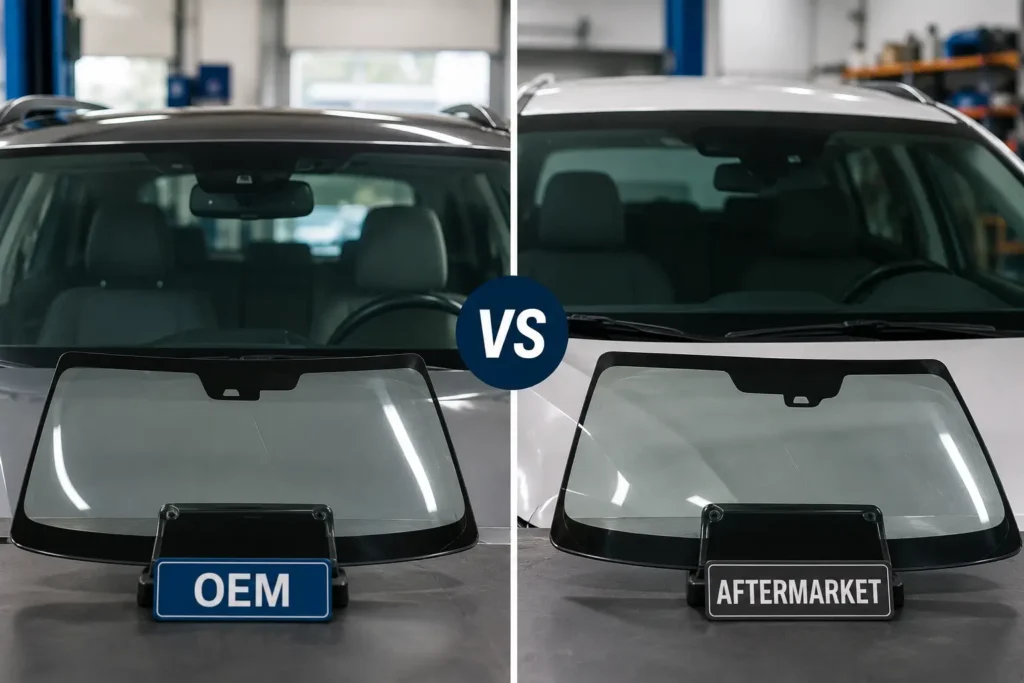
OEM (Original Equipment Manufacturer) glass is designed specifically for your vehicle. It matches the exact specifications, clarity, and fit required by the manufacturer.
Aftermarket glass is usually cheaper, and in some cases, it works just fine. But not all aftermarket glass is created equal.
I’ve seen cheaper options that don’t match the original perfectly. Slight differences in curvature or clarity can affect how ADAS systems perform.
That’s why I always explain the pros and cons to customers. OEM glass costs more, but it offers better compatibility and peace of mind. Aftermarket can save money, but you have to be careful about quality.
At the end of the day, it comes down to your priorities—cost vs precision.
Labor and Installation Quality Matters
Let me tell you something I’ve learned the hard way over the years—installation matters just as much as the glass itself.
You can have the best glass in the world, but if it’s installed poorly, you’re going to have problems.
Labor costs in Michigan can vary depending on the shop and the complexity of the job. But what you’re really paying for is experience.
I’ve seen cheap installations lead to leaks, wind noise, and even structural issues. And when it comes to ADAS systems, poor installation can throw off camera alignment.
A proper installation takes time. The adhesive needs to cure correctly. The glass needs to be positioned precisely. There’s no rushing it.
That’s why I always tell customers—don’t choose based on price alone. Choose based on quality.
Insurance vs Paying Out of Pocket
Now let’s compare your options. If you have insurance, your out-of-pocket cost usually comes down to your deductible. If your deductible is $500 and the replacement costs $600, you’ll pay $500 and insurance covers the rest.
But if the total cost is less than your deductible, then you’re paying the full amount anyway.
I’ve had customers ask me whether they should use insurance or pay out of pocket. My answer depends on the situation. For smaller repairs or lower-cost replacements, it might make sense to pay out of pocket. For higher-cost jobs, insurance can be a big help.
The key is understanding your policy before making a decision.
Ways to Reduce Your Out-of-Pocket Cost
Over the years, I’ve picked up a few ways to help customers save money without cutting corners. First, check your insurance coverage. You might have benefits you’re not aware of, like full glass coverage.
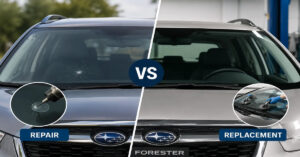
Second, act quickly. A small chip can often be repaired for much less than a full replacement. Waiting too long can turn a small problem into a bigger one.
Third, choose a reputable shop. It might cost a little more upfront, but it can save you from paying twice for a bad job.
And finally, ask questions. A good shop will explain your options and help you make the best decision for your situation.
Saving money is important—but doing the job right is even more important.
Real Examples From My Shop
Let me give you a couple of real-world scenarios. A customer with an older Toyota Camry came in with a cracked windshield. No sensors, no calibration needed. His total out-of-pocket cost was around $250.
Another customer had a newer Subaru with EyeSight. That job required calibration, and the total cost was closer to $700. Insurance covered most of it, but his deductible still applied.
Two different cars. Two very different costs.
That’s why I always say—there’s no one-size-fits-all answer. Your vehicle and your situation determine the final price.
Final Thoughts
If there’s one thing I want you to take away from this, it’s this—windshield replacement costs have changed, and for good reason. Cars today are smarter, safer, and more advanced. But that also means repairs require more precision, more tools, and more expertise.
Out-of-pocket windshield replacement cost in Michigan can range from a couple hundred dollars to several hundred, depending on your vehicle and whether calibration is needed.
The key is understanding what you’re paying for.
Don’t just look at the price. Look at the quality, the process, and the long-term impact.
Because at the end of the day, your windshield isn’t just protecting you from the wind—it’s part of what keeps you safe on the road.
FAQ
How much does windshield replacement cost out of pocket in Michigan?
Out-of-pocket windshield replacement in Michigan usually falls between $200 and $800, depending on your vehicle type and technology. Basic older vehicles without sensors are typically on the lower end of the range.
Newer cars with ADAS features, larger windshields, or specialty glass naturally cost more. The biggest factor is whether calibration is required after installation. Once sensors and cameras are involved, the cost increases because precision work is needed to ensure everything functions correctly.
Does insurance reduce my out-of-pocket cost?
Yes, insurance can significantly reduce what you pay, but it depends on your policy. With comprehensive coverage, you usually only pay your deductible, and insurance covers the rest.
Some policies even include full glass coverage, which means you may not pay anything at all. However, if your deductible is close to or higher than the repair cost, insurance may not provide much benefit. That’s why it’s always important to understand your specific coverage before making a decision.
Why is windshield replacement more expensive now?
Windshield replacement has become more expensive mainly because modern vehicles are far more advanced than older ones. Today’s windshields often support ADAS systems like lane assist, collision warning, and adaptive cruise control.
These systems require precise calibration after installation. On top of that, manufacturers use more specialized glass and adhesives to meet safety standards. All of these factors add labor time, technical requirements, and equipment costs, which directly increases the final price for the customer.
Can I avoid calibration to save money?
Skipping calibration is not a safe option, even if it seems like a way to save money. ADAS systems rely on exact camera and sensor alignment to function correctly. If calibration is not done, features like lane departure warning or emergency braking may not work properly.
In some cases, they may give false alerts or fail completely. The risk is not worth the short-term savings, because these systems are designed to protect you during real driving situations.
Is it cheaper to repair instead of replace?
Yes, repairing a windshield is almost always cheaper than replacing it, especially when the damage is small and caught early. Chips and minor cracks can often be fixed quickly with resin, preventing them from spreading. However, timing is critical.
Once the crack grows beyond a certain point or reaches the edges, repair is no longer possible and full replacement is required. That’s why addressing damage early not only saves money but also prevents safety risks later.