I’ve been repairing windshields for over 30 years. From the old sedans of the 90s to today’s high-tech EVs, every windshield has a story. And every repair requires precision, patience, and the right tools. Over the decades, I’ve seen drivers underestimate how much actually goes into fixing a tiny chip or replacing an entire windshield.
A windshield repair is not a simple cosmetic job. It is a structural and safety-critical process that directly affects airbag deployment, roof strength, and modern ADAS systems. What looks like a small crack on the surface often hides deeper stress patterns inside laminated glass.
Modern vehicles make the job even more complex. Cameras, sensors, and advanced driver assistance systems are often mounted directly on or behind the windshield. That means even a millimeter-level mistake can affect safety features like lane assist or emergency braking.
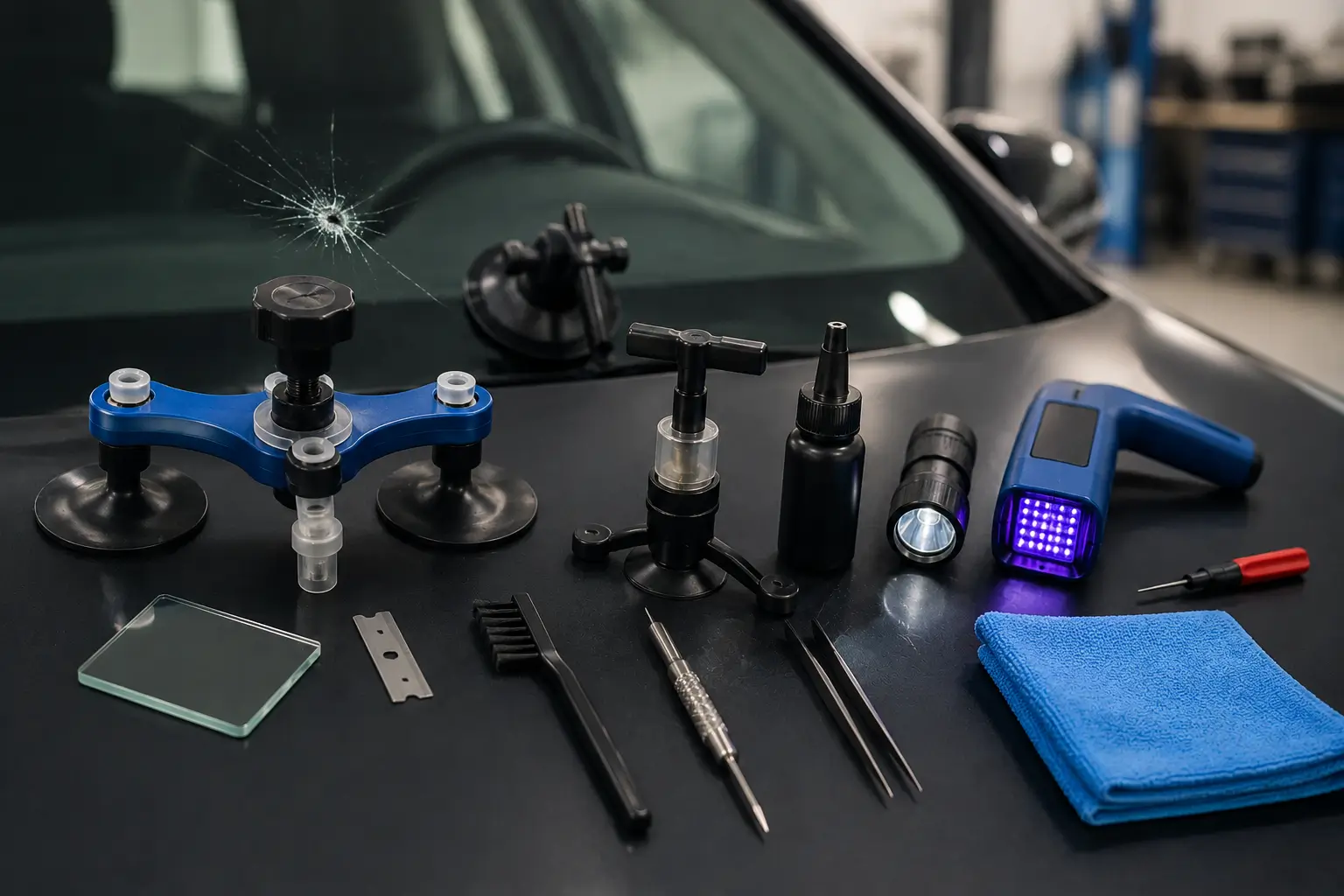
In this article, I will walk you through the top 10 tools used in professional windshield repair, how they work, and why each one matters based on real workshop experience.
Why Windshield Repair Is a Precision-Based Job
Windshield repair may look simple from the outside, but in reality it is one of the most precision-driven processes in the automotive industry. A small chip on the surface is only the visible part of a much deeper fracture network inside laminated glass. What most drivers don’t realize is that the windshield is not just a piece of glass—it is a structural safety component of the entire vehicle.
When a technician performs a repair, they are not just filling a crack. They are restoring structural integrity, optical clarity, and in many cases ensuring compatibility with modern safety systems like airbags and ADAS cameras. Even a slight error in pressure, alignment, or curing time can cause long-term failure.
Over the years, I’ve seen repairs fail simply because someone underestimated how sensitive glass structure really is. Temperature changes, road vibrations, and even cleaning chemicals can influence the final outcome. That is why precision is not optional in this work—it is the foundation of safety.
How Modern Vehicles Changed Windshield Repair
The windshield repair industry today is completely different from what it was 20 or even 10 years ago. Older vehicles had simple laminated glass with no electronic integration. Today’s vehicles, however, rely heavily on windshields as part of their digital safety network.
Modern cars often include forward-facing cameras mounted directly on the windshield. These cameras power lane departure warnings, collision alerts, adaptive cruise control, and even automatic braking systems. This means the windshield is no longer just glass—it is part of a calibrated electronic system.
Because of this evolution, even a minor windshield replacement or repair can impact vehicle behavior. A small misalignment or incorrect resin application can interfere with camera accuracy. I’ve personally seen cases where a vehicle began showing false lane warnings after a poorly executed repair.
This shift has forced technicians to combine mechanical skill with electronic understanding. Today, windshield repair is as much about technology as it is about glass.
What Happens When Wrong Tools Are Used
Using the wrong tools in windshield repair does not just reduce quality—it creates hidden long-term risks that often appear weeks or months later. Many drivers assume that if a repair “looks fine,” it is safe. Unfortunately, that is not always true.
Incorrect injection pressure can trap air bubbles inside cracks, which weakens the structure internally. Low-quality cutting tools can create micro-fractures along the edge of the windshield frame. Even poor adhesive application can lead to water leaks or wind noise at highway speeds.
One of the most serious issues I’ve seen in my career is ADAS malfunction caused indirectly by improper installation tools. A slight shift in windshield positioning can throw off camera calibration, leading to inaccurate lane detection or emergency braking errors.
These problems don’t always show up immediately. Sometimes everything seems fine for a few days, and then a temperature change or road vibration triggers failure. That is why professional tools are not just helpful—they are essential for safety and long-term reliability.
Professional vs DIY Repair Tools
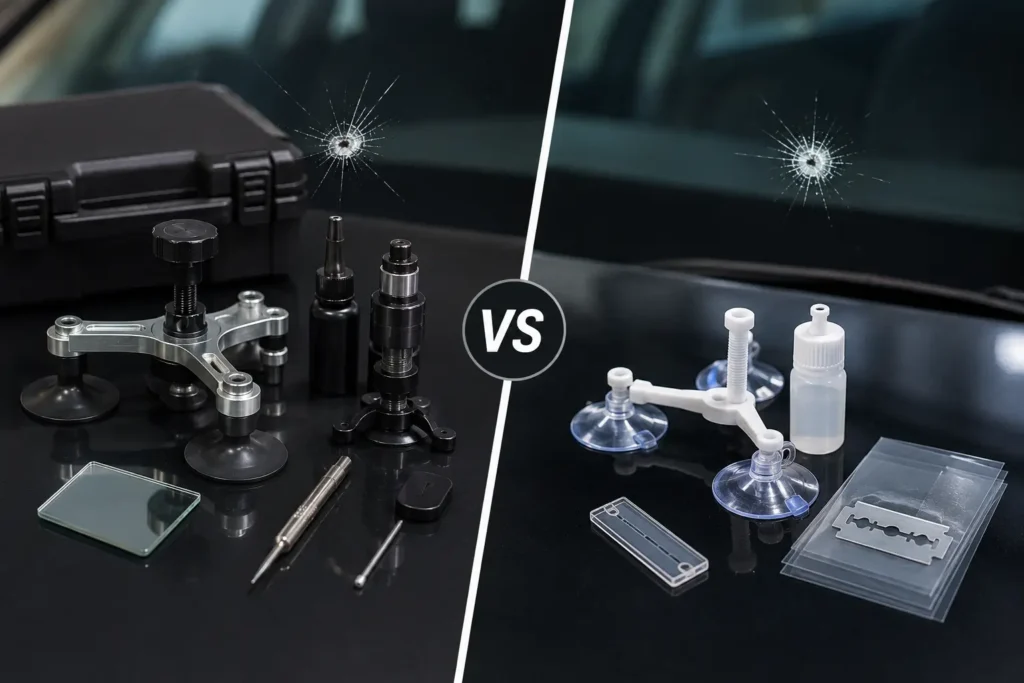
There is a major difference between professional windshield repair tools and DIY kits available in the market. DIY kits are designed for very small cosmetic repairs, not structural restoration or safety-critical fixes.
Professional tools are engineered to control pressure, temperature, and resin flow with high precision. They allow technicians to adjust variables in real time based on crack type, glass thickness, and environmental conditions. DIY kits do not offer that level of control.
Another major difference is material quality. Professional resins are designed for long-term optical clarity and structural bonding, while many low-cost kits use generic formulas that can discolor or shrink over time.
I’ve seen many cases where drivers attempted DIY repairs, only to make the damage worse. A small chip turned into a long spreading crack simply because the pressure or resin was not applied correctly. In most of these cases, the windshield had to be fully replaced afterward.
The truth is simple: DIY kits are for temporary cosmetic fixes, while professional tools are for safety restoration.
Material Science Behind Windshield Repair
Windshield repair is deeply rooted in material science. A modern windshield is made of laminated glass, which consists of two layers of glass bonded together with a plastic interlayer, usually polyvinyl butyral (PVB). This structure is designed to hold the glass together even when it cracks.
When a chip occurs, the damage spreads through the outer glass layer and creates micro-fractures that extend inward. The role of resin is to penetrate these fractures and restore bonding strength by filling microscopic gaps.
The success of a repair depends on how well the resin interacts with the glass at a molecular level. Temperature, viscosity, and curing method all affect this bonding process. If conditions are not controlled properly, the resin may not fully integrate with the crack structure.
This is why professional repair requires both technical skill and material understanding. It is not just about filling a hole—it is about restoring structural integrity at a microscopic level.
Environmental Factors That Affect Tool Performance
Environmental conditions play a much bigger role in windshield repair than most people realize. Temperature, humidity, and even sunlight exposure can significantly impact how tools and materials perform.
In cold conditions, resin becomes thicker and harder to inject into fine cracks. In hot conditions, it may cure too quickly, trapping air bubbles inside the fracture. High humidity introduces moisture into the crack, which weakens bonding strength and can cause long-term failure.
Even dust or airborne particles can interfere with adhesion if the repair environment is not controlled. I’ve seen perfectly good repairs fail simply because the vehicle was exposed to wind or moisture during the curing process.
Professional shops use controlled environments to stabilize these factors. Mobile repairs require even more attention because outdoor conditions are unpredictable. That is why experienced technicians constantly adjust their process based on real-time environmental conditions.

Top 10 Tools Used in Professional Windshield Repair
1. Resin Injection System
The resin injection system is the heart of professional windshield repair. In simple terms, it’s the tool that restores strength to damaged glass by injecting specially formulated resin into cracks and chips under controlled pressure.
But in real-world application, it does far more than just “fill a hole.” It rebuilds the internal fracture structure of laminated glass, which is something most drivers never see or understand.
When a windshield is damaged, the crack spreads beneath the surface in microscopic lines. A proper injection system ensures that resin doesn’t just stay on the surface but penetrates deep into those hidden fractures.
This is critical because the visible chip is only a fraction of the actual damage. Without deep penetration, the crack will continue spreading over time due to heat, vibration, and pressure changes.
Modern injection systems are designed with pressure control mechanisms that allow technicians to adjust force based on damage type. Too much pressure can actually worsen the crack, while too little leaves air pockets inside the fracture. In my experience, mastering this balance is what separates beginners from skilled professionals.
The quality of resin also plays a huge role in this process. High-grade resins are engineered to match the optical clarity of glass while maintaining flexibility under stress. When applied correctly, the repaired area becomes nearly invisible and structurally stable for years.
2. Bridge and Stabilizing Frame System
The bridge and stabilizing frame system may look like a simple support tool, but it is one of the most important components in windshield repair. It holds the resin injector in a fixed position directly over the damaged area, ensuring absolute stability throughout the repair process.
Even the smallest vibration can affect how resin flows inside a crack. Something as minor as a passing truck or a technician shifting their hand can create uneven distribution. That’s why stabilization is critical—it removes human error from the equation and locks the tool into precise alignment.
Modern systems are adjustable, allowing technicians to work on different windshield curves and chip locations. Windshields today are not flat surfaces; they are highly curved, angled, and often layered with sensors. Without adjustable framing, many repairs would be inaccurate or incomplete.
Over the years, I’ve seen how important stability is in preventing long-term failures. If the injector moves even slightly during the process, resin may not reach all fracture branches. That creates weak zones inside the glass that later expand into visible cracks.
3. Professional Suction Systems
Suction systems are essential for safely handling windshields during installation and removal. While most people assume glass can simply be lifted by hand, the reality is very different. Windshields are heavy, fragile at the edges, and under constant internal tension.
A professional suction system distributes weight evenly across the glass surface, allowing technicians to lift and position it without applying direct pressure. This reduces the risk of accidental cracks or edge damage, which is one of the most common issues during improper handling.
In modern vehicles, suction systems also play a critical role in ADAS alignment. Cameras and sensors mounted on windshields require millimeter-level accuracy. Even a slight misalignment during installation can affect lane assist or collision warning systems.
Different suction configurations are used depending on vehicle type. Large SUVs, curved windshields, and panoramic glass panels require multiple suction points for stability. In professional environments, this tool is considered essential for both safety and precision.
4. Cold Knife and Wire Cut-Out Tools
Cold knife and wire cut-out tools are used to remove old windshields from the vehicle frame by cutting through hardened urethane adhesive. This is one of the most delicate steps in windshield replacement because it directly affects the condition of the vehicle body.
The adhesive used to bond windshields is extremely strong and designed to withstand impact forces. Cutting through it requires controlled pressure and precision. If done incorrectly, it can damage the paint, scratch the frame, or even bend metal edges, leading to long-term corrosion or water leaks.
Technicians use different blade types depending on vehicle design and adhesive strength. Some vehicles require manual cutting, while others need powered oscillating tools or wire systems that glide through the adhesive layer.
In my experience, this is one of the steps where patience matters more than speed. A rushed cut can cause irreversible damage, while a controlled cut ensures a clean surface for proper reinstallation.
5. Urethane Adhesive Application Guns
Urethane adhesive guns are responsible for applying the bonding material that holds the windshield in place. This step is far more important than most drivers realize because it directly affects structural safety during accidents.
The goal is to apply a consistent, even bead of adhesive around the entire frame. This ensures that when the windshield is installed, pressure is distributed evenly across all contact points. Any inconsistency can create weak areas that may fail under stress.
Modern adhesive guns are designed to control flow rate and pressure precisely. This prevents air gaps and ensures that the adhesive maintains a uniform thickness throughout the application process.
In real-world repairs, even small mistakes in adhesive application can lead to wind noise, leaks, or reduced crash safety performance. That’s why professional-grade tools are always preferred over manual or low-cost alternatives.
6. UV Curing Lamps
UV curing lamps are used to harden resin after it has been injected into the windshield crack. Without proper curing, the resin may look solid but remain weak internally, which can lead to failure over time.
These lamps activate a chemical reaction inside the resin that transforms it from a liquid into a hardened, glass-like material. The process must be controlled carefully because uneven exposure can create weak spots within the repair.
In professional environments, curing is done under controlled conditions to ensure uniform strength across the entire repaired area. Mobile repairs require careful positioning of lamps to achieve the same effect outdoors.
From experience, I can say curing is one of the most underestimated steps in windshield repair. Many failures I’ve seen over the years come from improper or rushed curing processes.
7. Glass Cleaning & Preparation Systems
Cleaning and preparation are often overlooked, but they are absolutely critical to repair success. Before any resin or adhesive is applied, the glass must be completely free of dust, oil, or moisture.
Even microscopic contaminants can block resin from properly bonding with the glass. This leads to weak spots that may fail under stress or temperature changes. That’s why professional cleaning solutions are designed specifically for auto glass repair.
After the repair is complete, cleaning also plays a role in restoring optical clarity. It removes excess resin, residue, and surface haze, ensuring that the repair blends seamlessly with the surrounding glass.
In my shop, we treat cleaning as the foundation of every repair. If the surface is not perfect, the repair cannot be perfect.
8. Temperature & Humidity Control Tools
Environmental control tools help maintain ideal working conditions during repair. Temperature and humidity directly affect how resin flows, bonds, and cures inside the windshield.
In cold conditions, resin becomes thick and difficult to inject properly. In hot conditions, it may cure too quickly, trapping air inside the crack. Humidity adds another layer of complexity by introducing moisture into the fracture, which weakens adhesion.
Professional shops use controlled environments to stabilize these conditions and ensure consistent results regardless of outside weather. Mobile technicians must constantly adjust their techniques based on environmental changes.
From experience, I’ve seen repairs fail not because of bad tools—but because of uncontrolled conditions. That’s how important this factor is.
9. ADAS Calibration Equipment
ADAS calibration equipment is essential for modern vehicles after windshield repair or replacement. Today’s cars rely heavily on cameras and sensors mounted on the windshield for safety systems like lane assist, emergency braking, and adaptive cruise control.
Even a small shift in windshield position can affect how these systems function. That’s why calibration is required after structural glass work to ensure everything is aligned correctly.
Different manufacturers require different calibration methods. Some systems are static and require target setups in a controlled environment, while others require dynamic road calibration.
In my experience, this is one of the most critical safety steps in modern auto glass work. Without proper calibration, even a perfectly installed windshield can compromise vehicle safety systems.
10. Inspection Tools / Magnifiers
Inspection tools are used throughout the entire repair process to ensure precision and quality. They help technicians detect flaws that are completely invisible to the naked eye.
Magnifiers allow us to see micro-cracks, resin gaps, or incomplete bonding inside the glass structure. These issues might not be visible initially but can lead to long-term failure if left unnoticed.
Final inspection is the last and most important step before a vehicle is returned to the customer. It ensures that the repair meets both safety and clarity standards.
In professional work, no windshield leaves the shop without thorough inspection. It’s the final guarantee that the repair is safe, stable, and long-lasting.
FAQ
1. Are professional tools necessary for windshield repair?
Yes, professional tools are absolutely necessary for reliable windshield repair. These tools allow precise resin injection, controlled pressure, and proper curing, which cannot be achieved with basic DIY kits. Without them, repairs may look fine initially but often fail over time due to trapped air, weak bonding, or incomplete crack filling, compromising both safety and durability.
2. Can poor tools damage a windshield?
Absolutely. Using poor-quality or incorrect tools can directly damage the windshield instead of repairing it. For example, uneven pressure from low-grade injectors can extend cracks, while improper cutting tools can chip glass edges or damage the frame. These mistakes often lead to leaks, spreading cracks, or complete windshield replacement being required.
3. Why is ADAS calibration important?
ADAS calibration is essential because modern vehicles rely on windshield-mounted cameras and sensors for safety features like lane assist, collision warning, and adaptive cruise control.
Even a minor misalignment after repair or replacement can cause incorrect readings or system failure. Proper calibration ensures all safety systems function accurately and respond correctly during real driving conditions.
4. How often are tools maintained?
Professional windshield repair tools are maintained regularly, often on a daily or weekly basis depending on usage. Suction cups are cleaned, blades are sharpened or replaced, and injection systems are checked for pressure accuracy.
Proper maintenance ensures precision, prevents contamination, and guarantees consistent repair quality, which directly impacts safety and long-term performance.
5. Are all resin kits the same?
No, all resin kits are not the same. High-quality professional resins are designed for optical clarity, strong bonding, and resistance to heat and UV exposure. Cheaper resins may shrink, discolor, or fail under stress. The difference in quality directly affects how long the repair lasts and whether the crack remains stable over time.
Conclusion
Windshield repair is a precision-based technical process, not a simple glass fix. Every tool—from resin injection kits to ADAS calibration systems—plays a crucial role in ensuring safety, clarity, and structural integrity.
Over my 30+ years in this field, I’ve seen how the right tools make the difference between a permanent repair and a failed one. Modern vehicles demand even more precision due to advanced sensors and safety systems.
Understanding these tools helps you choose better service providers and ensures your vehicle remains safe on the road. A windshield is not just glass—it is a critical safety system, and the tools behind it determine how well it performs its job.