
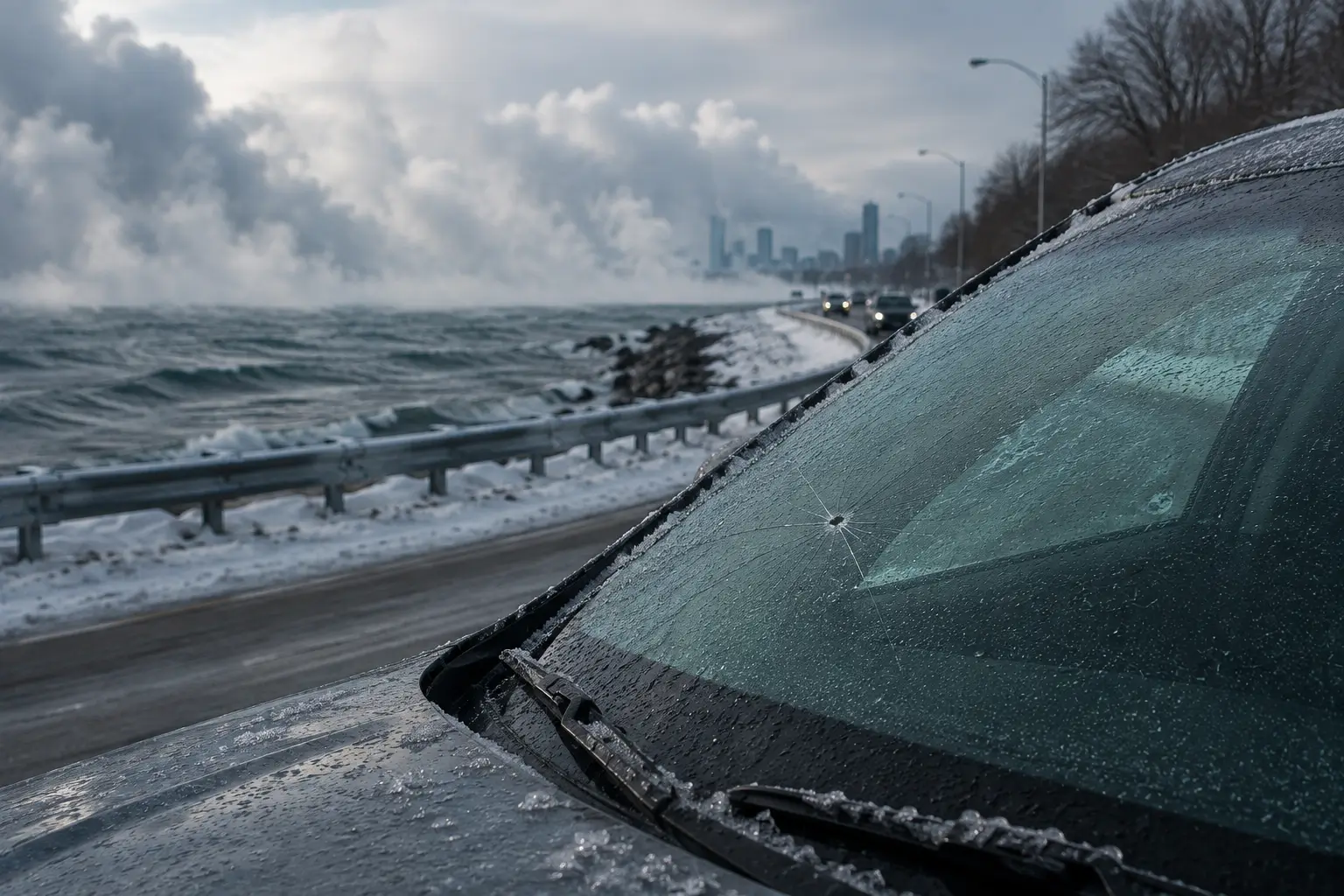
I’ve been working on windshields for over 30 years, and Michigan winters—especially lake effect weather—have taught me one thing very clearly: your windshield goes through more stress than you think.
I remember one winter morning after a brutal lake effect storm. Snow piled up overnight, temperatures dropped hard, and by 9 AM my shop was already full. One customer walked in shaking his head and said, “Ray, I didn’t hit anything. It just cracked sitting in my driveway.”
And I told him, “Yeah… that happens more than you think around here.”
That’s the reality of lake effect weather. It doesn’t always damage your windshield in obvious ways. It works slowly, quietly, and then suddenly—crack.
If you live in Michigan, understanding how lake effect weather impacts windshield durability can save you money, stress, and a lot of frustration. Let me break it down for you like I would in my shop.
What Is Lake Effect Weather and Why It’s So Harsh on Glass
Lake effect weather isn’t your typical winter condition. It’s unpredictable, intense, and constantly changing.
It happens when cold air moves over the relatively warmer Great Lakes. That temperature difference creates heavy snow, strong winds, and rapid shifts in weather conditions.
Now here’s the part most people don’t realize—your windshield doesn’t like sudden changes.
You’re not just dealing with cold temperatures. You’re dealing with fluctuations. One moment it’s freezing, then the sun comes out, then it drops again overnight. That cycle repeats over and over.
I’ve seen windshields crack without a single impact. No rock, no debris—just stress from temperature swings.
Your windshield is strong, but it’s not immune to physics. It expands when it warms up and contracts when it cools down. When those changes happen too quickly or too often, the glass weakens.
Lake effect weather creates the perfect conditions for that kind of stress.
How Temperature Swings Cause Stress Fractures
This is one of the biggest reasons windshields fail during Michigan winters.
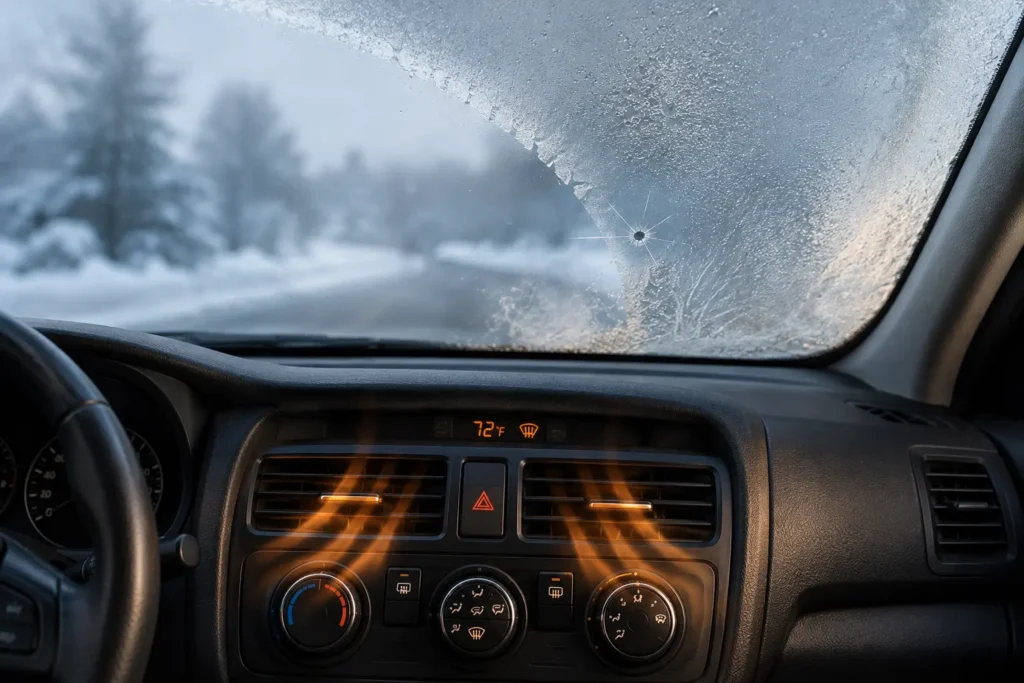
Let’s say your car sits outside overnight in freezing temperatures. The glass contracts and becomes more brittle. Then in the morning, you start your car and blast the defroster.
Now the inside of the windshield heats up quickly, while the outside is still ice-cold.
That uneven temperature creates stress inside the glass. And if there’s even a tiny flaw—a chip, a scratch, or a weak point—that stress can turn it into a crack.
I’ve seen it happen right in front of customers. One guy turned on his defroster while we were talking, and within minutes, a small chip spread across the glass.
He just stared at it and said, “Did that really just happen?”
Yes. It did.
Lake effect weather makes these temperature swings more extreme. It’s not just cold—it’s constantly changing cold. And that’s what makes it so damaging.
Snow Load and Ice Pressure on Windshields
Snow might look soft and harmless, but when it builds up, it adds weight.
Heavy snow sitting on your windshield creates pressure. It might not seem like much at first, but over time, that weight adds stress—especially if the glass already has a weak spot.
Then there’s ice. Ice is even worse.
When freezing rain hits your windshield, it forms a solid layer that sticks tightly to the surface. Removing it often requires force, and that force can damage the glass.
I’ve seen people use whatever they can find—cheap scrapers, metal edges, even tools that were never meant for glass. That’s where scratches and chips start.
One customer once poured hot water on his frozen windshield to save time. Within seconds, the glass cracked across the center.
That’s thermal shock—and it’s one of the fastest ways to destroy a windshield.
Lake effect weather often brings snow, ice, and freezing rain all in the same week. That constant cycle puts repeated stress on your glass.
Road Salt, Sand, and Flying Debris
Now let’s talk about what’s happening on the road.
During lake effect conditions, roads are treated heavily with salt and sand. It helps with traction, but it creates another problem—debris.
As cars drive, that debris gets kicked up into the air. And guess where it lands? Your windshield.
I’ve replaced thousands of windshields because of small chips caused by road debris. Most of those chips happen during winter.
You might not even notice it at first. Just a tiny “tick” sound while driving. But that small impact creates a weak point.
Then the cold weather kicks in, temperatures drop, and that tiny chip starts to spread.
I always tell customers—winter driving isn’t just about avoiding accidents. It’s about avoiding the little hits that add up over time.
Lake effect weather increases the amount of debris on the road, which increases the chances of damage.
Wind Pressure and Highway Driving Stress
Strong winds are another part of lake effect weather that people don’t think about.
When you’re driving at highway speeds, your windshield is already under pressure. Add strong gusty winds, and that pressure increases.
It might not crack your windshield instantly, but over time, it adds to the overall stress.
I’ve had customers come in after long winter drives saying their windshield cracked out of nowhere. No impact, no obvious cause.
But when you look at the conditions—high speed, strong winds, freezing temperatures—it all adds up.
Wind also carries debris. Small particles can travel faster and hit harder when pushed by strong gusts.
It’s one of those hidden factors that contributes to windshield damage without people realizing it.
Why Small Chips Turn Into Big Cracks Faster in Winter
This is something I wish every driver understood. A small chip in the summer might stay small for weeks or even months. But in winter—especially with lake effect conditions—it can spread in a day. Cold temperatures make the glass more brittle. That means it’s less flexible and more likely to crack under stress.
Then you add temperature changes, road vibrations, and pressure from snow or ice.
I’ve seen chips spread overnight while the car was just sitting in a driveway. One customer told me, “It was just a tiny dot yesterday.” By the next morning, it was a full crack across the windshield.
That’s how fast it can happen.
If there’s one piece of advice I always give, it’s this—don’t ignore small chips in winter. They won’t stay small.
The Impact of Defrosters and Heating Systems
Your car’s heating system is helpful—but it can also cause problems if used incorrectly.
When you blast hot air onto a freezing windshield, you create a sudden temperature difference. That’s what leads to stress fractures. I always recommend warming up your car gradually. Let the temperature rise slowly instead of going straight to maximum heat.
Think of it like pouring boiling water into a cold glass—it’s going to crack.
I’ve seen this mistake happen so many times, especially during early morning starts.
Drivers are in a hurry, they want to clear the glass quickly, and they don’t realize they’re putting extra stress on it. Lake effect weather makes this worse because the temperature difference is more extreme.
A little patience can go a long way in protecting your windshield.
Long-Term Wear and Tear from Repeated Exposure
Here’s something most people don’t think about—damage doesn’t always happen all at once. Sometimes it builds up slowly.
Every time your windshield expands and contracts, every time it gets hit by debris, every time it’s exposed to harsh conditions—it’s wearing down a little. Over weeks and months of lake effect weather, that wear adds up.
I’ve seen windshields that looked fine suddenly fail because they reached their limit.
It’s like bending a paperclip back and forth. It doesn’t break right away—but eventually, it does.
That’s what repeated exposure to harsh weather does to your glass.
Practical Ways to Protect Your Windshield
After all these years, I’ve learned that small habits can make a big difference. Try to avoid sudden temperature changes. Warm up your car gradually instead of blasting heat right away.
Use a proper ice scraper—something designed for glass, not a random tool from your garage. Keep a safe distance from other vehicles, especially trucks that kick up debris.
If possible, park in a garage or covered area to reduce exposure. And most importantly—fix chips early. Don’t wait.
These steps won’t make your windshield indestructible, but they’ll definitely help it last longer.
Real Experiences From My Shop
Every winter, I see the same pattern. Lake effect storms hit, and within days, the number of cracked windshields increases.
One week, after a series of temperature swings and heavy snow, we had customers coming in nonstop. Most of them said the same thing—no impact, just cracks appearing suddenly. Another customer ignored a small chip for a few days. By the time he came in, it had spread across half the windshield.
He told me, “I thought I had more time.”
That’s the thing about lake effect weather—it doesn’t give you much time.
Final Thoughts
If you live in Michigan, lake effect weather is just part of life.
But understanding how it impacts your windshield can help you stay ahead of the damage.
Your windshield is constantly dealing with temperature changes, pressure, debris, and environmental stress. During lake effect conditions, all of those factors come together at once.
The good news is, you can take simple steps to protect it.
Pay attention to small damage. Avoid sudden temperature changes. Use the right tools. And don’t wait when something needs fixing.
Because in my experience, it’s not one big event that causes most windshield damage—it’s the small things, repeated over time.
FAQ
Can lake effect weather crack a windshield without impact?
Yes, lake effect weather can absolutely crack a windshield without any direct impact, and this is something I’ve seen repeatedly over the years in Michigan winters. Many drivers assume a crack must come from a rock or physical hit, but that’s not always the case.
When your windshield is exposed to rapid temperature changes, especially during lake effect conditions, the glass expands and contracts unevenly. If there’s already a small chip, scratch, or even a microscopic weakness in the glass, that internal stress can cause it to suddenly spread into a visible crack.
I’ve had customers come in shocked, saying their car was parked all night and nothing touched it. But when you combine freezing temperatures, wind pressure, and overnight contraction of the glass, it creates the perfect environment for stress failure.
Why do windshields crack more in winter?
Windshields crack more often in winter because glass behaves differently under cold conditions. When temperatures drop, glass becomes more rigid and less flexible, which means it cannot absorb stress as easily as it does in warmer weather.
Now add lake effect weather on top of that—constant freezing, thawing, snow, ice, and sudden temperature shifts. This repeated cycle creates internal tension inside the windshield. Even normal driving vibrations or a small chip can become enough to trigger a crack.
Another big factor is human behavior during winter. Drivers use defrosters, heaters, and hot air to clear ice quickly. That sudden heat applied to cold glass creates thermal imbalance, which is one of the fastest ways to expand existing damage.
Is it bad to use the defroster on full heat?
Using your defroster on full heat immediately after starting your car in freezing weather is one of the most common mistakes I see, and yes—it can be harmful to your windshield if not done carefully.
When you blast hot air onto a frozen windshield, the inside surface of the glass heats up rapidly while the outside remains extremely cold. This uneven temperature creates what we call thermal stress. If there is even a tiny imperfection in the glass, that stress can cause it to expand instantly into a crack.
I always tell customers to think of it like pouring boiling water into a frozen glass—it doesn’t matter how strong the glass is, the sudden change is too much.
How quickly should I fix a small chip in winter?
In winter conditions—especially during lake effect weather—you should fix a small chip as soon as possible, ideally within a day or two. Waiting even a short time can significantly increase the risk of the damage spreading.
Cold temperatures make the glass more brittle, and every time you drive, the windshield is exposed to vibration, pressure changes, and road debris. Add temperature swings from heating systems, and that tiny chip becomes highly unstable.
I’ve personally seen cases where a driver ignored a small chip on a Monday, and by Wednesday it had already turned into a long crack stretching across the windshield. Once that happens, repair is no longer an option—you’re looking at a full replacement.
Does parking indoors help protect my windshield?
Yes, parking indoors or in a covered space is one of the most effective ways to protect your windshield from lake effect weather damage. The main advantage is temperature stability.
When your car is parked outside in Michigan winters, the windshield is constantly exposed to freezing air, snow buildup, and rapid temperature shifts. But when parked indoors, those extreme fluctuations are significantly reduced, which lowers stress on the glass.
Another benefit is protection from physical hazards. Snow accumulation, ice formation, falling branches, and even debris carried by wind are all reduced when your vehicle is sheltered.