
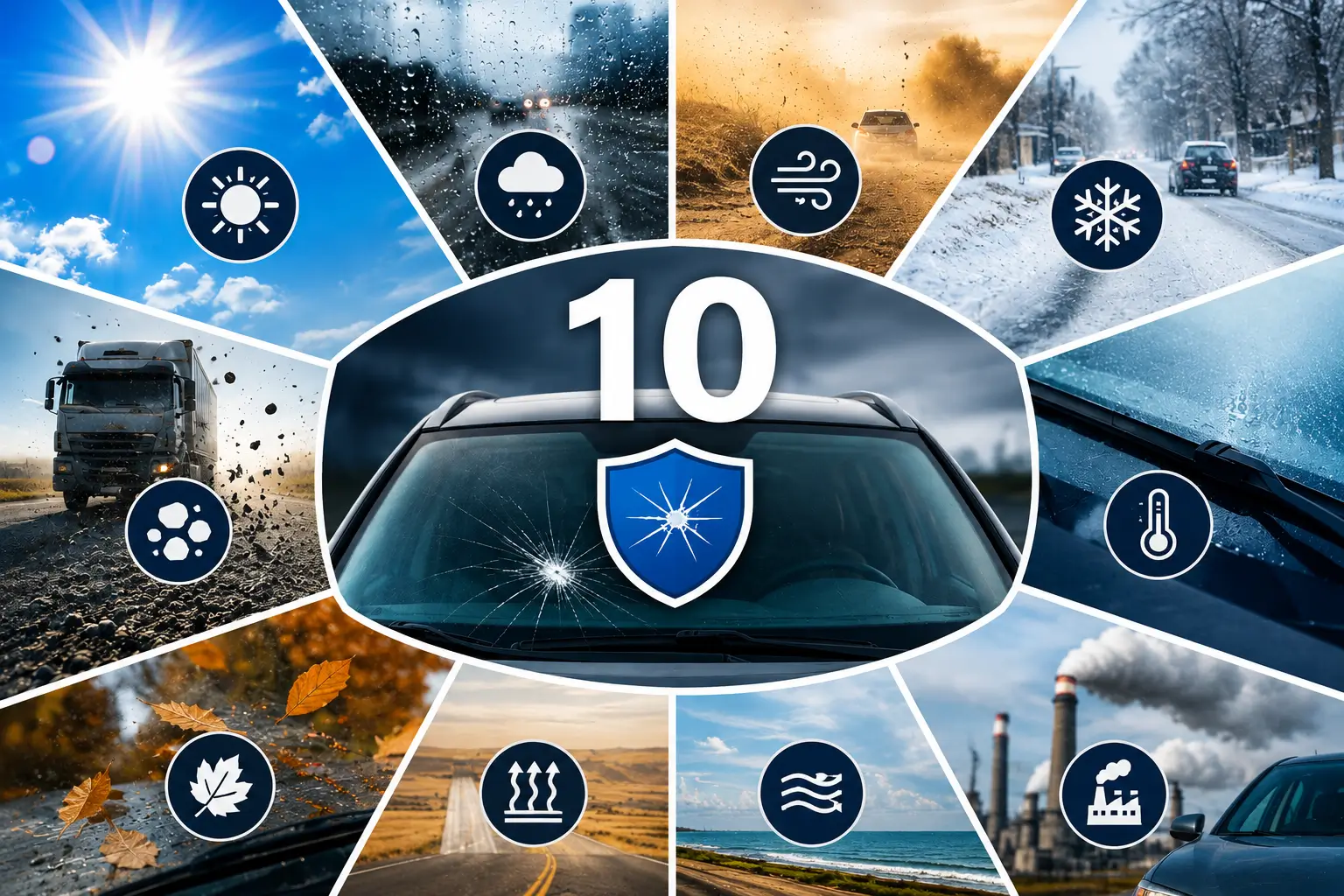
I’ve been working on cars for over 30 years, from classic 90s sedans to modern EVs. One thing I’ve learned is that a windshield is more than just glass—it’s a crucial part of your car’s structure, safety system, and even ADAS sensors. Yet, most drivers underestimate how environmental factors silently wear down and weaken their windshield over time.
Michigan is a perfect example: from freezing lake-effect winters to scorching summer sun, your windshield faces a constant battle.
Even if you treat your car with care, the environment can quietly chip away at the strength and reliability of your glass. I’ve repaired countless windshields that looked fine at first glance but failed because of prolonged exposure to environmental stressors.
In this article, I’ll walk you through the top 10 environmental factors that weaken your windshield, explain why they matter, and offer tips to protect your glass. We’ll also discuss how some seemingly minor issues can lead to big safety hazards down the road.
How Environmental Damage Builds Up Over Time
One of the biggest misconceptions drivers have is that windshield damage happens suddenly. In reality, environmental damage is almost always gradual.
Your windshield is constantly exposed to multiple stressors at once—heat, cold, debris, chemicals—and each one contributes a small amount of wear. Individually, these effects may seem insignificant, but over months or years, they compound into noticeable damage.
I’ve seen many windshields that looked perfectly fine from a distance but failed under minor stress because the glass had already been weakened internally. Micro-abrasions, resin fatigue, and tiny stress fractures build silently beneath the surface.
By the time a crack becomes visible, the damage has already progressed significantly. This is why regular inspection and awareness are so important. You’re not just reacting to damage—you’re preventing the buildup that leads to failure.
The Hidden Impact on Structural Integrity
Most drivers don’t realize that the windshield plays a direct role in the structural strength of the vehicle. It helps support the roof and contributes to how the car absorbs impact during a collision. When environmental factors weaken the glass, they are not just affecting visibility—they are compromising structural integrity.
For example, prolonged exposure to UV rays or repeated freeze-thaw cycles can weaken the bonding layer within laminated glass.
This reduces the windshield’s ability to distribute force evenly. In a crash scenario, this could affect how the roof holds up or how airbags deploy.
I’ve worked on vehicles where environmental wear had reduced the effectiveness of the windshield long before any visible crack appeared. It’s a hidden risk that most drivers never consider until it’s too late.
How Environmental Damage Affects ADAS Systems
Modern vehicles rely heavily on Advanced Driver Assistance Systems, many of which depend on windshield-mounted cameras and sensors. These systems require a perfectly clear and properly aligned surface to function correctly. Even minor environmental damage can interfere with their accuracy.
Tiny pits from acid rain, micro-scratches from dust, or slight distortions from heat stress can scatter light and affect how cameras interpret the road.
This can lead to incorrect readings, delayed responses, or system warnings. In some cases, drivers may not even realize their safety systems are compromised.
I’ve seen vehicles where customers complained about inconsistent lane assist, only to discover that the issue was caused by subtle windshield damage. This is why maintaining the condition of your windshield is not just about the glass—it’s about ensuring your entire safety system works as intended.
The Cost of Ignoring Environmental Wear
Ignoring environmental damage doesn’t just lead to inconvenience—it leads to higher costs over time. What starts as a small chip or minor surface wear can quickly escalate into a full windshield replacement if left untreated.
From a financial perspective, early intervention is always cheaper.
A simple repair costs a fraction of a replacement, but once the damage spreads or affects critical areas, replacement becomes the only option. Beyond the cost of glass, you may also need recalibration for ADAS systems, which adds to the expense.
I’ve had countless customers say, “I wish I had fixed this earlier.” That’s a common pattern. Environmental damage rarely forces immediate action, which is why it’s often delayed. But the longer you wait, the more expensive and complicated the solution becomes.
Seasonal Inspection
One of the most effective ways to combat environmental damage is through seasonal inspection. Each season brings its own challenges, and preparing for them can significantly extend the life of your windshield.
In winter, you’re dealing with ice, salt, and freezing temperatures. In summer, it’s heat, UV exposure, and expansion stress. Spring and fall introduce rain, debris, and fluctuating temperatures. By checking your windshield at the start of each season, you can identify small issues before they worsen.
In my experience, drivers who perform regular seasonal checks rarely face sudden failures. They catch chips early, maintain their seals, and adjust their habits based on conditions. It’s a simple routine, but it makes a major difference in long-term durability.
Long-Term Protection Strategies for Windshield Longevity
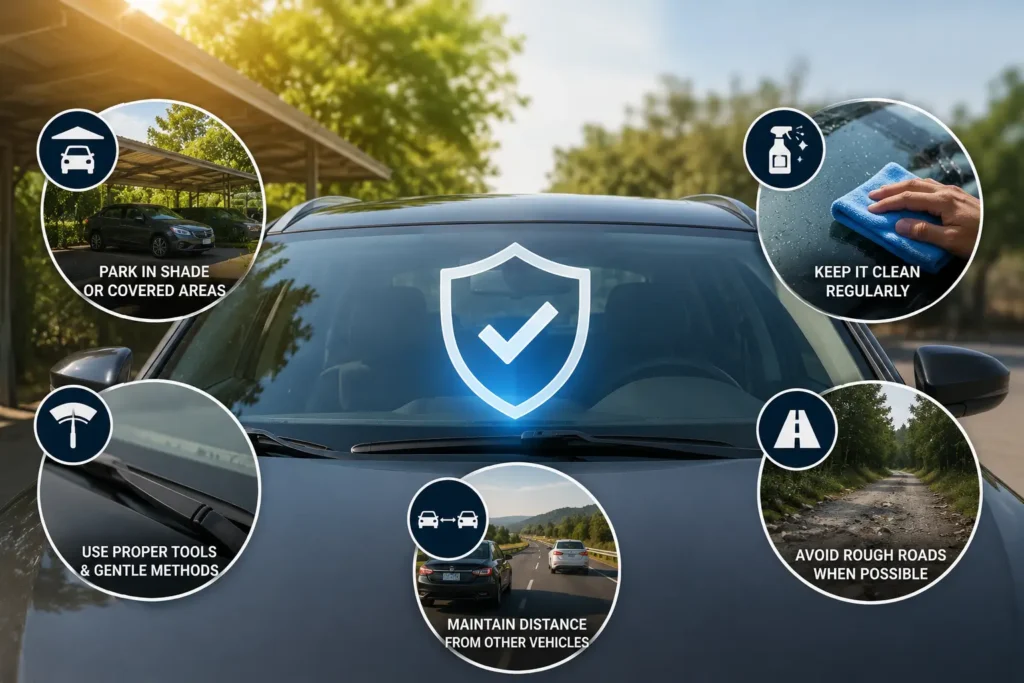
Protecting your windshield from environmental damage isn’t about one single action—it’s about building consistent habits over time. Small protective measures, when combined, can significantly extend the lifespan of your glass.
Parking in shaded or covered areas reduces UV exposure and heat stress. Regular cleaning prevents buildup of harmful substances like salt, dirt, and sap.
Using proper tools and gentle methods avoids introducing new damage during maintenance. Even driving behavior—like maintaining distance and avoiding rough roads—plays a role.
What I’ve noticed over decades is that drivers who are proactive rarely face major windshield issues. It’s not about perfection—it’s about consistency. Taking small steps to protect your windshield every day ensures it remains strong, clear, and reliable for years.
10 Environmental Factors That Weaken Your Windshield
1. Extreme Heat and Sun Exposure
Windshields are designed to withstand heat, but constant exposure to direct sunlight can cause gradual deterioration. Prolonged UV radiation weakens the resin that bonds laminated glass layers, leading to small micro-cracks invisible to the naked eye. Over time, these cracks grow, reducing structural integrity.
UV damage and resin breakdown
When the sun beats down on your windshield daily, the ultraviolet rays slowly degrade the adhesive layers. This makes the glass less effective at absorbing impact, especially during collisions. Cars parked outside for hours are particularly vulnerable.
Heat-related stress cracks
Rapid temperature changes—like blasting the AC on a hot summer day—can create internal stress. I’ve seen windshields develop spiderweb cracks after years of repeated heat cycles. Even high-quality OEM glass can eventually succumb.
Protective measures
Using a sunshade, parking in shaded areas, or applying UV-protective sprays can slow this damage. It’s not just about keeping the cabin cool—it’s about prolonging the windshield’s life and maintaining safety.
2. Freezing Temperatures and Ice
Cold Michigan winters are notorious for their impact on glass. Ice doesn’t just sit on your windshield—it interacts with small imperfections, expanding and worsening them. Laminated glass is durable, but extreme cold makes it brittle.
Ice expansion and stress cracks
When water seeps into tiny chips or scratches and freezes, it expands. That pressure can turn a minor blemish into a full-length crack overnight. I’ve had customers come in after a single frost who needed complete replacements.
Thermal shock from heaters
Turning on a powerful defroster instantly can cause rapid temperature changes. This thermal shock may lead to cracking, particularly near edges where the glass is slightly thinner.
Winter prevention tips
Use de-icing sprays, soft scrapers, and avoid blasting the heater directly on ice. Even small precautions can prevent thousands in repair costs.
3. Road Salt and Chemicals
Road salt is a necessary evil in northern climates. It keeps roads drivable, but it’s harsh on your car, including your windshield. Salt and chemical mixtures accelerate corrosion on any exposed metal, and even micro abrasions in glass can grow worse from repeated exposure.
Salt-induced micro-abrasions
Salt grains act like tiny sandpaper particles. Windshield wipers push these grains across glass, creating fine scratches. Over time, these scratches reduce clarity and compromise strength.
Chemical interaction with adhesives
Salt and chemical runoff can seep into the resin layers around the glass. I’ve repaired vehicles where weakened adhesive caused minor leaks and misalignment of ADAS sensors.
Preventive steps
Rinse your car frequently during winter months, replace worn wiper blades, and use protective coatings to reduce salt damage.
4. Hail and Severe Storms
Michigan isn’t immune to hail, and even small hailstones can cause chips or dents in a windshield. These impact points may seem minor but can quickly evolve into dangerous cracks.
Micro-damage from hail
A pebble-sized dent can propagate into a spiderweb crack if left untreated. Even tempered glass designed for impact can’t escape repeated stress.
Storm-related debris
Strong winds often throw sticks, gravel, or other debris at your car. Each strike may only cause a small chip, but multiple hits weaken the overall structure.
Protection tips
During storm season, park in covered areas or garages. Using hail-protective blankets for vehicles can prevent minor cracks that become major headaches.
5. Temperature Fluctuations
Frequent swings between hot days and freezing nights create thermal expansion and contraction in glass. Even the highest-quality windshields are subject to stress under these conditions.
How expansion and contraction damage glass
Glass naturally expands in heat and contracts in cold. Repeated cycles create invisible stress lines, particularly near edges where the glass meets the frame.
Risk to laminated layers
Over time, these stress lines compromise the resin bonding, reducing the windshield’s ability to absorb shocks. I’ve seen cracks propagate from tiny imperfections caused purely by thermal stress.
How to reduce risk
Try to park in areas with minimal temperature swings, use car covers, and avoid rapid heating or cooling. These small adjustments preserve the windshield’s strength.
6. Tree Sap and Organic Debris
Tree sap isn’t just sticky—it’s acidic. Leaves, bird droppings, and sap can eat away at the surface coating of your windshield. Left unattended, these substances weaken the glass and reduce visibility.
Acidic properties and glass erosion
Over time, acid etches into the protective coatings, causing tiny pits that spread. Even minor pits disrupt wiper performance and sensor functionality.
Organic debris and scratches
Leaves trapped under wipers can grind into the glass during motion, creating micro-scratches. These are especially harmful on laminated glass with sensors.
Preventive measures
Park away from trees when possible, clean off sap immediately, and use microfiber cloths instead of scrapers that can worsen damage.
7. Dust, Sand, and Dirt
Even on dry days, airborne particles impact your windshield at highway speeds. Microscopic abrasions accumulate over time, making glass more susceptible to cracks from other stressors.
Highway erosion
Sand and grit kicked up by other vehicles can chip glass. Over years, minor impacts create weak points.
Wiper damage from trapped debris
Windshield wipers spread dust across the glass, leading to scratches. Replacing worn wipers frequently reduces this risk.
Mitigation tips
Wash your windshield regularly, inspect for chips, and replace wipers as soon as streaking appears.
8. High Winds and Flying Debris
Wind is more than an annoyance—it can hurl stones, twigs, or gravel into your windshield. Even small impacts can lead to cracks if the glass has pre-existing weaknesses.
Edge stress from wind pressure
High-speed winds push against edges, especially on SUVs or larger vehicles. Over time, this stress can exacerbate micro-cracks.
Debris collision risk
Flying objects cause chips or cracks, which compromise structural integrity. I’ve repaired cars where small gravel hits eventually caused full replacements.
Protective measures
Use garages or covered parking whenever possible. Drive cautiously on windy days or near construction sites.
9. Pollution and Acid Rain
Industrial pollution and acid rain slowly eat away at glass and resin coatings. Over years, this chemical exposure can weaken windshields, reducing their ability to handle impacts.
Chemical erosion over time
Acid rain alters the chemical composition of glass surface coatings, creating tiny pits and scratches that grow.
Impact on sensor functionality
ADAS cameras and rain sensors depend on clarity. Even small pits can scatter light, leading to misreads.
Mitigation
Wash your windshield promptly after rain, and apply protective coatings to reduce exposure.
10. Improper Car Washing and Maintenance
Finally, even your cleaning routine can damage your windshield. Harsh brushes, pressure washers, or improper detergents weaken glass over time.
Abrasive cleaning tools
Brushes or sponges with grit can scratch glass, creating points for cracks to start.
High-pressure water risks
Pressure washers can damage seals and dislodge adhesives if used incorrectly.
Recommended maintenance
Use soft microfiber cloths, gentle cleaners, and follow proper wiper maintenance. Careful cleaning extends windshield life and maintains ADAS performance.
FAQ Section
Q1: How quickly can environmental factors weaken a windshield?
It depends on exposure and local climate. High-UV areas and regions with frequent frost or hail may cause noticeable weakening within 1–2 years.
Repeated stress accumulates gradually, so early inspection is crucial to catch micro-cracks before they grow. Regular washing, parking in shade, and monitoring chips can prevent long-term damage.
Q2: Can a windshield with micro-cracks still be safe?
Micro-cracks may not immediately compromise safety, but they reduce the glass’s ability to absorb impacts.
Even small chips can expand under stress from temperature changes, wind, or debris. A repair or replacement is recommended to maintain structural integrity and prevent ADAS sensor misalignment.
Q3: Does windshield tinting affect environmental durability?
Yes. High-quality tinting can block UV rays, reducing resin degradation. However, poor-quality film may trap heat or interfere with sensor function. Always use OEM-approved or professional-grade tinting materials.
Q4: Are certain vehicles more susceptible to environmental damage?
Vehicles with large windshields, SUVs, or those equipped with ADAS cameras are more vulnerable. Larger glass surfaces collect more heat, debris, and ice, while sensitive sensors require precise alignment to function properly.
Q5: How can I prevent environmental damage effectively?
Park in garages or shaded areas, wash regularly, replace wipers frequently, and apply protective coatings. Also, inspect for chips after storms or hail. Preventive care minimizes weakening, extending the lifespan of your windshield and maintaining safety.
Conclusion
Your windshield does more than shield you from the elements—it’s a vital safety component. From extreme temperatures and hail to road salt and tree sap, environmental factors silently weaken glass over time.
Early inspection, proper cleaning, and preventive care can extend your windshield’s lifespan, protect ADAS systems, and save you money in the long run.
Remember, prevention is always better than repair. Treat your windshield as an essential safety feature, and it will protect you when it matters most.