

I’ve been in this business for over 30 years, and if there’s one thing that surprises drivers the most, it’s this—yes, insurance can deny a windshield claim.
I remember a customer who came into my shop frustrated. He had a cracked windshield from road debris, filed a claim, and expected it to be covered. A few days later, he got a call—denied. He looked at me and said, “Ray, how is that even possible?”
And honestly, I understood his frustration.
For most people, windshield damage feels like a straightforward situation. You have insurance, something hits your glass, and it should be covered. But the reality is, insurance doesn’t always work that simply. There are rules, conditions, and fine print that can catch you off guard.
So let’s walk through this together, the way I would explain it in my shop, so you know exactly when a claim can be denied—and how to avoid it.
How Windshield Insurance Claims Work
Before we talk about denials, you need to understand how windshield claims actually work.
In most cases, windshield damage falls under comprehensive coverage. That includes things like rock chips, debris, weather damage, or even vandalism. If you have this type of coverage, your insurance may help pay for repair or replacement.
But here’s the key—coverage depends on your policy details.
Some drivers have full glass coverage, which means the windshield can be repaired or replaced without paying a deductible. Others have a standard comprehensive policy, where a deductible applies. And some drivers don’t have comprehensive coverage at all.
I’ve seen customers assume they’re covered, only to find out later that their policy doesn’t include it. That’s usually the first point of confusion.
Insurance companies don’t just look at the damage. They look at your policy, your claim history, and the situation surrounding the damage. All of that plays a role in whether a claim is approved or denied.
Yes, Insurance Can Deny a Windshield Claim
Let’s address this directly.
Yes, insurance companies can deny a windshield claim, and it happens more often than people think. Over the years, I’ve seen it firsthand with customers who walked into my shop expecting full coverage, only to run into problems.
A denial doesn’t always mean the damage isn’t real. It usually means something about the situation doesn’t meet the requirements of the policy.
Sometimes it’s as simple as the driver not having the right type of coverage. Other times, it’s related to how or when the damage occurred. And in some cases, it’s about documentation or timing.
I always tell customers this—insurance is a contract. If something falls outside that contract, even slightly, the claim can be denied.
That’s why it’s so important to understand the common reasons behind these denials. Once you know what to look for, you can avoid most of them.
Common Reasons Windshield Claims Get Denied
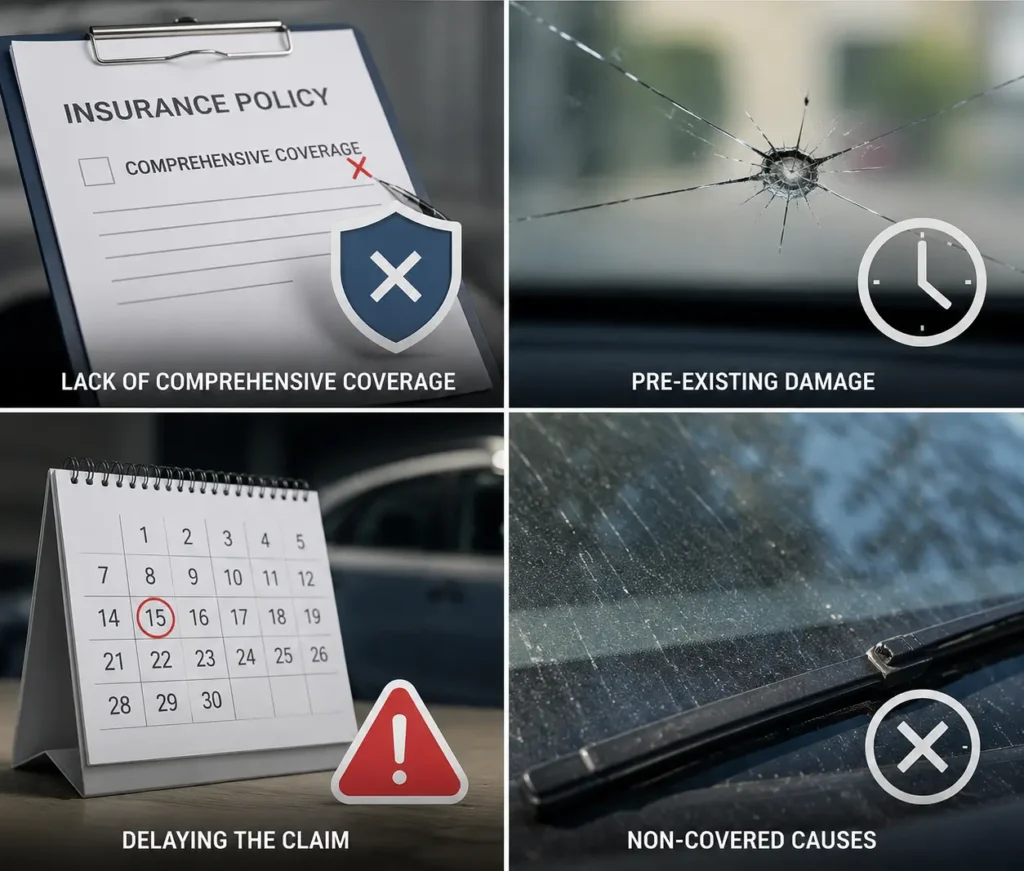
From my experience, most denied claims fall into a few clear categories.
One of the biggest reasons is lack of comprehensive coverage. If your policy doesn’t include it, the insurance company simply isn’t responsible for paying for the damage. I’ve seen this catch a lot of drivers off guard.
Another common issue is pre-existing damage. If the windshield was already cracked or chipped before the policy started, insurance may refuse to cover it. They expect the damage to happen after the policy is active.
Timing can also be a factor. If you wait too long to file a claim, the insurance company may question when the damage actually occurred. I’ve had customers come in months after noticing a crack, and by then, it becomes harder to prove what happened.
There are also cases where the cause of damage isn’t covered. For example, wear and tear or gradual damage might not qualify under certain policies.
None of these situations mean the system is unfair—it just means the rules weren’t met.
How Timing and Reporting Affect Your Claim
Timing is something many drivers underestimate.
I’ve seen people notice a small chip and think, “I’ll deal with it later.” Weeks go by, the chip spreads into a crack, and then they file a claim. At that point, insurance companies may question whether the damage worsened due to neglect.
From their perspective, they want to know exactly when and how the damage happened. The longer you wait, the harder it is to provide a clear answer.
I always advise customers to act quickly. If you notice damage, document it right away. Take photos, note the date, and file your claim as soon as possible.
There was a customer who did exactly that—called his insurance the same day a rock hit his windshield. His claim went through smoothly because everything was clear and documented.
Waiting might seem harmless, but it can complicate things more than you’d expect.
The Role of Deductibles in Claim Approval
Another area that causes confusion is deductibles.
Even if your claim is approved, you may still have to pay out of pocket. If the cost of the repair or replacement is less than your deductible, insurance won’t pay anything.
I’ve had customers file claims expecting full coverage, only to find out their deductible was higher than the cost of the repair. In those cases, the claim isn’t exactly denied—but it doesn’t provide any financial benefit either.
This is why it’s important to know your deductible before filing a claim. Sometimes it makes more sense to pay for the repair yourself, especially for small chips.
Understanding this ahead of time can save you from unnecessary frustration.
Can Insurance Deny a Claim After Approval?
This is something people don’t expect, but yes—it can happen in certain situations.
A claim might be initially approved, but later reviewed more closely. If the insurance company finds inconsistencies or missing information, they can reverse the decision.
I’ve seen this happen when documentation didn’t match the claim details or when additional inspection revealed pre-existing damage.
That’s why accuracy matters from the beginning. Be honest about what happened, provide clear information, and work with a reputable shop that can support your claim with proper documentation.
Once everything is handled correctly, the chances of reversal are much lower.
How to Avoid Getting Your Windshield Claim Denied
After all these years, I’ve learned that most denials can be avoided with a few simple steps.
First, make sure you understand your policy. Know whether you have comprehensive or full glass coverage, and what your deductible is.
Second, report damage as soon as it happens. The sooner you act, the easier it is to process the claim.
Third, choose a professional auto glass shop. A good shop can help document the damage, explain the process, and even work with your insurance company directly.
I’ve helped many customers navigate claims successfully just by guiding them through these steps.
It’s not complicated—but it does require attention.
Real Experiences From My Shop
Over the years, I’ve seen both sides of this.
I’ve seen claims denied because the driver didn’t have the right coverage. I’ve also seen claims approved quickly because everything was handled correctly.
One customer came in thinking his claim would be denied because he wasn’t sure when the damage happened. We documented everything carefully, worked with his insurance company, and the claim went through.
Another driver waited too long and didn’t have clear documentation. Unfortunately, his claim was denied.
These experiences taught me that preparation and timing make a huge difference.
FAQ
Why would insurance deny a windshield claim?
Insurance may deny a claim if the damage is not covered under your policy, such as lacking comprehensive coverage or having pre-existing damage. Other reasons include late reporting, unclear cause of damage, or policy limitations. Each case depends on the specific terms of your insurance agreement.
Does having full coverage guarantee approval?
No, having full coverage does not guarantee approval. While it increases the chances, the claim still needs to meet the conditions of the policy. Factors like how the damage occurred, when it was reported, and whether it falls within covered events all play a role in approval.
Can a small chip claim be denied?
Yes, even small chip claims can be denied if they don’t meet policy requirements. For example, if the damage existed before the policy started or if it’s considered wear and tear, insurance may refuse coverage. Reporting the damage early improves your chances of approval.
What should I do if my claim is denied?
If your claim is denied, review the reason provided by your insurance company. You can ask for clarification, provide additional documentation, or even appeal the decision in some cases. Working with a professional auto glass shop can also help you better understand your options.
Does filing a windshield claim affect my insurance rates?
In many cases, windshield claims under comprehensive coverage do not significantly affect your rates. However, this depends on your insurance provider and claim history. It’s always a good idea to check with your insurer before filing a claim if you’re concerned about potential rate changes.
Final Thoughts
If there’s one thing I want you to take away from this, it’s this—insurance can deny a windshield claim, but most denials are preventable.
It’s not about luck. It’s about understanding your policy, acting quickly, and working with the right people.
Windshield damage might seem like a small issue, but how you handle it can make a big difference in whether your claim is approved.
After 30 years in this industry, I’ve seen the frustration that comes with denied claims. But I’ve also seen how easily those situations can be avoided with the right approach.
Stay informed, ask questions, and don’t wait when something happens.