
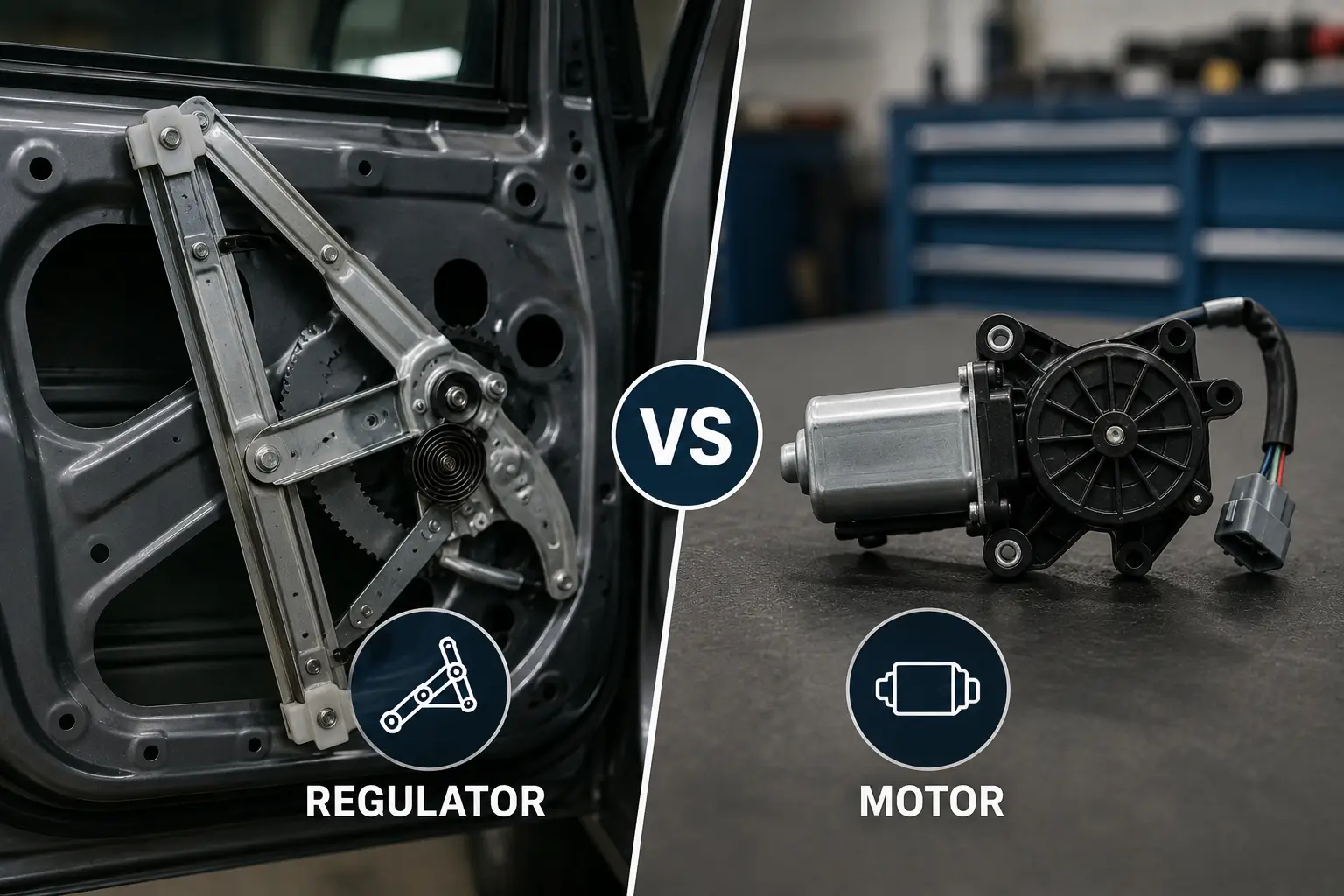
If you’ve ever tried to roll your car window up or down and it hesitated, made strange noises, or stopped moving altogether, you might have wondered: what actually makes a car window work? Most people think the motor does everything, but there’s another key player—the window regulator. I’ve been fixing cars for over 30 years, and in my shop, I’ve seen countless drivers confused about this.
Today, I want to break it down in simple terms, explain the differences, and give you the insight to keep your windows working smoothly.
Understanding the Window Regulator
A window regulator is essentially the framework that moves your car window up and down. Think of it like a set of rails and pulleys that guide the glass along its path. Without a properly functioning regulator, even the strongest motor won’t be able to move the window.
Back in the 90s, when most cars had manual windows, the regulator was purely mechanical, and you’d turn a crank to operate it. Today, most vehicles use electric regulators paired with a motor, which makes things easier but adds complexity.
The regulator supports the glass, distributes the weight, and ensures it stays aligned with the door frame. If it fails, windows may stick, tilt, or jam, and it often leads to the dreaded “window off-track” situation.
In my experience, a worn regulator is one of the most common causes of a malfunctioning power window, and it’s often mistaken for a motor problem.
When replacing a regulator, it’s important to inspect the guides, cables, and gears for wear. Many drivers overlook this and end up replacing only the motor, which doesn’t solve the underlying issue. A properly installed regulator ensures your window moves smoothly for years, reducing stress on the motor and preventing further damage.
Role of the Window Motor
The window motor is the engine that powers the movement. It converts electrical energy from the car battery into mechanical motion, which drives the regulator to raise or lower the window. Most modern cars have small, compact motors tucked inside the door panel. Some drivers assume the motor alone handles the entire operation, but without a functioning regulator, the motor’s power is wasted.
Motors can fail gradually or suddenly. A common sign I see in the shop is a motor that hums or groans but doesn’t move the window. Sometimes, it’s due to worn brushes, electrical issues, or corrosion. Regular maintenance, like keeping the window tracks clean and lubricated, can extend motor life. One time, a customer brought in a 2012 Honda Civic whose window stopped moving. I removed the door panel and found the motor was fine, but the regulator cables were frayed and stuck. Fixing the regulator restored smooth operation immediately.
Common Misconceptions
One of the biggest misconceptions is thinking a power window problem is always a motor issue. Many DIY enthusiasts will spend hundreds on a new motor, only to realize the window still doesn’t operate because the regulator is faulty.
Another misunderstanding is assuming a regulator replacement is only needed when the window is stuck. In reality, a slightly misaligned or noisy regulator can cause long-term motor strain, eventually burning it out.
I often tell customers, “Treat the regulator like the rails of a train track—the motor is the engine. If the tracks are damaged, the engine can’t do its job efficiently.” Understanding this distinction can save you time, money, and frustration.
Signs Your Regulator Needs Attention
A failing regulator can manifest in several ways. You might notice your window moves slowly, tilts to one side, or makes grinding noises. Sometimes, it will get stuck halfway or fall inside the door entirely. These are warning signs that your vehicle may need power window repair, so it’s best to act quickly.
In colder climates like Michigan, ice and snow can exacerbate regulator issues. I’ve seen cars come in after winter where the regulator cables were frozen, bent, or stretched, causing permanent damage. Acting early by inspecting and lubricating your regulator can prevent more costly repairs later.
When the Motor Fails
Motor failure has its own set of signs. If you press the window switch and hear nothing, or only a faint whirring sound, the motor may be burned out or have electrical issues. Motors are generally more expensive than regulators, so it’s crucial to diagnose correctly before ordering parts.
I remember a 2016 Ford Escape customer who replaced the motor three times over two years because the technician didn’t check the regulator. Once we replaced both simultaneously, the problem was solved permanently. A functioning motor depends on a good regulator.
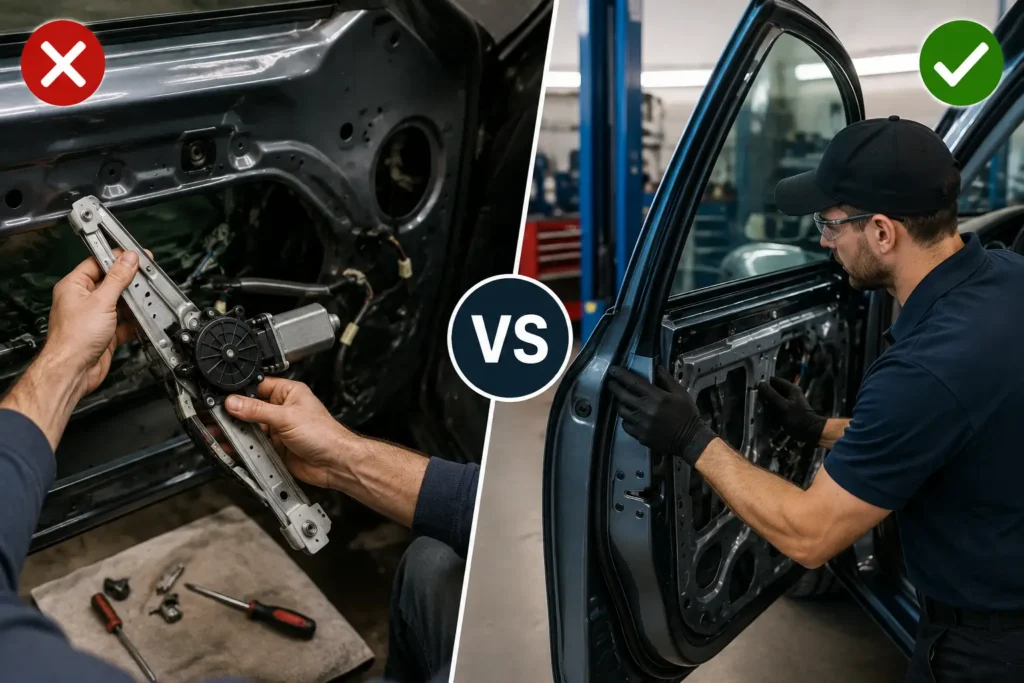
DIY vs Professional Replacement
Some car owners attempt DIY repairs, especially for regulators or motors. While it’s possible, it requires patience, proper tools, and door panel removal skills. I often caution, “One wrong move, and you can crack the window or damage the wiring.”
Professional replacement ensures alignment, proper lubrication, and correct installation. It may cost more upfront, but it prevents repeated failures and long-term damage.
For cars with ADAS systems or complex electronics, professional service is almost mandatory, as improper window installation can affect sensors or mirrors.
Maintenance Tips for Longevity
Keeping your windows and mechanisms in top shape isn’t difficult. Regularly cleaning the window tracks, lubricating the regulator cables, and avoiding forcing the window if it’s stuck can extend both motor and regulator life. Even small actions, like ensuring your windows are clear of debris in winter, can prevent frozen or bent regulators.
In my shop, I always advise customers to run their windows periodically during cold months. It may seem trivial, but moving the glass helps prevent ice buildup, reduces friction, and keeps motors from overworking.
How to Know When Both Need Replacing
Sometimes, both motor and regulator fail together. Signs include windows moving only partially, inconsistent speed, strange noises, or complete non-operation. During replacement, it’s smart to inspect both components. Using OEM or high-quality aftermarket parts ensures smooth, long-lasting performance.
A customer once asked me, “Why replace both if only one seems bad?” I explained that worn regulators put stress on motors, and worn motors can strain regulators. Replacing both together avoids repeated trips to the shop.
FAQs
Q1: How do I know if my window regulator is failing?
A failing window regulator usually gives early warning signs before it completely stops working. One of the most common symptoms is slow or uneven window movement. You might notice the glass tilting slightly as it moves, or it may struggle to stay aligned inside the door frame. Grinding, clicking, or dragging noises are also strong indicators that the regulator mechanism is wearing out.
In many cases, drivers ignore these early signs because the window still “kind of works.” But in my experience, that’s exactly the stage where repairs are easiest and cheapest. Once the regulator cables start fraying or the track bends, the damage often escalates quickly.
Cold weather can make things worse. Ice buildup inside the door can stress the regulator components, especially in older vehicles. If you notice stiffness in winter that improves in warmer weather, that’s still a sign something is wearing down internally.
Q2: Can I replace a window regulator myself?
Yes, it is possible to replace a window regulator yourself, but it’s not as simple as many online tutorials make it look. You’ll need to remove the interior door panel, disconnect electrical wiring, carefully support the glass, and then align the new regulator inside a very tight working space.
One of the biggest risks during DIY replacement is damaging the window glass itself. I’ve seen many cases where people accidentally dropped the glass inside the door cavity or cracked it while trying to reposition the regulator. Another common issue is improper alignment, which causes the window to move unevenly or stick halfway.
Q3: How long does a motor or regulator replacement take?
In most standard vehicles, replacing a window regulator or motor typically takes around one to two hours per door. This includes removing the door panel, inspecting the components, installing the new parts, and testing the window operation multiple times to ensure smooth movement.
However, not all vehicles are the same. Modern cars with complex wiring systems, side-impact sensors, or integrated electronics inside the door may take longer. In some SUVs and luxury vehicles, the process can extend beyond two hours because everything must be carefully disconnected and recalibrated.
Another factor is condition. If the old regulator has broken cables or the glass has slipped out of alignment, additional time is needed to reposition everything correctly. Rushing this process often leads to long-term issues like misalignment or motor strain.
Q4: Will a worn regulator damage the motor?
Yes, absolutely—and this is one of the most overlooked problems I see in my shop. A worn or damaged window regulator places constant resistance on the motor. Instead of moving the window smoothly, the motor is forced to work harder every time you press the switch.
Over time, this extra strain can cause the motor to overheat, wear out its internal brushes, or even fail completely. What often starts as a small regulator issue eventually turns into a full window system failure, requiring both parts to be replaced.
I’ve seen many cases where customers replaced the motor multiple times, thinking it was the root problem, when in reality the regulator was the real culprit all along. Once the regulator was replaced, the motor issues stopped immediately.
Q5: Are OEM parts necessary for replacement?
OEM parts are not always strictly necessary, but they are often the most reliable choice, especially for long-term performance. OEM (Original Equipment Manufacturer) parts are built to match your vehicle’s exact specifications, which ensures perfect fit, smooth operation, and proper alignment with the motor and regulator system.
High-quality aftermarket parts can also perform well, and in many cases they offer a more budget-friendly option. However, the key difference lies in consistency. Some aftermarket parts are excellent, while others may have slight variations in fit or durability that only show up over time.
In my experience, poor-quality parts are the real problem. I’ve seen regulators that don’t sit properly in the door frame or motors that run noisily from day one. These issues often lead to repeated repairs, which end up costing more in the long run.
Conclusion
Understanding the difference between a window regulator and motor is crucial for any driver experiencing power window problems. The regulator guides and supports the glass, while the motor provides the power.
Ignoring either component can lead to repeated repairs, higher costs, and unnecessary frustration. Regular maintenance, proper diagnosis, and professional installation can keep your windows operating smoothly for years.
Next time your window hesitates or tilts, remember: it’s often the regulator, not the motor. Addressing issues early protects your motor, prevents future damage, and saves money in the long run.
If you’re in Metro Detroit or nearby, bring your car to Save On Auto Glass—we’ve helped thousands of drivers restore their windows to perfect operation with professional care.