
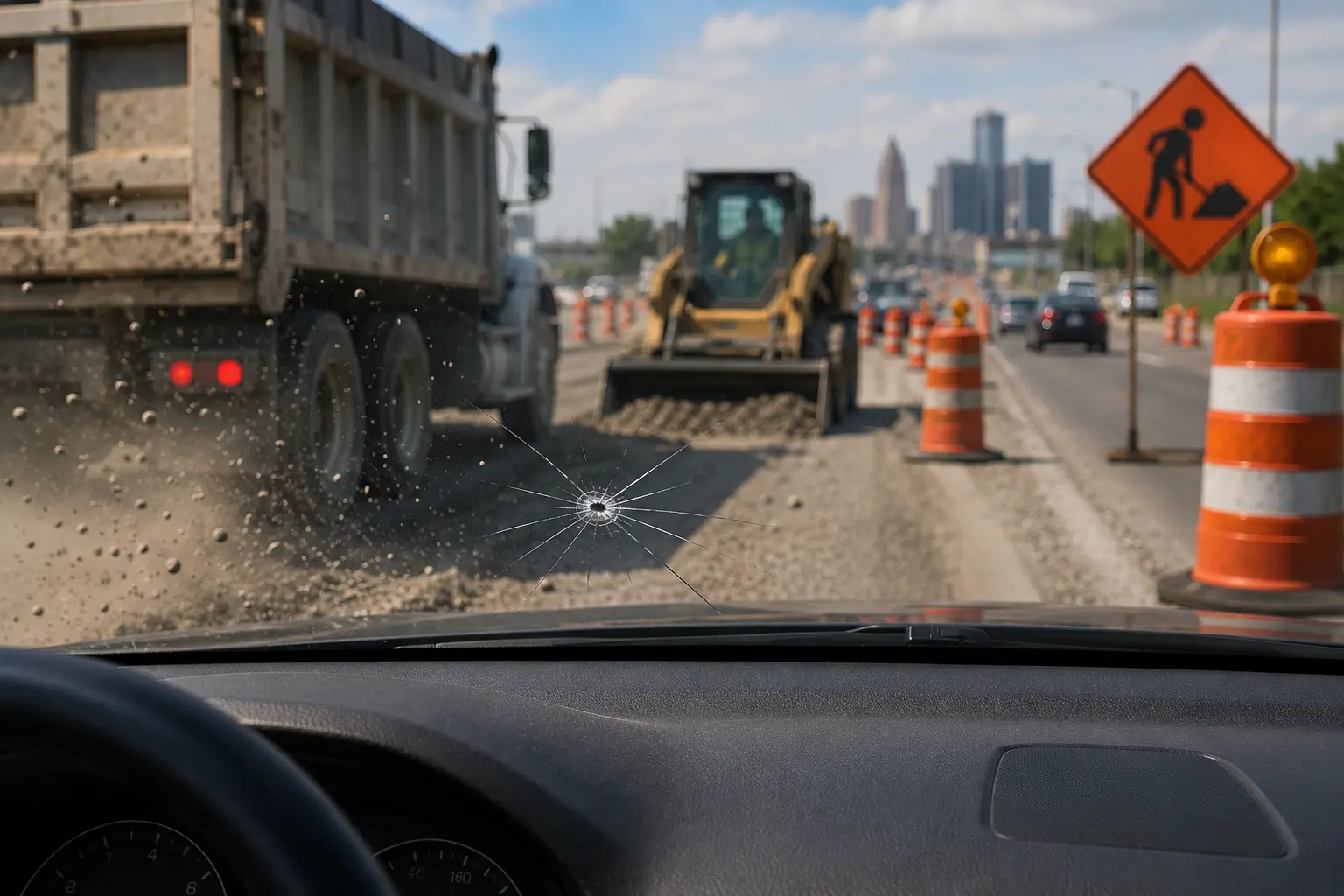
Every year, like clockwork, spring rolls around in Metro Detroit, and the road construction season begins. Potholes, detours, and construction zones dominate the streets. While most drivers worry about traffic delays and getting to work on time, there’s another risk lurking—your windshield.
I’ve been working on windshields for over 30 years, and I can tell you that construction season is one of the busiest times in my shop. Chips, cracks, and shattered glass are far more common during these months.
One morning, a customer came in holding a tiny chip, saying, “I was just on I-75 yesterday. How did this happen?” I took a closer look and noticed it wasn’t just a chip—it was the start of a crack that would’ve spread quickly if left untreated.
Construction zones create unique risks that most drivers don’t anticipate. Understanding them can save you money, stress, and the headache of an unexpected windshield replacement. Let me walk you through exactly what’s happening during construction season, why your windshield is vulnerable, and how to protect it.
Why Construction Zones Are Hazardous for Windshields
Construction zones aren’t just inconvenient—they’re damaging. Heavy machinery, loose gravel, sand, and sudden detours increase the likelihood of debris hitting your car.
I remember one job during the Woodward Avenue renovation. A dump truck kicked up a small stone that hit a customer’s windshield. At first, it was just a minor chip, but within a few days, the crack had spread across the driver’s line of sight.
Vehicles often slow down, speed up, and swerve unpredictably around cones and barriers, which increases the chance of rocks and construction debris flying. Even a tiny pebble can create a weak spot that develops into a major crack, especially if it’s already an older windshield.
Metro Detroit’s construction season amplifies these risks because projects are often extensive and long-term, meaning drivers face these hazards repeatedly. Your windshield faces stress not just from impacts but also from vibrations caused by uneven road surfaces.
The Impact of Debris and Flying Gravel
Loose debris is one of the main culprits behind windshield damage during construction. Sand, small rocks, and even broken asphalt fragments can fly at highway speeds and chip your glass.
I’ve worked with countless customers who couldn’t believe that a tiny chip could appear so suddenly. One client said, “It was just a little pebble, I barely felt it!” But that small chip often spreads because of stress from driving, temperature changes, and repeated impacts from road vibrations.
The key takeaway: even minor debris matters. Metro Detroit construction zones are notorious for leaving behind small stones that can turn into expensive windshield problems if ignored.
Temperature Swings and Seasonal Challenges
Spring construction season often coincides with unpredictable Michigan weather. One day it’s sunny and 70°F, the next day it drops to 40°F with a cold rain. These temperature swings put additional stress on auto glass.
I’ve seen cars with small chips expand into full cracks simply due to the combination of stress from road vibrations and fluctuating temperatures. The glass expands and contracts, creating weak points that spread.
Drivers sometimes underestimate the impact of these swings. Even minor temperature differences between the inside and outside of the vehicle, like using the defroster while the windshield is still cold, can worsen small imperfections during construction season.
How Heavy Machinery Vibrations Affect Your Windshield
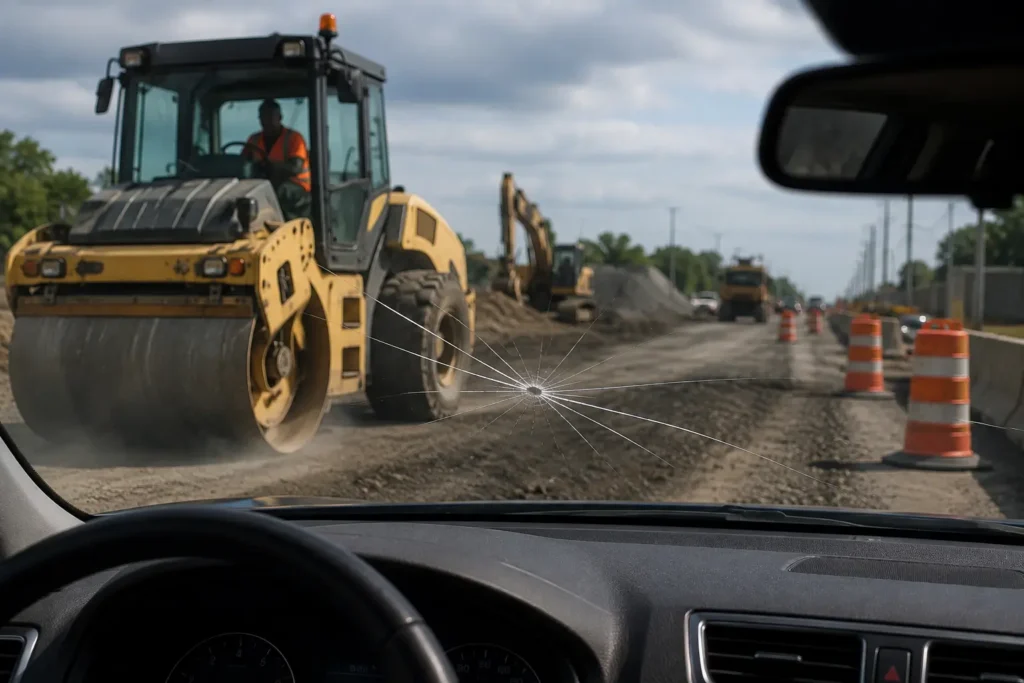
Construction zones don’t just fling debris—they also shake the road. Heavy machinery like bulldozers, cement mixers, and cranes can create vibrations that travel through the pavement.
Those vibrations reach your car and your windshield. Over time, repeated stress can exacerbate existing chips or weaken the glass. I often notice windshields that survived minor debris impacts but fail after repeated exposure to construction zone vibrations.
Drivers rarely think about this, but if you frequently commute through construction areas, it’s a significant risk. Consider it cumulative stress on the windshield—it’s not always immediate, but it shows up over weeks.
Common Mistakes Drivers Make During Construction Season
Many drivers unintentionally increase the risk of windshield damage during construction season. Some of the most common mistakes include:
- Following too closely behind trucks that kick up gravel.
- Driving too fast through construction zones.
- Ignoring minor chips because they seem “small.”
- Using improper tools to remove debris or ice.
- Parking near construction zones overnight, exposing the car to debris.
I always tell customers: prevention starts with awareness. Minor precautions can save hundreds of dollars in windshield repair or replacement.
DIY Prevention Tips for Drivers
Over the years, I’ve learned that preventing windshield damage during construction season isn’t about doing anything complicated—it’s about building small, consistent habits. Most drivers don’t realize how much control they actually have over protecting their windshield until they start paying attention.
Here are some practical steps that can make a real difference during Metro Detroit’s construction season:
Keep a safe following distance
One of the easiest and most effective habits is simply not driving too close to trucks or construction vehicles. These large vehicles constantly kick up gravel, sand, and small rocks from the road surface.
Even a single pebble hitting your windshield at highway speed can create a chip that later turns into a crack. By increasing your following distance, you give those particles time to fall before reaching your car.
In real driving conditions, that extra space often becomes the difference between a safe trip and a costly windshield repair.
Inspect your windshield regularly
Most drivers only notice windshield damage when it becomes obvious—but by then, it’s often too late.
Make it a habit to quickly inspect your windshield every few days during construction season. Look closely for tiny chips, faint lines, or small “dots” that might seem harmless.
Early detection is everything. A chip that takes 5 minutes to repair today can turn into a full windshield replacement within days if ignored. I’ve seen this happen countless times in my shop, especially during spring construction months.
Use proper cleaning and scraping tools
A surprising amount of windshield damage actually happens during cleaning, not driving.
Avoid using metal scrapers, knives, or any sharp household tools to remove ice, dirt, or debris. These can leave micro-scratches that weaken the glass over time.
Instead, always use a proper plastic ice scraper and soft microfiber cloth. These tools are designed to remove buildup without damaging the glass surface.
It may feel like a small detail, but over time, this habit significantly reduces wear and tear on your windshield.
Consider protective glass coatings or films
Many drivers overlook this, but protective coatings and clear films can add an extra layer of defense.
These products help absorb minor impacts from gravel and reduce the chances of chips forming in the first place. While they don’t make the glass indestructible, they act as a buffer during high-risk driving conditions like construction zones.
For drivers who frequently travel on highways or construction-heavy routes, this is a smart long-term investment that can reduce repair frequency.
Park away from construction activity
Where you park your car matters more than most people think during construction season.
Try to avoid parking near active construction zones, piles of gravel, or areas where heavy machinery is operating. Even when your car is stationary, it can still be exposed to flying debris, dust, or accidental contact.
If possible, choose covered parking or garage spaces. Even partial protection can dramatically reduce exposure to sudden impacts or environmental stress.
Avoid sudden temperature changes when possible
This is one of the most overlooked causes of windshield cracks.
If your windshield is cold, avoid immediately blasting hot air through the defroster. Similarly, don’t pour hot water on icy glass to speed things up.
These rapid temperature changes create internal stress in the glass, especially if there is already a small chip present. During construction season—when glass is already under stress from road vibration—this becomes even more dangerous.
A gradual warm-up is always safer and helps extend the life of your windshield.
Drive more smoothly in construction zones
Aggressive driving increases vibration and impact stress on your vehicle.
Slow down when entering construction zones, avoid sudden braking, and try to maintain steady movement over uneven roads or potholes.
These small adjustments reduce the amount of shock transferred to your windshield. Over time, that means fewer cracks and longer-lasting glass integrity.
Don’t ignore “minor” noises or tiny impacts
Many drivers hear a small “tick” on the windshield and assume nothing happened.
But in reality, that sound often means a small rock or piece of debris has already created a weak point in the glass. Even if you don’t see visible damage immediately, it can develop into a crack later—especially with temperature swings and road vibrations.
If you suspect an impact, it’s always worth checking the glass closely instead of ignoring it.
The Importance of Early Repair
One lesson I’ve learned in over 30 years is that early intervention is critical. A small chip today can turn into a full crack tomorrow, especially during construction season.
If the damage is caught early, a professional windshield repair can often prevent the need for a complete replacement.
I recall a customer who delayed repair on a minor chip. Within days, it had spread across the driver’s line of sight. Had it been repaired immediately, we could have avoided a full replacement.
Fixing minor chips early not only preserves your windshield but also protects Advanced Driver Assistance Systems (ADAS) that rely on precise sensor alignment. In many modern vehicles, a damaged windshield can affect lane departure warnings, automatic braking, and adaptive cruise control.
Real Stories From Metro Detroit Drivers
Every spring, I see a pattern. Drivers navigate construction zones, and suddenly, the shop fills with cars needing windshield repair.
One customer joked, “I think the construction crew is targeting my car.” I smiled and explained, “It’s not personal—they’re just doing their job, but your windshield feels the consequences.”
Another client had a windshield crack that began during the first week of construction season. The damage spread faster than expected due to temperature swings and road vibrations. By the time he brought it in, a replacement was unavoidable.
These real stories highlight a simple truth: construction season is a high-risk period, and prevention matters.
Insurance Considerations During Construction Season
Many drivers wonder if insurance covers windshield damage from construction debris. The answer depends on your policy. Comprehensive coverage typically covers chips and cracks caused by falling or flying debris.
I always advise customers to review their policies before the season begins. If your deductible is low, repair might be cheaper than replacement. Keep documentation and photos of any damage, especially in active construction zones.
Some drivers delay repairs thinking insurance won’t help, only to face much higher costs when minor chips turn into major cracks. Early repair is usually the best financial strategy.
FAQ
Can road construction really cause windshield cracks without debris?
Yes, it absolutely can. Many drivers assume a rock or piece of gravel must hit the windshield for damage to occur, but that’s not always the case. During construction season, constant road vibrations from heavy machinery, uneven pavement, and shifting surfaces put repeated stress on the glass.
If your windshield already has a small chip or weak point, these vibrations can slowly expand it into a visible crack. It often happens gradually, so drivers don’t notice until it suddenly spreads across the glass.
Should I fix a minor chip during construction season?
Yes, fixing a minor chip as soon as possible is one of the smartest things you can do during construction season. Even a small chip can turn into a long crack quickly because of constant road stress, temperature changes, and vibration from rough construction zones.
What looks harmless in the morning can spread by the end of the week if left untreated. Early repair is usually fast, inexpensive, and prevents the need for a full windshield replacement later. It also helps protect ADAS systems in newer vehicles.
Does insurance cover windshield damage from construction?
In most cases, yes—comprehensive auto insurance policies typically cover windshield damage caused by flying debris or construction-related hazards. However, coverage depends on your specific policy and deductible amount.
If your deductible is higher than the repair cost, you may end up paying out of pocket. That’s why it’s always a good idea to review your insurance details before construction season starts. I always recommend taking photos and documenting the damage early so claims are easier and faster to process if needed.
How can I prevent windshield damage during construction season?
You can’t completely eliminate risk during construction season, but you can significantly reduce it with smart driving habits. Keeping a safe distance from large trucks is one of the most effective ways to avoid flying gravel and debris.
Slowing down in construction zones also reduces impact force if something does hit your windshield. Regularly inspecting your glass helps you catch small chips early before they spread. Parking away from active construction areas also reduces exposure to loose materials and accidental damage.
Are modern vehicles more vulnerable to construction-related damage?
In a way, yes. Modern vehicles are more advanced, and that adds complexity to windshield damage. Many newer cars rely on ADAS systems that use cameras and sensors mounted on the windshield.
Even a small chip or crack can affect how these systems function or require recalibration after repair. This doesn’t mean the glass itself is weaker, but it does mean the consequences of damage are more serious. That’s why timely repair is even more important for newer vehicles during construction season.
Conclusion:
Metro Detroit’s construction season brings challenges beyond traffic delays—it poses real risks to your auto glass. From debris and vibrations to temperature swings and heavy machinery, your windshield faces more stress than most drivers realize.
After 30+ years in this industry, my advice is simple: be proactive. Inspect your windshield, fix chips early, drive cautiously, and use smart preventative measures. Your windshield is your first line of defense on the road—it deserves attention and care.
If you’re facing windshield damage or want guidance on prevention this construction season, reach out to us at Save On Auto Glass. We’ll ensure your windshield is repaired or replaced safely, so you can drive with confidence.