

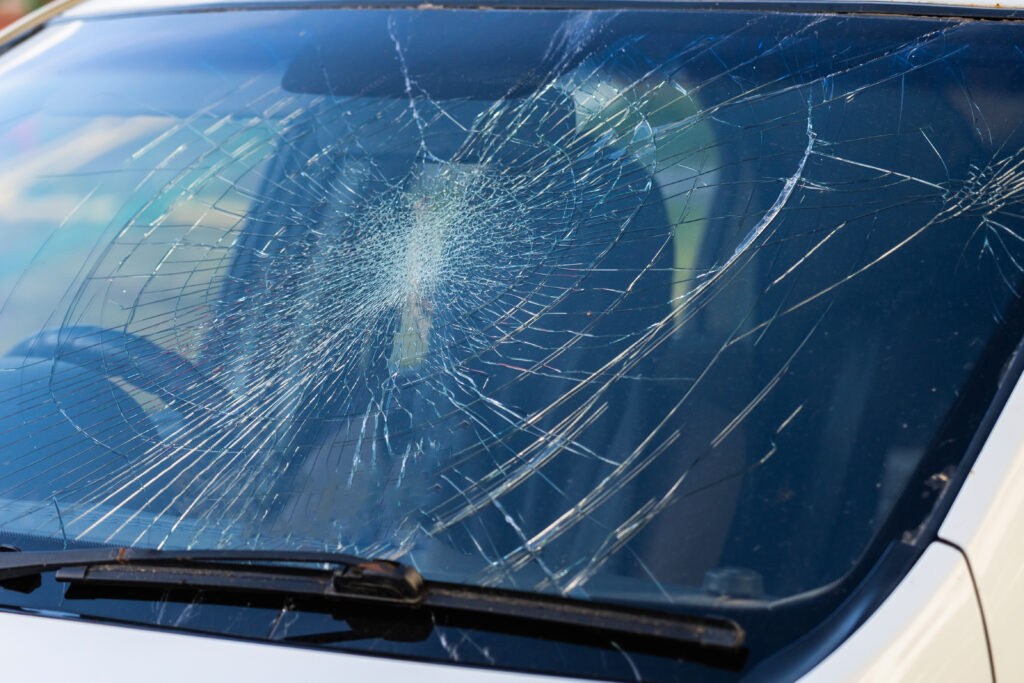
You’re on a road, and a rock just hits your windshield. You measured it and saw that 1 1-inch chip has happened. What should you do now, repair or replacement?
At Save On Auto Glass Repair can be solved within $35-$65, but replacement costs start from $99. Now, if you don’t know about it, how could you determine what you should do?
As a car owner, you shouldn’t ignore safety. Your safety is more than a piece of glass. A small chip can develop into a large crack, necessitating replacement.
In this content, I’ll describe the most common types of windshield damage, repair vs replacement, and other issues that you will find interesting.
Let’s get started.
Common Types of Windshield Damage
Before learning about the common types, it is essential to understand why knowing them is important.
As a car owner, you should have the ability to identify which one is a chip and which one is a crack. Both are damage types that generally occur in the windshield.
This ability not only reduces overall spending but also preserves the original windshield. If you have a crack on your windshield, then there is no option to recover the original strength; only replacement is available.
Sometimes, several technicians could be suggested for replacement, but that is actually not needed. This identification helps you to get a better idea.
Now, let’s see which are the common types of windshield damage:
Chips
In the case of the windshield, the most common damage is chips.
Chips can be in various formats. These chips may occur due to unwanted occurrences. For example-
You are driving on a road, and a piece of stone or solid debris hits the glass. At first sight, this may not be too visible or sometimes unnoticeable. You can think like a wound on a glass.
If you don’t take any steps, it can develop into a crack. And, this can happen comparatively faster if you live in the Nordic region.
These small chips may lead to a large crack, and in that case, replacement would be the only option. This scenario may incur costs that exceed the average.
Cracks
Cracks are the upgraded version of chips. Cracks can occur directly or result from a transformation, such as large chips. So, how do you figure this out?
It is easy to determine whether your windshield has a chip or a crack.
A line will appear on your windshield that can be spread from top to bottom or left to right. The parameter of length is not always the same. However, the size of the crack can be 6 inches or higher. Temperature, vibration, and other external factors may play a big role here.
So, if you see a crack, there’s no need to wait anymore for the next one.
Visit the repair shop and discuss the options with them. If you are near Metro Detroit and Southeast Michigan, just contact a better repair shop like Save on Auto Glass.
Combination Breaks
The middle position or condition between chips and cracks is called ‘combination breaks’. This generally happens when the impact is substantial, and creates chips and multiple branching of cracks around the chips.
Now, a question may arise in your mind: “Is a combination break repairable?” The answer is not entirely yes/NO. Some damages may be repaired, and others are replaceable.
So, this actually depends. If the damage is severe, it’s better to opt for replacement rather than a test drive with repair. Ultimately, you may need to consider the replacement option further.
Surface Pits and Scratches
Some car owner thinks that scratches or surface pits are not a big deal. Is it really true? These should not be neglected.
Usually, these can occur due to dust, sand, or wiper blades. The windshield may become cloudy over time if you don’t take proper care of it.
Light scratches may cause significant issues like glare, which may lead to difficulty driving when while sunlight hits directly.
This is why you should maintain your routine. And, don’t forget to clean up after a long drive. A little practice may reduce the cost of repair.
Causes Behind Different Types of Windshield Damage
The truth is that the damage to the windshield doesn’t happen spontaneously. Behind it, there will always be a reason. If the reasons can be understood, chips, cracks, or other problems can be easily prevented.
So, let’s check the most common culprits for the windshield damage.
Road Debris and Flying Rocks
At the top of the list, the biggest offenders are road debris and Flying Rocks.
While driving on the highway, small rocks and gravel can be blown away from their original position. These fragments, often dislodged by the tires of other vehicles, especially trucks, may directly hit the windshield.
These types of tiny rocks, traveling at high speed, can create chips or star-shaped cracks instantly. Maintaining a minimum distance from large vehicles is not only a defensive driving technique but also a crucial aspect of windshield protection.

Weather and Temperature Changes
Extreme temperatures are not conducive to glass. So what’s the reason?
During hot weather, the glass expands, and it contracts when it’s cold. Due to this constant shift, the windshield can become stressed, especially if it has any chips or microcracks.
Do you ever notice a crack getting longer abruptly overnight in winter? That’s the effect of thermal stress.
Rapid changes in temperature. This can include freezing or extremely low temperatures. This can cause the defroster to blast. Thus, it makes the situation worse in an instant.
Accidents or Heavy Impact
It’s obvious but needs to be said.
From a minor fender bender to a fallen tree can cause serious damage. Although the glass doesn’t break down, the structure can be weak, which may later become visible as a crack.
So it’s better to inspect the windshield after any accident, even if it’s minor.
Poor Installation or Structural Weakness
Sometimes the problems remain with the installation, not the outside of the vehicles. If the adhesive wasn’t fit evenly or the glass wasn’t installed correctly, a stress fracture may develop gradually, even with a slight vibration or temperature change.
A poor installation doesn’t just mean a car problem. It also reduces the rigidity of the car frame. This can be a cause for the windshield to act as a structural support for the car.
If the windshield were replaced recently, it would be ensured that a certified technician did the work. If you are near Sterling Heights, just call the expert, like Save on Auto Glass. They will give you the best support and installation.

How to Identify the Severity of Damage
Windshield replacement is pricy, and not needed for all types of cracks. So, how do you know whether you should change the windshield or not?
You can take the replacement decision if you understand the severity of the damage. And this would be a wise and precise decision.
Now, let’s discuss some matters on it:
Size and Depth of the Chip or Crack
This is the very criterion that you should check first.
If the size of the crack is very deep or exceeds 6 inches, then you should consider replacement. These deep cracks gradually weaken the windshield’s strength.
Chips that are approximately 1 inch in diameter and 3 inches in length can be repaired.
According to ROLAGS™, bullseye damage should not be longer than 25 mm or 1 inch. The Combination Break should not exceed 50 mm or 2 inches.
Location on the Windshield
Location of damage significantly impacts both safety and repairability as well.
If the damaged location is directly in the field of vision, then it is highly recommended to repair it. The area could be within 300 mm or within 12 inches.
And, cracks located at the edge can sometimes make it difficult to repair and restore the windshield to its original strength.
Number of chips or cracks present
Experts recommended that if the number of cracks is more than three, then it is better to choose the replacement option. The total length of the three cracks measures 150 mm, which is equivalent to 6 inches.
However, in the DPVA, replacement is recommended if the crack’s length exceeds 100 mm as a safety measure. So, if the number crosses three, don’t think twice to replace your windshield.
Final Word
A right decision could reduce the overall costs.
Sometimes, we completely believe what the technicians say. If you don’t know when to repair and when to replace the entire windshield, then you may burn your money.
This is why you should clarify the concept of common types of chips, cracks, and how to identify them. Besides finding the right technician, it is also important to consider like Save on Auto Glass.
They will assist you in finding the best repair or replacement options, as well as covering insurance aspects. Just call them, and find the best solution. That’s all for today.
Frequently Asked Questions (FAQs)
What type of windshield damage can be repaired?
Resin, a viscous liquid or solid, can be used to repair small chips or short cracks. If the damage didn’t reach the inner glass layer or block the driver’s view, then repair would be possible. Repairing with resin, the visibility of the glass can be restored. But in case of a large or deep crack, it wouldn’t work, so replacement is necessary.
How do I know if my crack is too big to repair?
Repair would be possible if the entire cracks were inserted into a dollar bill; otherwise, not. It’s not safe to repair if any longer or branching cracks across the glass. Replacement is the best option when any large cracks are present in the glass. These types of cracks are the primary reason for the structural weakness of the glass.
Are scratches considered windshield damage?
Off course. Scratches are also a form of windshield damage. Deformation of light can occur due to scratches on the surface. As a result, light visibility can be reduced, especially at night. It’s the fact that scratches can be fixed sometimes by polishing, when it’s light. However, in the case of deep scratches, either professional repair or replacement is necessary.
Can small chips turn into big cracks?
Obviously yes. Small chips can easily turn into a large one. Some factors act as inducive agents. It includes temperature, vibration, pressure, etc. That’s why early repair is essential. It’s to avoid the expensive replacement.
Does insurance cover all types of windshield damage?
Almost all the comprehensive insurance plans cover windshield repair and replacement as well. Sometimes, many providers provide a deductible waiver for minor chip repair. However, it can vary depending on the coverage details. Therefore, it’s best to review the glass protection policy and its benefits.