


By Ray Y., Founder of Save On Auto Glass | AGSC Certified Auto Glass Technician
If you’ve driven M-59 through Sterling Heights long enough, you’ve probably felt that split second of dread. A sharp pop. A quick glance at the windshield. That silent hope that whatever hit the glass didn’t leave a mark.
Most of the time, it did.
I’ve been repairing and replacing windshields since the late 1980s, back when we cut glass by hand and mobile vans rattled like they were about to fall apart. I repaired my first windshield in Sterling Heights in 1999, not far from Hall Road, and more than two decades later, M-59 is still one of the hardest roads on auto glass in this area.
This article is about the common windshield damage caused by M-59 traffic in Sterling Heights, why it keeps happening, and what drivers need to understand before a small chip turns into a safety problem.
This isn’t theory or internet advice. It’s what I’ve seen with my own hands for 35 years.
Why M-59 Is So Tough on Windshields
M-59 isn’t just busy. It’s unforgiving.
You’ve got constant construction, heavy commercial traffic, aggressive lane changes, and Michigan weather all working together. Gravel trucks move through daily. Lane expansions leave loose debris behind. In winter, the road freezes and thaws over and over, sending vibrations straight through your vehicle.
Back in the early ’90s, windshields were simpler. Today, they’re part of the vehicle’s safety system. They support airbags, help maintain roof strength, and house cameras that assist with braking and steering.
I often tell customers something that surprises them:
Your windshield does more structural work than most people realize.
When it takes a hit on M-59, it’s not just cosmetic damage. It’s stress added to a critical safety component.
Rock Chips from Construction Zones and Gravel Trucks
Most windshield damage from M-59 traffic starts small. A rock chip. A tiny star break. Something easy to ignore.
Construction zones are the main culprit. Gravel trucks don’t always cover their loads as well as they should, and at highway speed, even a pebble becomes a projectile. I’ve had customers come in convinced the chip appeared overnight, when it actually happened miles back near Mound or Van Dyke.
What many drivers don’t realize is that a rock chip doesn’t just damage the outer surface. It creates internal fractures inside the glass layers. Those fractures hold stress, and stress doesn’t like to stay still.
In Michigan weather, that stress usually spreads. Sometimes slowly. Sometimes all at once.
I’ve seen chips that could have been repaired in 20 minutes turn into full replacements because the driver waited “just a few days.”
Long Cracks Triggered by Temperature Shock
Temperature is one of the biggest enemies of damaged glass, especially on M-59.
Picture this. It’s January. You start your car. The windshield is ice cold. You blast the defroster. The inside heats fast while the outside stays frozen. That uneven expansion puts pressure on every weak point in the glass.
If there’s a chip already there, the crack doesn’t need much encouragement.
I’ve watched cracks grow six inches overnight. I’ve seen windshields split edge to edge after one cold morning commute. Once a crack starts moving, there’s no stopping it.
This is one of the reasons we always tell customers not to wait. Glass doesn’t heal. It only gets worse under stress.
Edge Cracks Caused by Road Vibration
Edge cracks are some of the most dangerous damage we see from M-59 traffic.
They don’t always come from a direct hit. Often, they’re caused by vibration. Uneven pavement. Expansion joints. Sudden bumps near exits. The vehicle frame flexes, and that stress transfers directly to the edge of the windshield.
Once damage reaches the edge, repair is no longer safe. According to Auto Glass Safety Council standards, replacement is required. The structural integrity of the glass is compromised at that point.
I know some shops will still attempt a repair. We won’t. Safety comes first.
Pitting from Years of Daily M-59 Driving
This is the damage people don’t notice until it’s too late.
Years of daily driving on M-59 cause tiny impacts from sand and debris. Over time, these create surface pitting. Individually, they’re harmless. Collectively, they turn your windshield into a light diffuser.
Drivers usually complain about glare first. Headlights seem brighter. Rain makes visibility worse. Night driving becomes exhausting.
At that stage, polishing won’t fix it. The glass itself is worn. Replacement is the only option if you want clear, safe visibility again.
Why Windshield Damage on M-59 Keeps Repeating
Here’s something I’ve learned the hard way over decades in this business.
Once a windshield is weakened, it’s more vulnerable the next time.
Repeated M-59 exposure causes internal stress patterns in the glass. Even after a repair, that area may still be more sensitive to vibration and temperature changes. That’s why quality materials and proper technique matter so much.
A rushed repair might look fine today. Six months later, it fails.
The Truth About Cheap Repairs
I don’t enjoy fixing other people’s mistakes, but it happens every week.
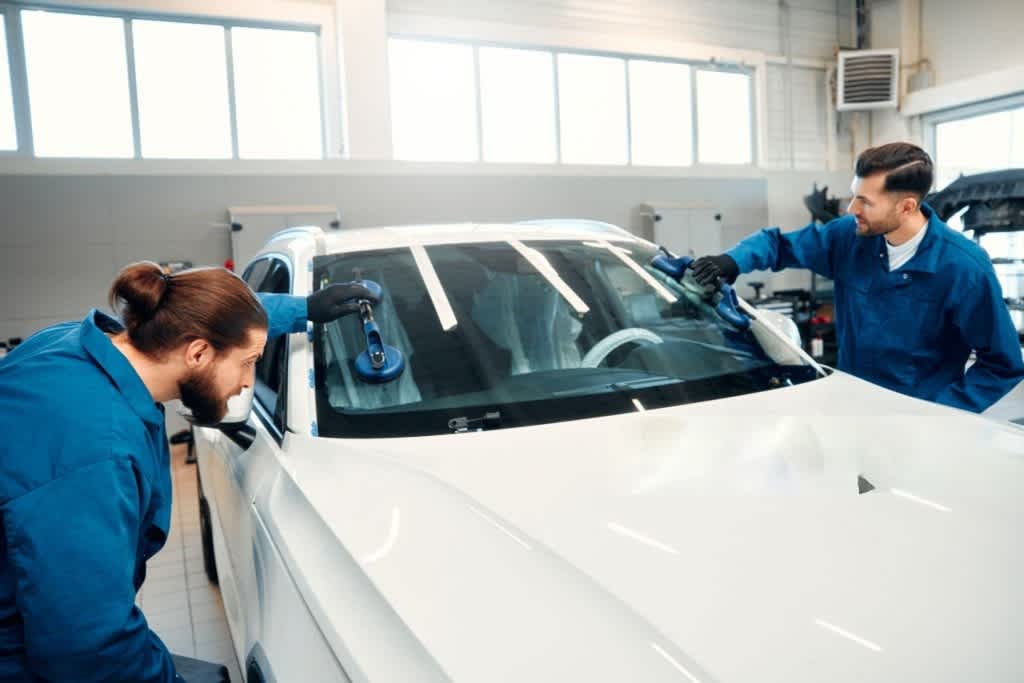
Cheap windshield repairs often use low-grade resin or aftermarket glass that doesn’t match OEM specifications. Improper urethane bonding is another common issue. Moisture contamination during installation weakens the bond from day one.
I once replaced a windshield that had been installed just two weeks earlier. The glass shifted during a minor accident. Thankfully, no one was hurt. But it shouldn’t have happened at all.
At Save On Auto Glass, we use OEM or OEM-equivalent glass only, along with AGSC-approved urethane from brands like Sika and Dow. We follow curing times based on real conditions, not wishful thinking.
Shortcuts don’t protect families.
Windshield Damage and ADAS on M-59
Modern vehicles rely heavily on windshield-mounted cameras. These systems control lane departure warnings, collision avoidance, and adaptive cruise control.
When a windshield is replaced, ADAS calibration is not optional.
I’ve seen vehicles drift slightly left after a bad calibration. I’ve seen forward collision warnings trigger late. On a road like M-59, that’s dangerous.
Proper calibration requires trained technicians, correct targets, and the right environment. Skipping it saves money today and risks lives tomorrow.
Old Tools, New Tools, Same Responsibility
When I started, we used cold knives and manual measurements. Everything depended on experience and feel.
Today, we use precision tools, digital calibration systems, and controlled curing methods. Technology helps, but it doesn’t replace judgment.
A tool is only as good as the person using it. That’s where experience still matters.
DIY Repairs vs Professional Work
DIY kits are tempting. They’re cheap and easy to find.
But they don’t remove moisture properly. They don’t restore structural strength. And once a DIY repair fails, professional repair becomes harder—or impossible.
I’ve seen well-meaning drivers turn a small repairable chip into a full replacement with a $15 kit. It’s not worth the risk.
What Windshield Damage Really Costs in Sterling Heights
Costs vary based on vehicle type, glass technology, and calibration needs. As a general range, chip repairs are affordable and often covered by insurance with no deductible. Full replacements cost more, especially with ADAS calibration involved.
Insurance usually covers repairs fully. Replacements may involve a deductible, but many policies waive it.
The key is acting early.
Insurance Myths I Hear Every Day
Many drivers believe filing a windshield claim will raise their rates. In most cases, it doesn’t. Others think they’re required to use the insurance company’s preferred shop. Michigan law says otherwise.
You have the right to choose who works on your vehicle.
Pro Advice from 35 Years in the Field
After replacement, curing time matters. Avoid car washes for at least a day. Don’t slam doors. Let the adhesive do its job.
And if damage reaches the edge, sits in the driver’s line of sight, or involves multiple impact points, repair is no longer safe.
Key Takeaways for M-59 Drivers
M-59 traffic causes repeated windshield damage. Michigan weather accelerates crack spread. Cheap repairs fail. ADAS calibration is critical. Experience still matters.
FAQs: Windshield Damage from M-59 Traffic in Sterling Heights
How long does windshield replacement take?
Most replacements take about an hour, but safe drive-away time depends on temperature and humidity. We follow AGSC standards to ensure the adhesive cures properly before releasing the vehicle.
Is OEM glass really worth it?
Yes. OEM glass matches factory thickness, clarity, and camera alignment. Aftermarket glass often causes distortion or calibration issues, especially at highway speeds.
Can rain affect installation?
Rain can contaminate urethane if not handled correctly. A professional technician adjusts the process or reschedules when conditions aren’t safe.
Do I really need ADAS calibration?
If your vehicle has windshield-mounted cameras, calibration is required. Skipping it can cause safety systems to malfunction.
Will insurance cover windshield damage?
Most Michigan policies cover chip repairs fully. Replacement coverage depends on your policy, but many deductibles are waived.
How can I stop a crack from spreading?
Avoid temperature shock and get it inspected immediately. Delays almost always make the damage worse.
A Final Story from M-59
I remember a customer from the late ’90s, just off M-59 in Sterling Heights. Young family. Minivan. Small chip. He waited. Three weeks later, the crack ran across the windshield.
He looked at me and said, “I should’ve come sooner.”
I still hear that today.
At Save On Auto Glass, we’ve helped over 10,000 drivers stay safe using OEM-grade glass and AGSC-approved materials. If your windshield took a hit on M-59, don’t wait.
And if this article helped you, share it with another Sterling Heights driver. It might save them more than a windshield.